9 Inaccuracies in Full Metal Jacket (1987)

Often considered one of the most accurate Vietnam War movies, along with Platoon (1986), Full Metal Jacket has its own flaws. While the boot camp segment (the first half of the movie) is one of the most accurate depictions of basic training on Parris Island, the latter half, which takes place in Vietnam, could have been done better. Stanley Kubrick was famous for his attention to detail, and many of the flaws on this list are blink-and-you’ll-miss-it. But they slipped through the cracks and ended up in the final product. So, let’s take a look at them. Note: these inaccuracies are listed based on when they appear in the movie, not how big or small they were.
Here’s two things that are just small details that couldn’t be made into long paragraphs.
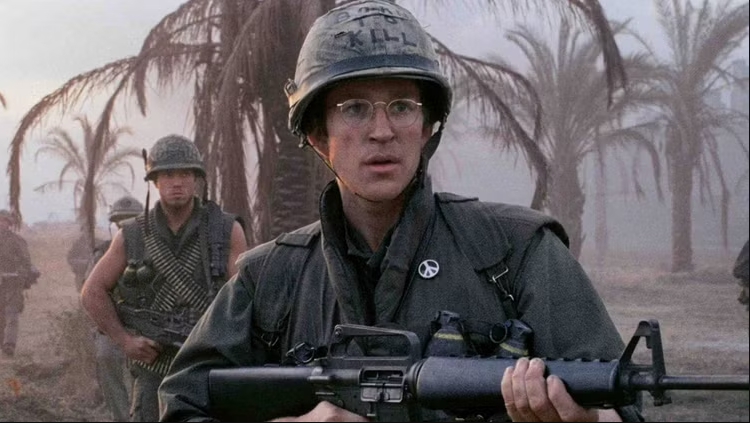
Pvt. Joker wouldn’t have had his own glasses; He would’ve needed military prescribed ones. Secondly, the flip flops would not be different colors. They would all be black or brown.
A book that hadn’t been published yet makes an appearance

The book “The Word for World is Forest” appears on Joker’s bedside. That book was published in 1976, 8 years after the year the movie takes place and 4 years before it appeared as a novella.
Sgt. Hartman would’ve kicked Private Pyle out because Pyle was unfit for service
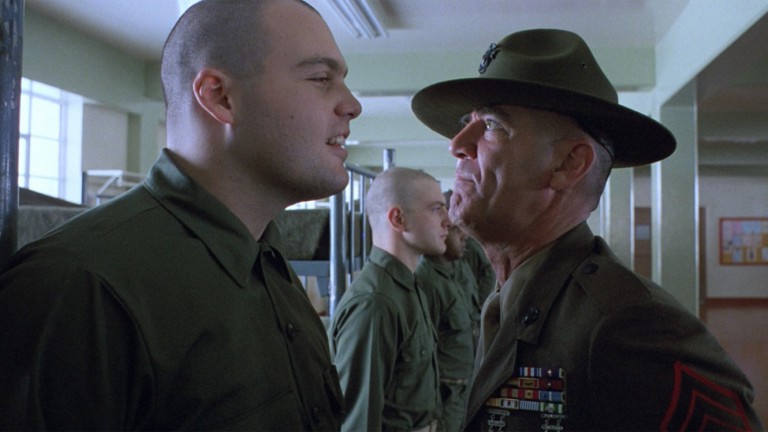
This one is highly contested because, at the time, the US military would send anyone they could to Vietnam, regardless of whether or not they were fit for service. Nowadays, that’s not the case. You would likely be turned away very early if you were unfit for service, but in the 1960s, the fight against communism demanded whoever it could push into its meat grinder.
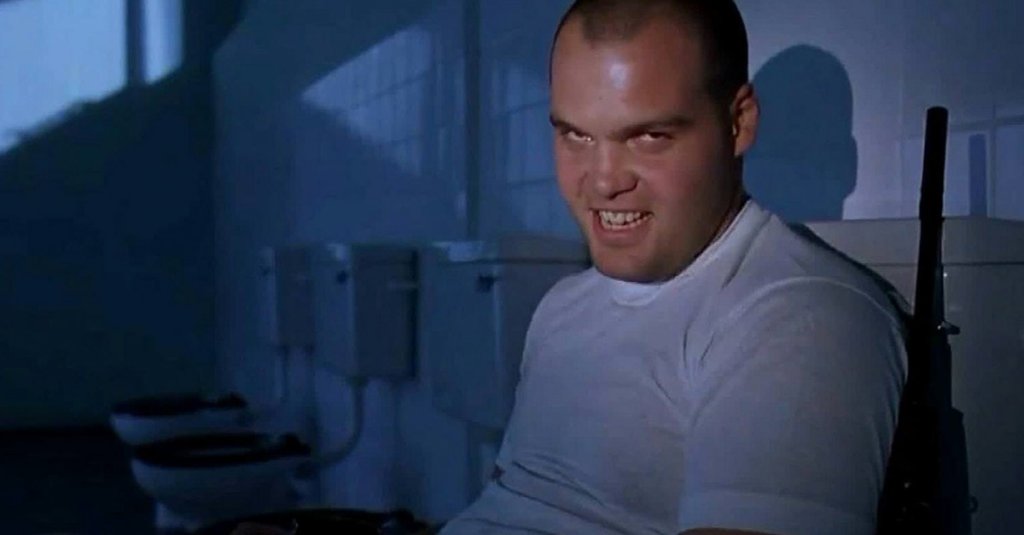
Private Pyle never would have had access to the rifle that he uses to kill Sgt. Hartman
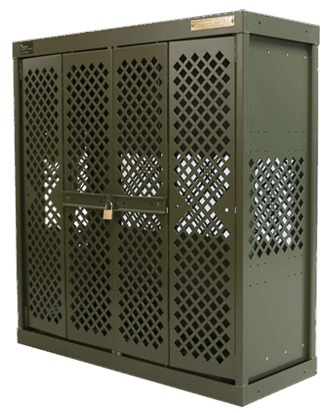
When the rifles are not in use, they are locked up in lockers. This aspect contributes to the fan theory that someone was just dreaming the murder-suicide sequence. It’s actually plausible, considering Stanley Kubrick is somewhat known for dream sequences.
If Pyle did kill the sergeant, it would’ve rocked the entire Marine Corps
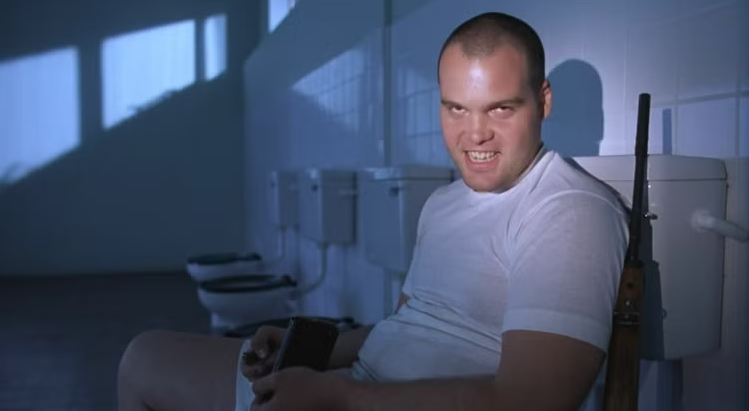
In the movie, the whole squad is sent to Vietnam and the murder-suicide is treated like nothing happened. This is probably the most inaccurate part of the movie. Putting things mildly, the killing of the sergeant is likely a preferable end to the nightmare that would happen in the aftermath of such an event. After the event, the United States Marine Corps Criminal Investigation Division would come in to investigate. Joker, Cowboy, and everyone else in the platoon would be interrogated. The blanket party that took place earlier would come back to bite them. Best case scenario, they would get a non-judicial punishment. Worst case, the courts-martial would get involved, reminiscent of A Few Good Men (1992). That could be potential for dishonorable discharges. In addition, the Naval Inspector General’s office would start asking lots of questions, and not just of the marines in the platoon, but of the entire chain of command on Parris Island. Some of the officers would have likely seen their careers end. The lucky ones would be dismissed and they would receive letters of admonition or reprimand. The unlucky ones would face the “up or out” realities of promotion. The really unlucky ones would get court-martialed.
There were no British helicopters in the Vietnam War
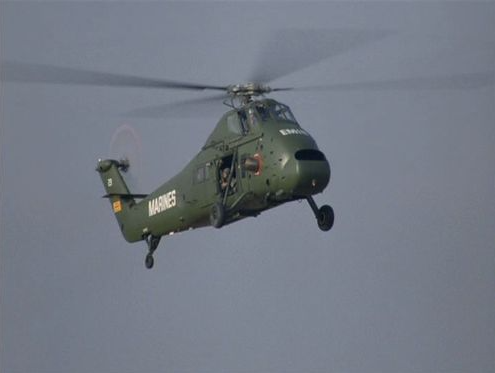
Britain was not involved in the Vietnam War, and didn’t give the US any materiel. So it does come as a surprise that the transport helicopters in the movie are British, despite the fact that they were painted to look like American ones. The US military used Sikorsky UH-34D and Boeing Vertol CH-46 Sea Knight helicopters for transport during the war. The British had developed the similar Westland Wessex 60. Wessex 60s were used in the movie. They have different noses than the American UH-34s. Are there similarities? There certainly are. But would the US use British helicopters in Vietnam? Not at all. They appear in the movie because it was filmed in England, if you can believe that. The city scenes were actually filmed at an old gas works in London, which was the same location as 1984 (1984), with John Hurt.
There were no black leather boots in Vietnam
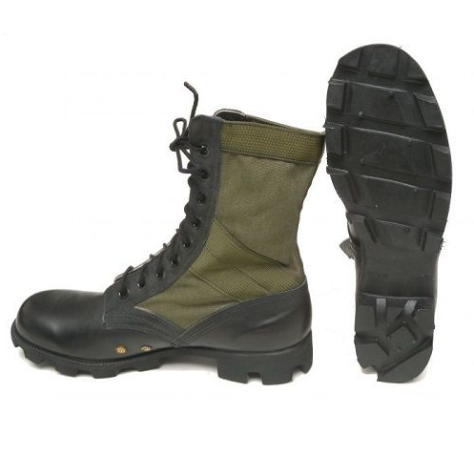
In 1965, the black leather boots were phased out in favor of jungle boots for the Vietnamese jungle conditions. They were made to handle the mud and moisture of the climate and could drain water and resist mildew. This type of breathable, waterproof boot was first discovered during the Pacific Theater of World War II. That’s why everyone in Vietnam would have been wearing these jungle boots, not the black leather boots as seen in the movie.
The AK-47 wasn’t meant to be a sniper rifle
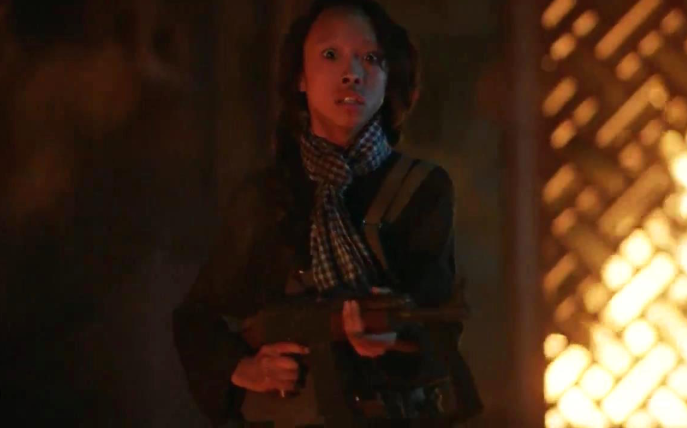
The sniper is revealed to be only about 12 years old, and it isn’t really believable that she could be trained to be so lethal at that age. This is also considering the rifle used. Many will say that the AK-47 isn’t very accurate. The distances of several hundred meters in an urban environment simply weren’t what the AK-47 was designed for. The Dragunov SVD, which does not appear in the movie, would’ve been better suited for this job than the AK. This rifle holds an accuracy rate of 2 inches at 100 yards, while the AK-47 holds an accuracy rate of 4 inches at 100 yards.
Soldiers didn’t sing “Mickey Mouse”
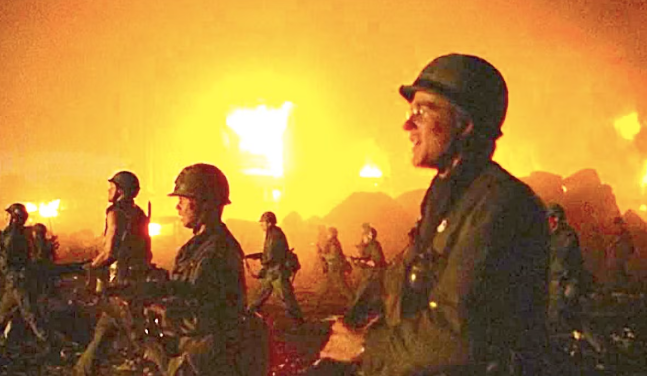
In the final scene, the soldiers leave Hue City, which looks like it has been defeated. The city wasn’t defeated in a day, or even a month. On top of that, there is no documented instance of US soldiers singing the Mickey Mouse March after a bloody battle. By this point, Kubrick is making a statement about America through one of its top exports, Mickey Mouse. But there are enough real victory marches in the Marine Corps that they wouldn’t have chosen to sing about Mickey Mouse. It’s actually kind of ridiculous that this accurate depiction of the Vietnam War would have the soldiers sing a fictional song that was never sung at victory.
Which inaccuracy surprised you the most? Leave a comment!
Sources: Looper, We Are the Mighty
 Ryan Ariano
 Harold C. Hutchison