American vs Russian Gun Comparison

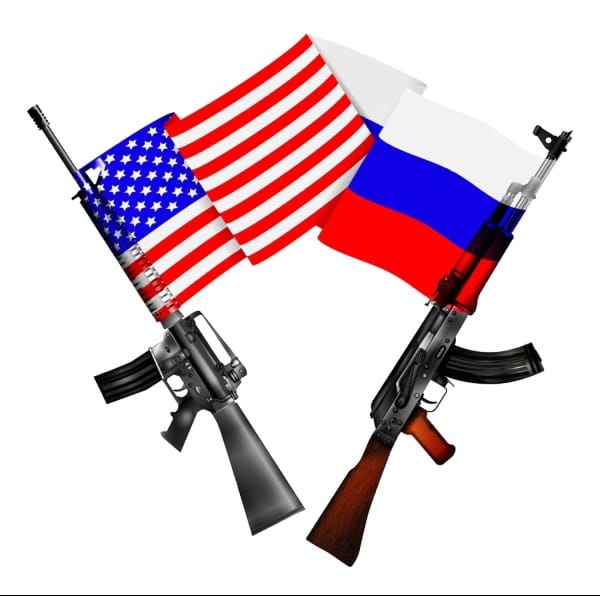
Before and during the Cold War, both sides of what would become the Iron Curtain were working to advance their firearm technology. This was especially true during the Second World War, even though, during that time, the US and Soviet Union were on the same side. But, of course, that didn't last. After that war, the US and Soviet Union fought for supremacy, and during that time, several new weapons came to be. Today, we will be looking at how these weapons stack up against the other side. There won't be any winners. That will be up for you to decide.
Colt 1911 vs Tokarev TT-33

Year: 1911 vs 1930
Caliber: .45 ACP vs 7.62x25mm
There is no denying that the 1911 was way ahead of its time. Sure, other pistols of that time, like the FN Models 1900, 1903, and 1910 operated using gas recoil, but none of those pistols still hold up to this day in the way that the 1911 has. And neither has the Tokarev TT-33. But that didn’t stop the Soviets from shamelessly copying, or even stealing outright, certain technology. So, it shouldn't be a surprise that the TT-33 looks somewhat like the Browning Model 1903. Regardless, both of these are semi-automatic pistols, but aside from that, they are different in practically every way. The 1911's .45 ACP ammunition has good stopping power, but the TT-33 offers better penetration. The TT-33 is also known for its simplicity and modular hammer, while the 1911 is known for its accuracy. The 1911 is a classic and powerful pistol with good ergonomics while the TT-33 has a simpler design with a stronger penetration. And while both are good firearms, their strengths differ greatly.
Thompson M1A1 vs PPSh-41
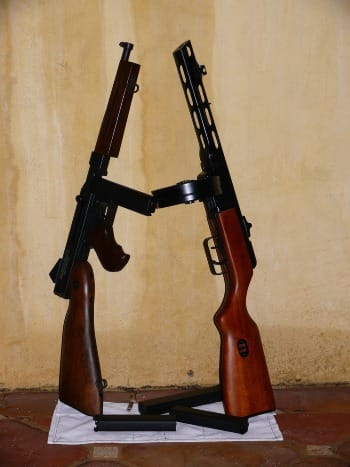
Year: 1928 vs 1941
Caliber: .45 ACP vs 7.62x25mm
Moving into submachine gun matters, both of these weapons were simplified versions of other submachine guns. The M1A1 was simplified from the M1928A1 (and could be produced in half the time), and the PPSh-41 was a simplified version of the PPD-40. The Thompson could have carried a drum magazine, like the PPSh-41 did, but it didn’t. M1A1s were designed to only have stick magazines, unlike the M1928A1, which could use both drum and box magazines. Although some reasons the M1928A1 wasn’t used in combat was because they were heavy, bulky, unreliable, and noisier compared to the 20 to 30-round box magazines. The drum magazine provided more ammunition (50 to 100 rounds), but it was heavier and had a tendency to rattle, making it more difficult to carry and use. So, the M1A1 only used box magazines for these reasons. Nevertheless, both of these weapons served in World War II as allies, then fought against one another during the Korean War.
M3 Grease Gun vs PPS-43
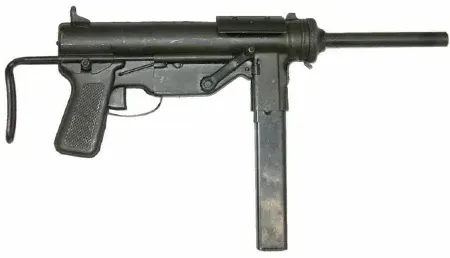
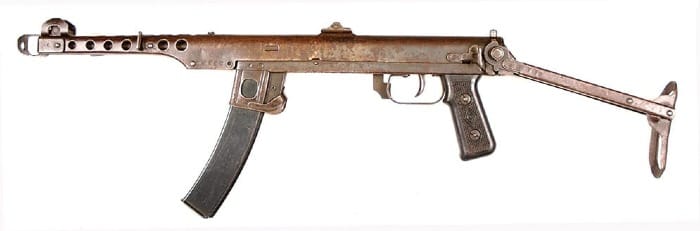
Year: 1943 vs 1942
Caliber: .45 ACP vs 7.62x25mm
By 1943, the going had gotten so tough that even simpler submachine guns were designed and put into service. Metal and other resources need to be conserved during wartime, which is why both of these weapons were created. Both have their ups and downs. Let's compare them. The M3 has a slower rate of fire and uses an inferior single-feed magazine. The PPS-43 boasts a higher rate of fire and flatter trajectory. That, and it features a more reliable double-feed magazine. It also has lighter, more easily manufactured design with a folding stock, while the M3 is a simpler, heavier, and less reliable weapon.
M14 vs SKS
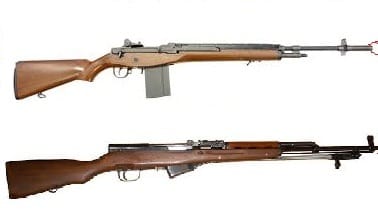
Year: 1957 vs 1949
Caliber: 7.62x51mm vs 7.62x39mm
While the M14 didn't see much action in Vietnam as a service rifle (it was replaced in 1964, the year the war escalated), it remained in service as a sniper rifle. But let's compare the two. For starters, the SKS was a semi-automatic carbine while the M14 is a full-powered battle rifle. This gives the M14 greater range and more accurate aim but also had a heavier weight and recoil. The SKS also offered higher rates of reliability and lower recoil. Both rifles were created in case of a hypothetical Third World War. Ultimately, however, both rifles were short-lived with their respective countries' armies, as the US and Soviet Union would adopt the following rifles...
M16 vs AK-47
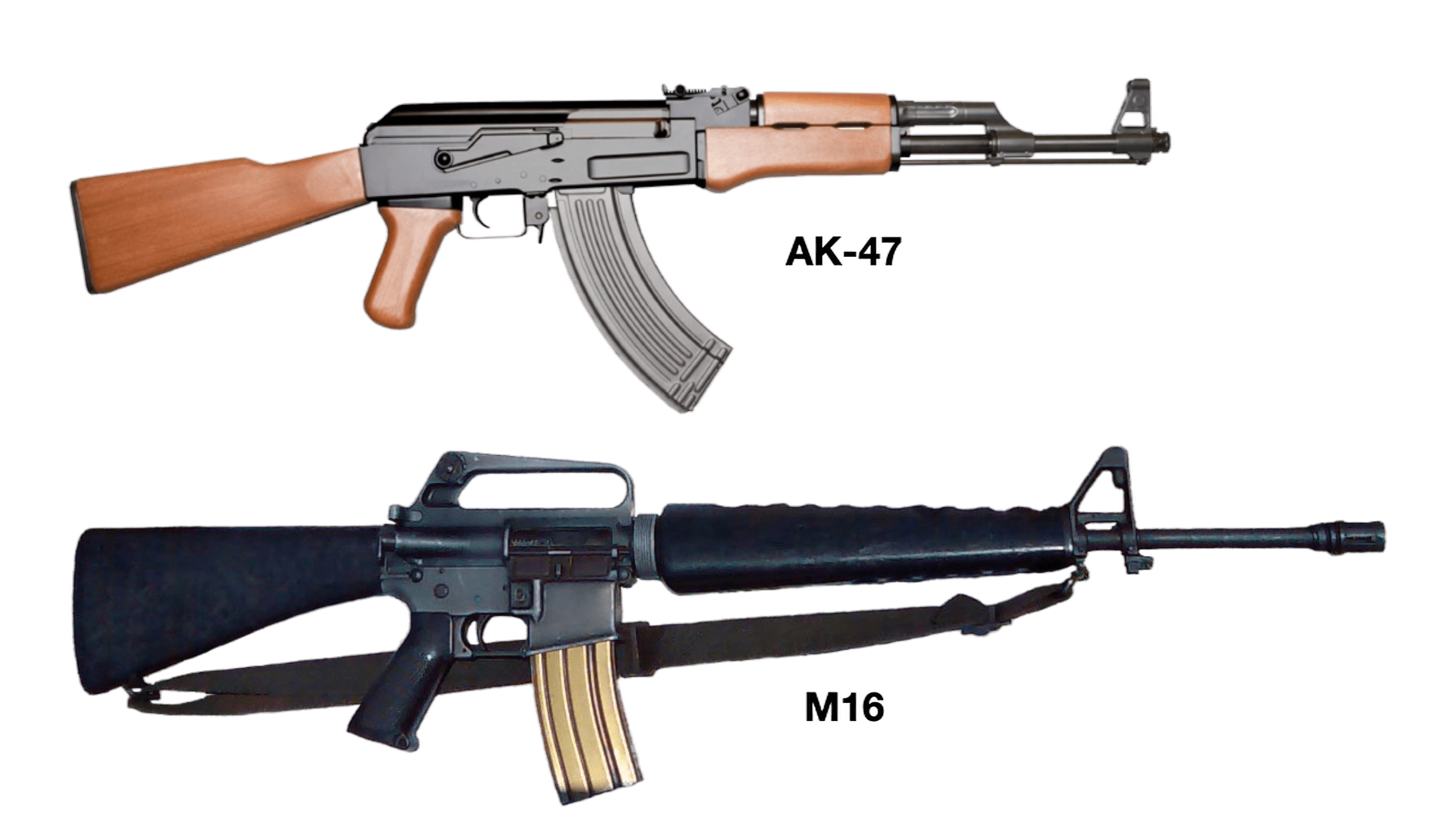
Year: 1964 vs 1947
Caliber: 5.56x45mm vs 7.62x39mm
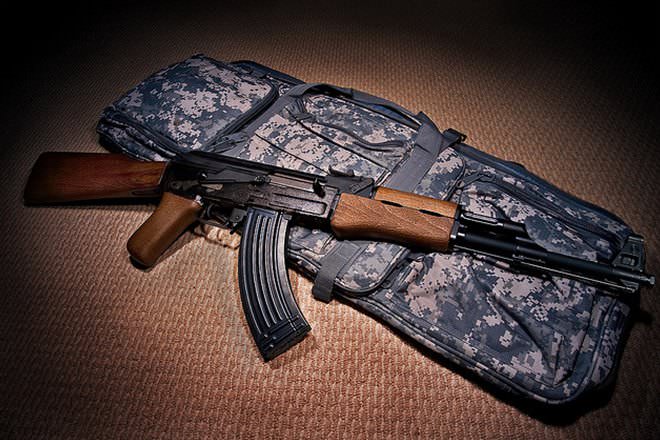
Arguably the biggest head-to-head comparison on this list, these assault rifles duked it out during several conflicts, like the 1990-1991 Gulf War, but the most famous one is the Vietnam War. The AK-47, while known for reliability and easy maintenance, still doesn't hold up to the M16's accuracy and range. Though the AK-47 is shorter and may be favorable in tighter conditions, whereas the M16 may be favored at times when accuracy and range are at play. The 7.62x39mm ammunition of the AK-47 gives good penetration but also produces more recoil than the more accurate 5.56x45mm. But both compare in the sense that they have 20 or 30-round detachable magazines, and that both are selective fire. However, they can't compare in one huge regard: popularity. The AK-47 is the far more popular rifle around the world, particularly with terror groups and in the armies of rogue nations.
Honorable Mention: M72 LAW vs RPG-7

Year: 1963 vs 1958
Caliber: 66mm vs 40mm
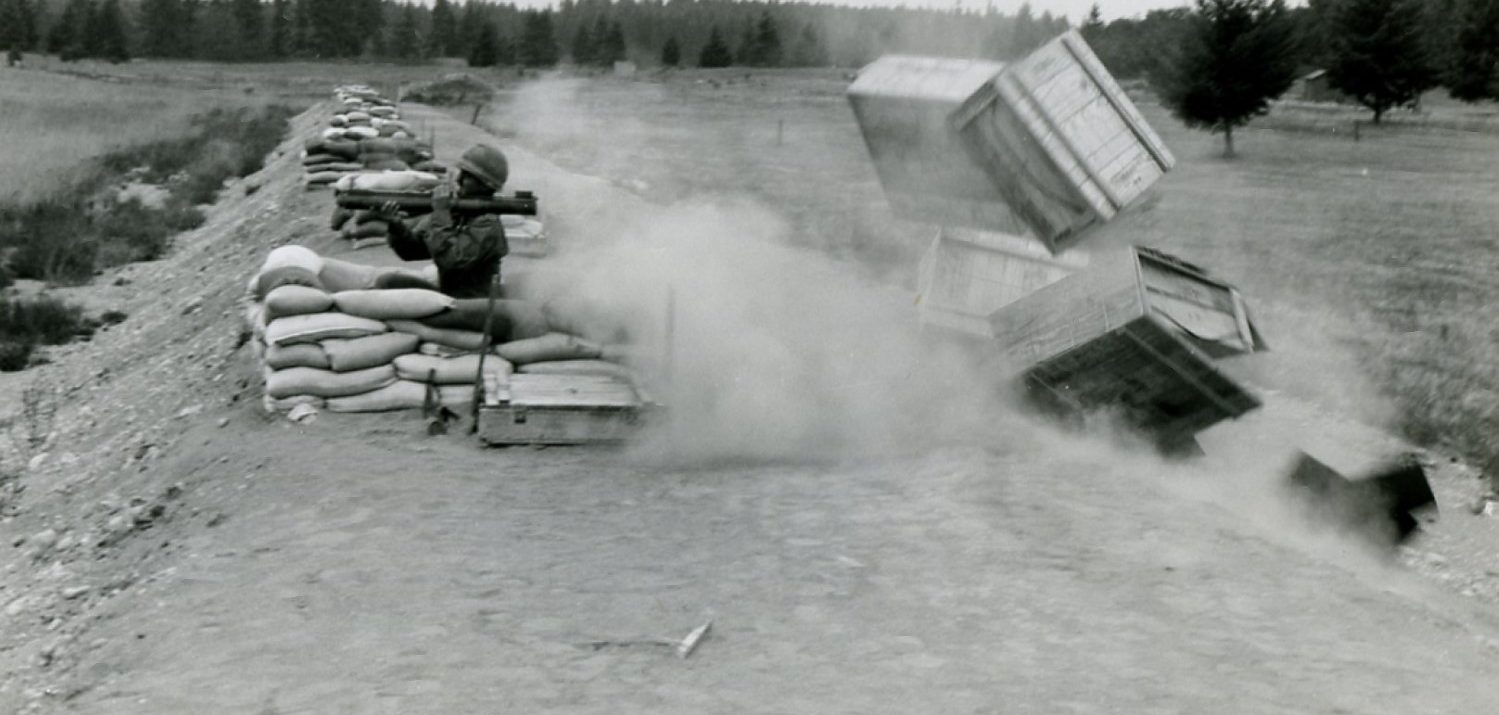
And now, for something completely different: missile launchers. The rocket-propelled grenade (RPG) is a 40mm shoulder-fired anti-tank grenade which can be operated by one or two crew members. US and South Vietnamese forces regularly faced the RPG during the Vietnam War. In response, the US developed the M72 light anti-armor weapon (LAW), taking inspiration from World War II-era weapons, such as the German Panzerfaust and American M1 Bazooka. The weapon entered US military service in 1963. Both of these weapons are handheld, anti-tank rockets, but that's about the only thing they have in common. Perhaps the biggest difference between them is the fact that the M72 LAW is single-use, while the RPG-7 is reusable. The M72 LAW also has limited range and isn't as effective against heavily armored targets. Despite these flaws, it was also lightweight, inexpensive, and easy to use. The RPG-7 also lacks in regard to accuracy, and it has to be reloaded. It's also heavier than the M72 LAW. But unlike the M72 LAW, the RPG-7 is still widely used today. Though the M72 LAW is still in service in places like Great Britain, Australia, and South Korea.
What was the biggest rivalry between American and Russian weapons in your opinion? Leave a comment!
Sources: The Armory Life, Diffen, Warfare History Network
 Tom Laemlein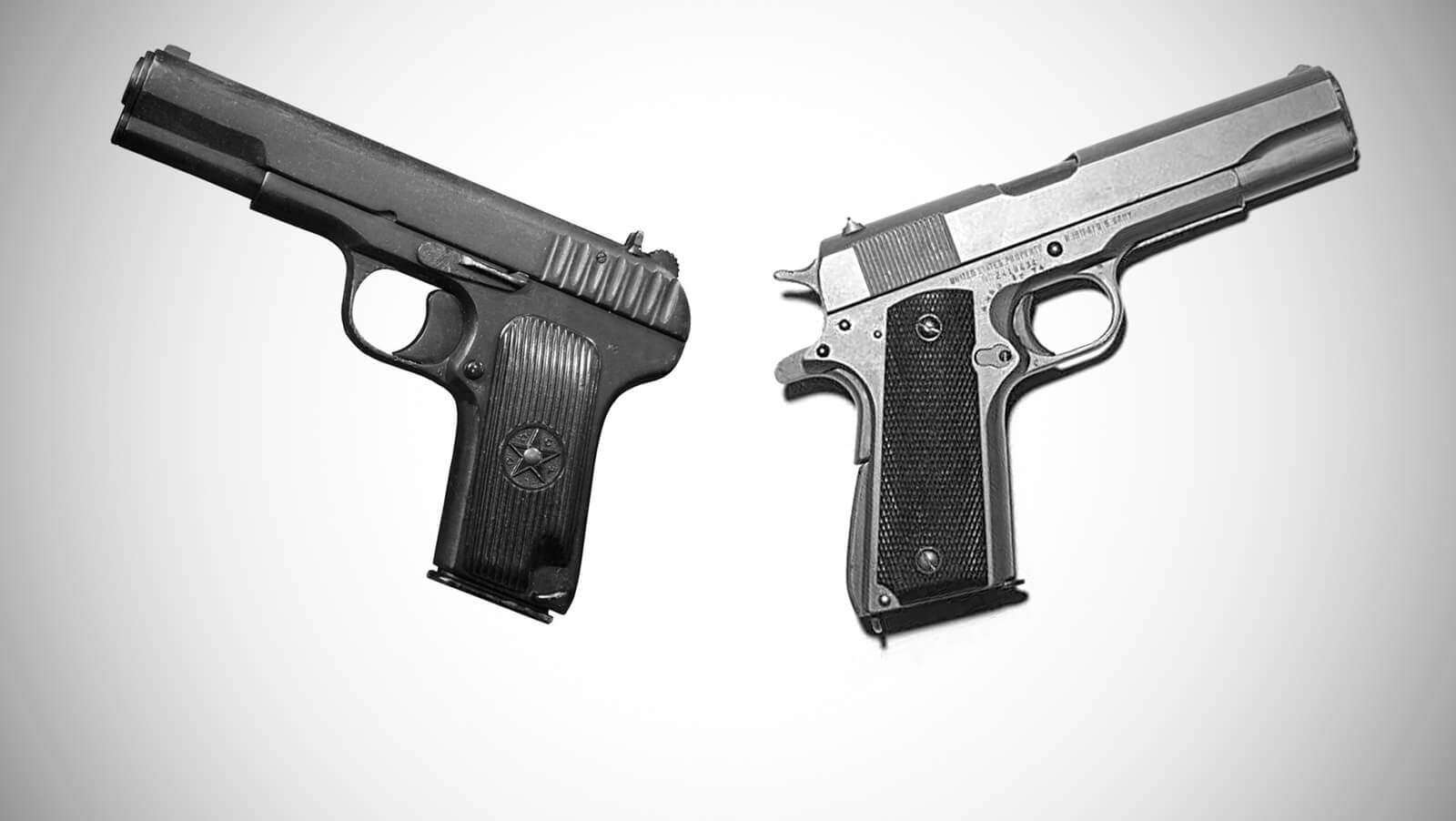
 Tom Laemlein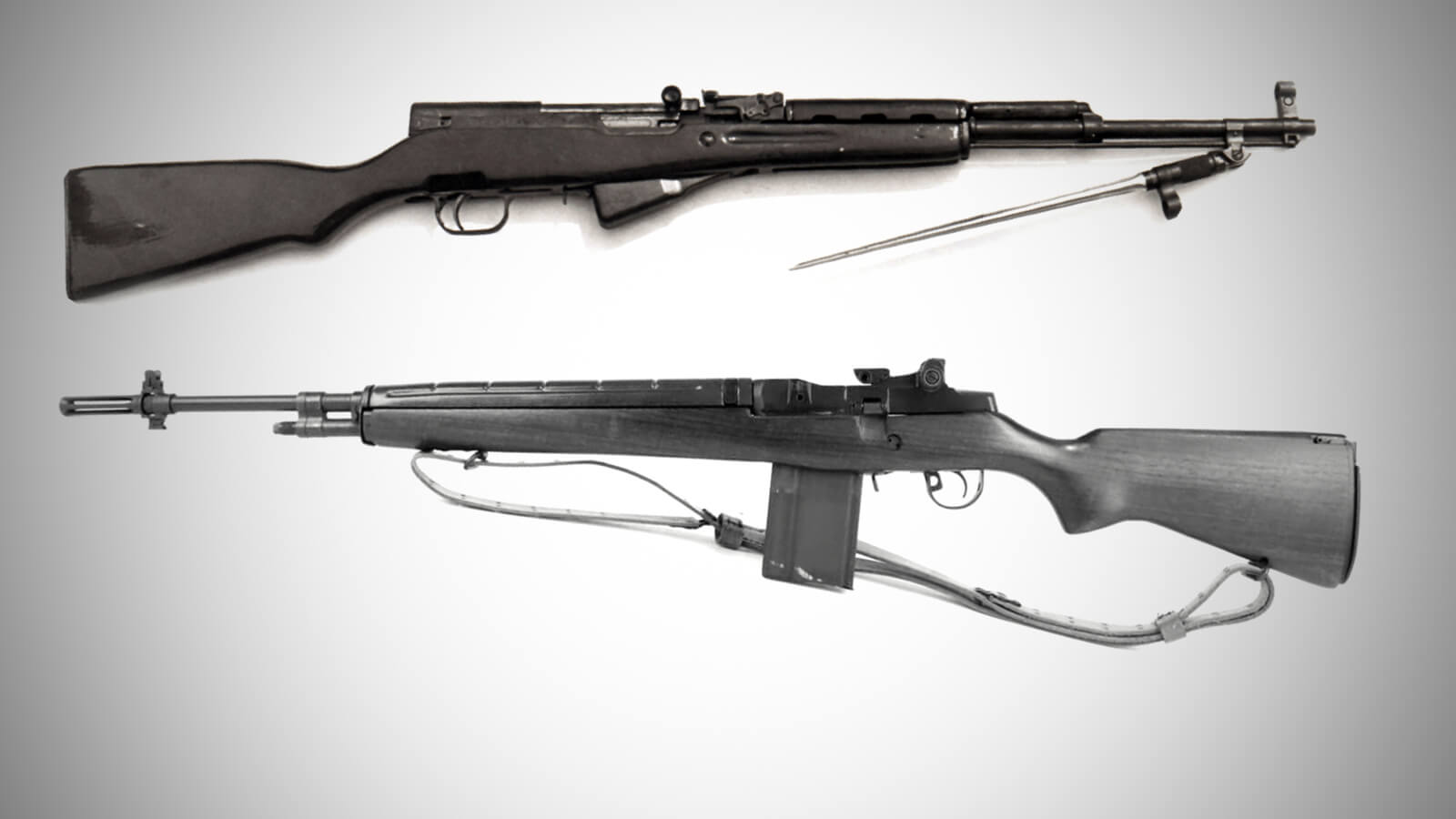

 Carl Gnam