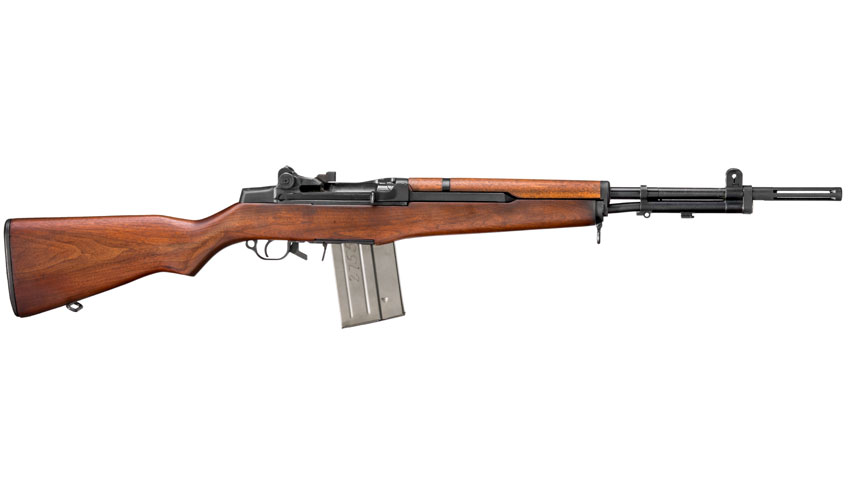
Beretta BM-59: The M14-Like Rifle That Surpassed the Original M14

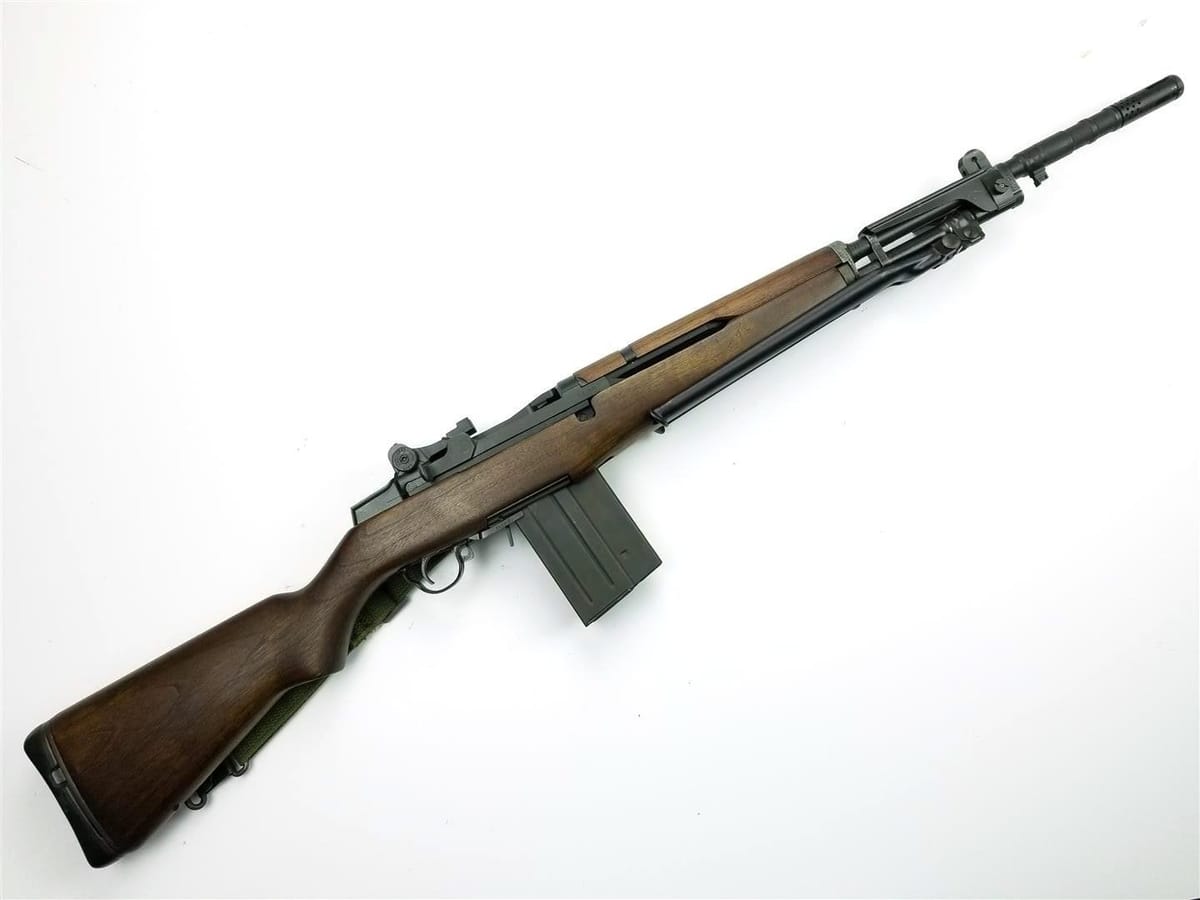
Italians have been known for a fair number of good things. Most notably is their food. And, to a certain extent, their guns can be viewed in a similar way. But you wouldn’t exactly go to an Italian and ask them to re-engineer a gun to be better. You’d likely give that job to a German. Even so, without being asked, Beretta took the M1 Garand (not the M14) and made a rifle similar to the M14, but better. Essentially, they dialed the M14 up to 11. And today, we will be discussing that.
The legacy of John C. Garand (pronounced “Gare-und,” even though the gun is pronounced “Guh-rand”) lies, arguably, within the M1 Garand. That rifle served the American armed forces from 1936 until 1957. Prior to its adoption, it had evolved from the prototype .30 caliber T1 rifle to the standardized M1 on January 9, 1936, which would continue to evolve until the middle of 1940, when it was mass produced for the first time. And while it did have very minor changes here and there until production stopped in 1957, it evolved into an entirely different rifle in another corner of the globe.
Italian fascist dictator Benito Mussolini was ousted in 1943 and executed on April 28, 1945. After this, Italy transitioned from a monarchy to a republic on June 12, 1946, in a nationwide referendum that exiled the House of Savoy. During the subsequent reforms, the new Italian armed forces adopted the American-designed M1 Garand, which was also produced in Italy under license. But it became clear by the mid-1950s that the M1 Garand was outdated and, essentially, obsolete in many ways. Not only that, but the NATO alliance had begun using the 7.62x51mm round as standard, and the M1 Garand didn't use that round. So, naturally, the Italian military looked to firearms designer Domenico Salza to design a rifle that worked like the M1 Garand but was chambered for the 7.62x51mm NATO round and had a box magazine. While that is, essentially, what an M14 is in a nutshell, the result was not entirely an M14.
It should go without saying that the Second World War rocked Italy, and Rome wasn't rebuilt in a day. The Italian armed forces also needed to be rebuilt, and whatever equipment they used during the war was either obsolete or at the end of its service life. Oftentimes, both. And old bolt-action rifles and submachine guns just didn't work anymore as standard service weapons. As such, in late 1945, the Italian government started purchasing M1 Garand rifles from the US. The number purchased from foreign military sales was over 100,000 by 1950, around the same time Beretta and Breda began producing Italian-made M1 Garand rifles, with the same tooling that Winchester used during World War II.
Since the M1 Garand was outdated by the time NATO was established in 1949, the founding members of NATO (including Italy) began working on select-fire rifles that chambered the then-standard 7.62x51mm NATO. But the Italians, having just reformed in costly ways, decided it would be cheaper to modernize its existing stockpiles of M1 Garand rifles instead. To do this, the engineers at Beretta began by giving the rifle a new 24" (60.96 cm) barrel. This stage in development was called the "Tipo 1 Garand." But development certainly didn't stop there. Not long after that, Beretta realized that more money could be saved if they modified the .30 caliber barrels that the existing rifles had. For that, Beretta engineers shortened each barrel by 0.5 inches (1.27 cm) at the breech. This compensated for the cartridge's case length. This upgraded rifle also saw reduction in the length of the operating rod, rear handguard and stock. This improved rifle was designated the "Tipo 2." Despite all of these modifications, it still lowered the cost of the conversion program by a large amount. And even though the Tipo 1 and 2 rifles ushered Italy into post-war NATO standardization, the M1 Garand design still wasn't leaving Beretta's drawing board yet.
Now it's 1957. The Tipo 1 and 2 were still regarded in the same way the M1 Garand was. That being heavy, outdated and obsolete. And that's not counting the more-than-obsolete 8-round clip that the M1 Garand was famous for, which would never hold up against the AK-47 and its variants, which were now standard within the Warsaw Pact. To fix that problem, two Beretta engineers named Domenico Salza and Vittorio Valle were tasked with decreasing the size and weight of the M1 Garand and make it capable of fully automatic fire with a different feed system. In under two years, they combined modified and unmodified parts alike with newly designed parts. The resulting rifle was designated BM-59, standing for "Beretta Model 1959," and it was everything the Italian army needed: an inexpensive, magazine-fed, select fire battle rifle that met the NATO requirements.
Fast forward to 1962 and the Italian army has adopted the BM-59 as standard. But that didn't stop Beretta from cashing in on a new type of market for weapons. A market that was, essentially, a byproduct of the world in which the Cold War was taking place. The M1 Garand had been distributed around the free world, and the 7.62x51 cartridge was now being adopted by non-NATO members, such as Algeria, Nigeria, Morocco, Ethiopia, Indonesia, Libya, and Argentina. This meant there was now a bigger demand for rifles chambered in that cartridge. Because of that, Beretta began making different variations of the BM-59 rifle. Examples are as follows:
Mark I, which was 41" (104.14 cm) long overall with a 17.6" (44.7 cm) barrel and no bipod.
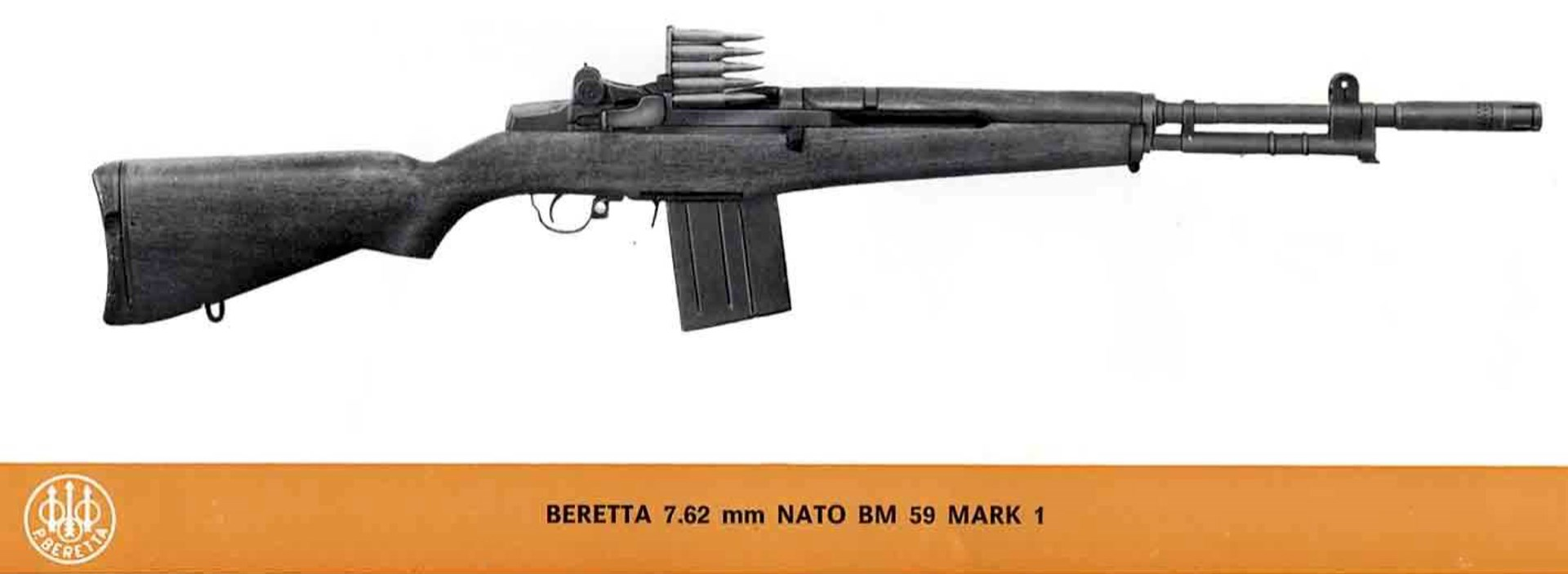
Mark II, 43" (109.22 cm) long overall with a 19" (48.26 cm) barrel, a bipod, "tri-compensator," and winter trigger.
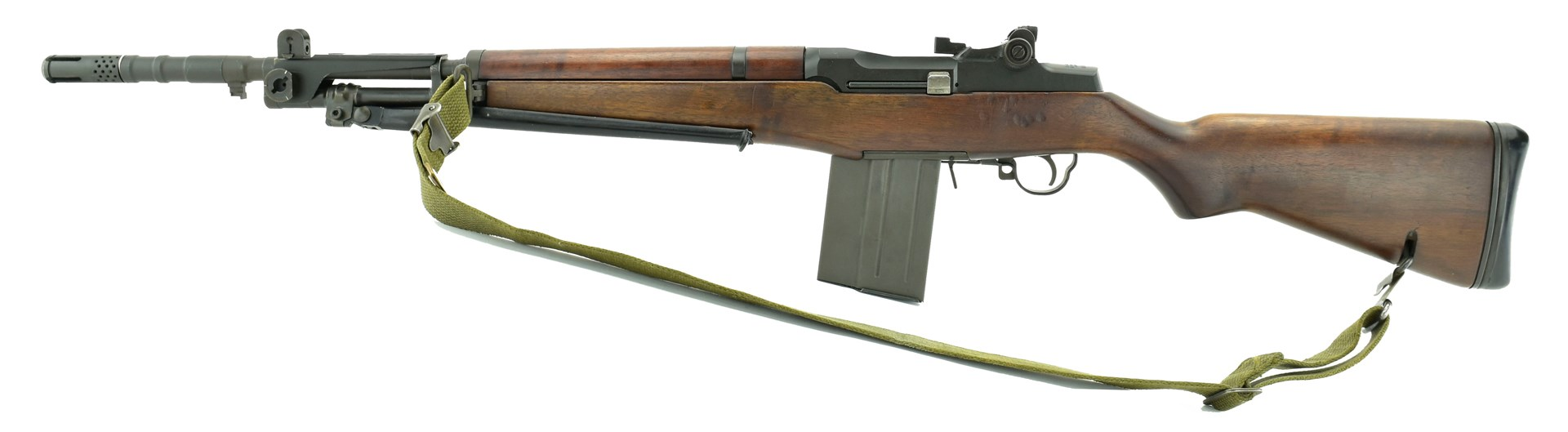
Mark III, 38.4" (97.53 cm) long overall with a 17.8" (45.212 cm) barrel, skeletal folding stock, removable "tri-compensator," and winter trigger.
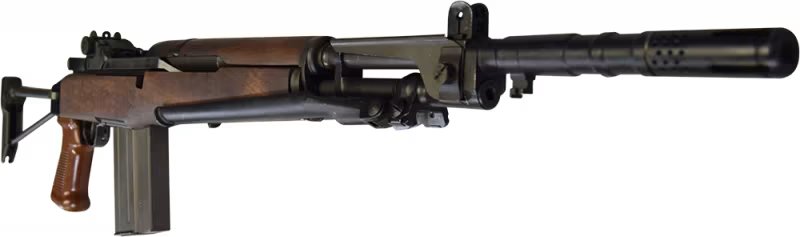
Mark IV, 42.5" (107.95 cm) long overall with a 21" (53.34 cm) barrel, full length wood stock, pistol grip, and heavy bipod.
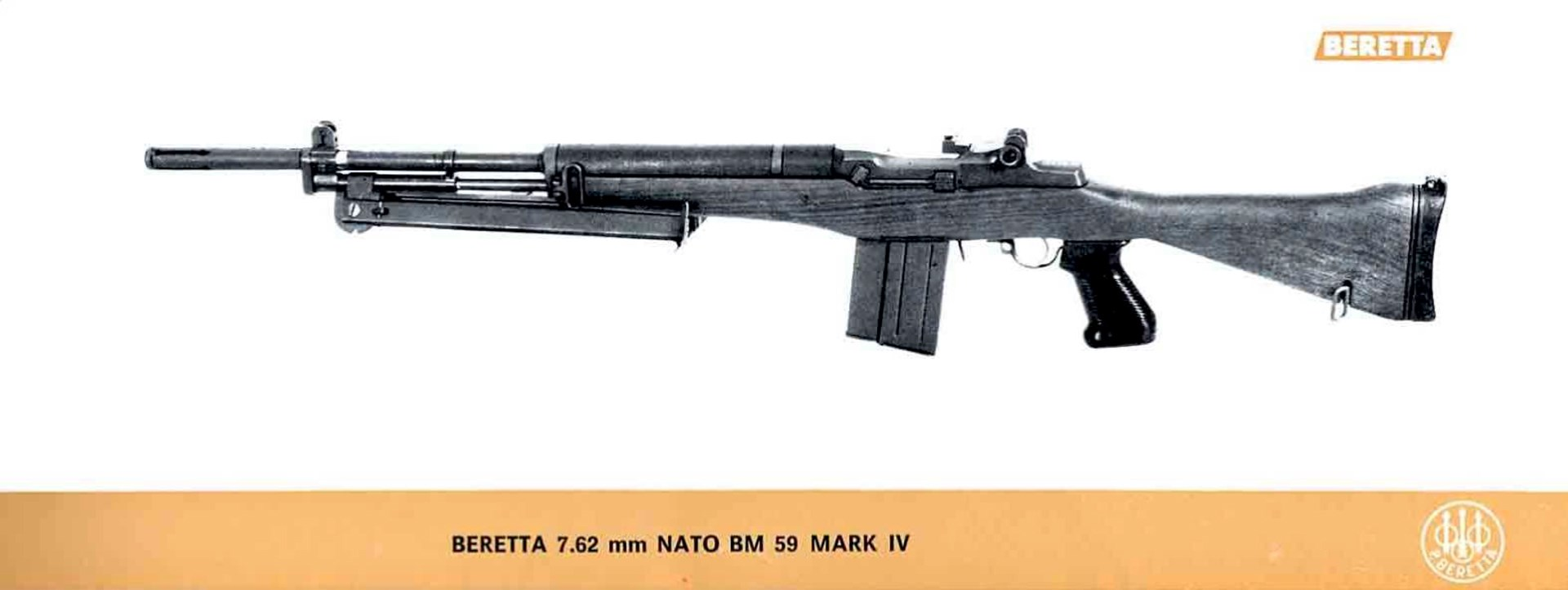
The BM-59 went on to serve the Italian army into the late 1980s, before it was phased out in 1990 in favor of the new Beretta AR70/90. Though it was used well into the 1990s in Nigeria. And that's not all. In the 1980s, two semi-automatic only versions were sold in the United States: the BM-62 and the BM-69. And even though this rifle is seemingly forgotten, its story proves just how far American ingenuity can go. It also proves how influential the designs of John C. Garand proved to be.
What gun do you think could be made better with higher-quality engineering? Leave a comment! (and don't say the L85. That gun is good now)
Sources: American Rifleman, Shooting Illustrated
 National Rifle Association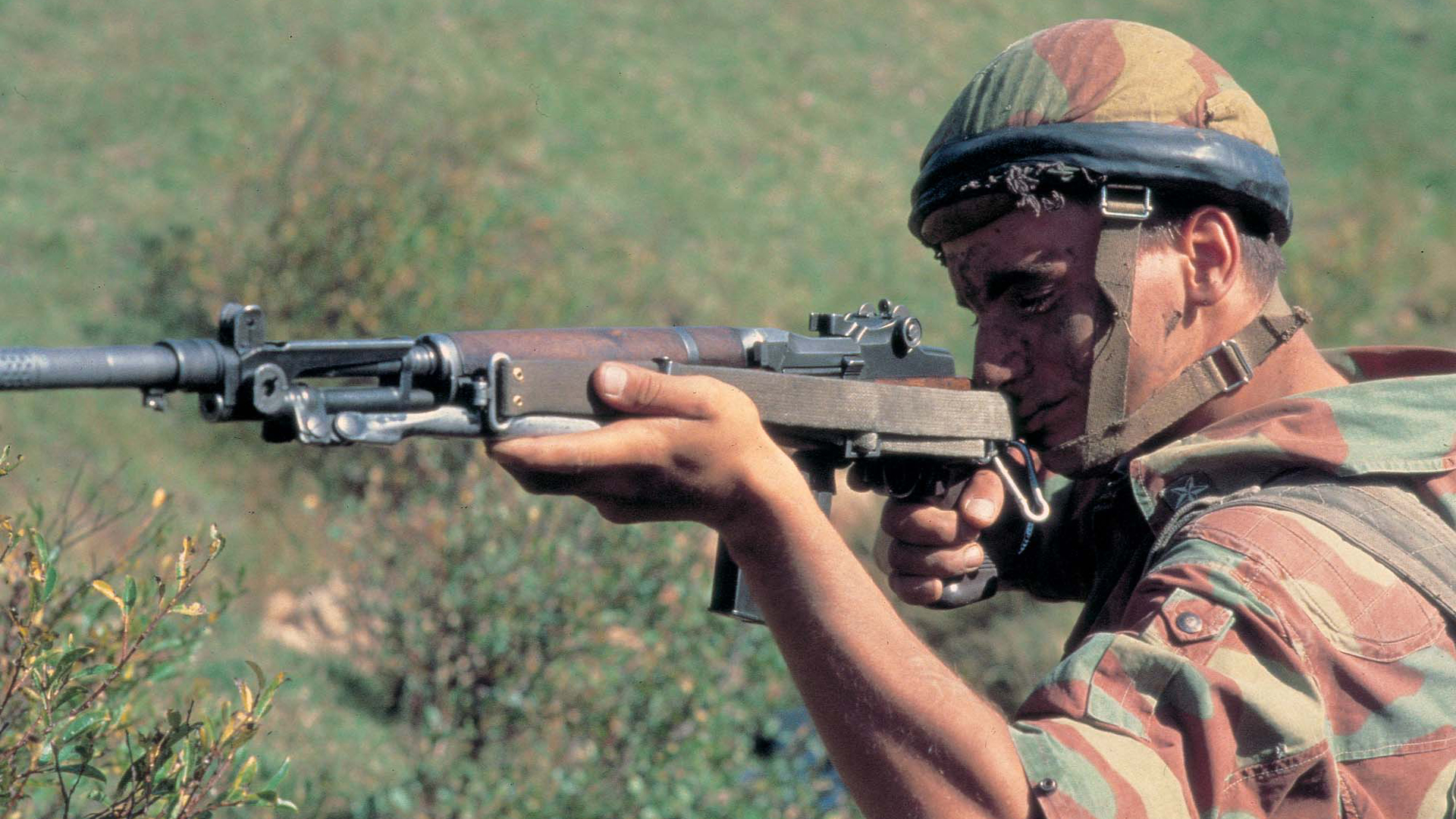
 National Rifle Association