Beriev S-13: The Soviet U-2 That Never Was

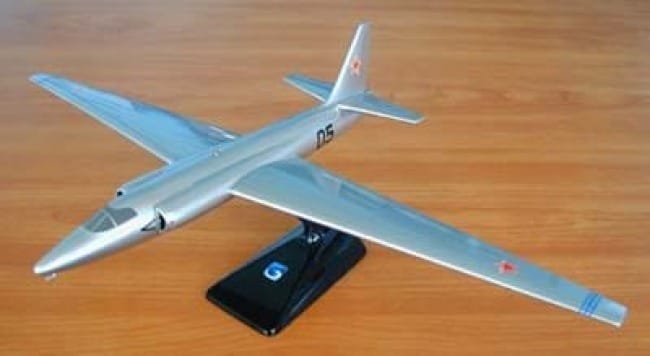
The Soviets easily copied American technology for many things, the space shuttle Buran, for example, or the Tupolev Tu-4. But not every piece of American equipment could be copied by a corrupt, authoritarian regime. Today, we will be looking at the Soviet Union’s failed attempt to copy the American Lockheed U-2 spy plane.
Reconnaissance was a big part of the Cold War, and the US certainly had its own plane for that mission. The Lockheed U-2, nicknamed “Dragon Lady” by its pilots, first flew on August 1, 1955. And its service ceiling was 80,000 ft (24,000 meters), which was, for its time, the highest that the US military could make it, thanks to German technology that the US had captured after World War II. However, this plane wasn’t fast or stealthy, and that was a problem.
The US had secretly been flying U-2s into Soviet airspace, beginning on July 4, 1956, taking off from Wiesbaden Air Base in West Germany. US intelligence had assumed that the Soviet air defenses couldn’t track the U-2s at such high altitudes. But it turns out, US intelligence was incorrect about the Soviet Union’s air defense capabilities. The Soviets had been tracking the U-2s from the very beginning. And it was only a matter of time before they could bring one down.
On May 1, 1960, in an event that sent shockwaves around the world, a U-2C piloted by Francis Gary Powers, which took off from a base in Pakistan, was shot down over the Ural Mountains, near Sverdlovsk and Chelyabinsk, by an S-75 Dvina missile. The plane had broken up at high altitude while it was descending, and the wreckage was carefully and thoroughly examined by Soviet aviation experts from the State Red Banner Research and Teaching Institute. The search was conducted by Georgy Beriev from the Beriev Design Bureau, and the technology and materials they found provided them with information about alloys and metal processing methods.
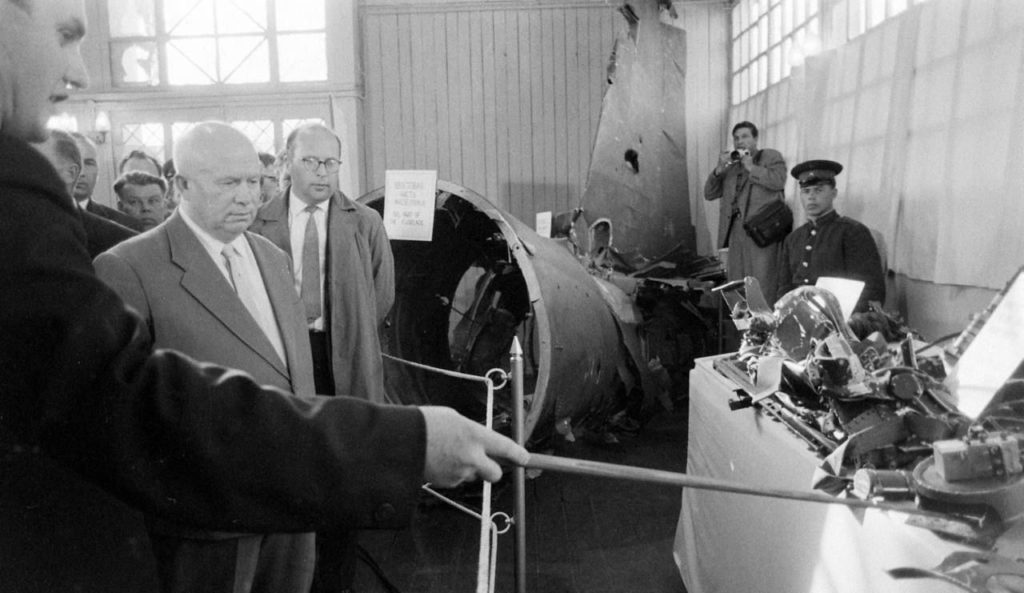
After examining the wreck, the Soviets now had critical information on metals and technology. And they knew they couldn’t beat the U-2, so they simply chose to copy it. On June 28, 1960, the Council of Ministers of the Soviet Union voted to have the plane and its Pratt & Whitney J75-P-13 engine to be reverse-engineered. This led to a copy of the engine, which was designated RD-16-75 and was built in Kazan.
And on August 23 of that year, after taking into account the proposals of the Ministry of Defense and the State Committee for Aviation Technology, the Council of Ministers issued Resolution No. 918-383, "On the reproduction of the Lockheed U-2 reconnaissance aircraft based on the surviving remains and materials of the downed aircraft,” and five pre-production planes, designated S-13, were ordered. Two of which would be made available to the Soviet air force after flight trials in the first quarter of 1962, which was a particularly tight deadline.
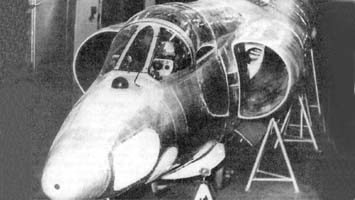
On April 1, 1961, the fuselage of the first S-13 was completed at the Taganrog city production plant, although some sources say that the fuselage was actually a full-scale mockup rather than the actual thing. Though it is true to say that the resemblance to the U-2 was striking, even though the S-13's air intakes were larger. Nevertheless, by July 1 of that year, the aircraft's working drawings were complete. But before the new aircraft could have its first flight, things took a turn for the worst.
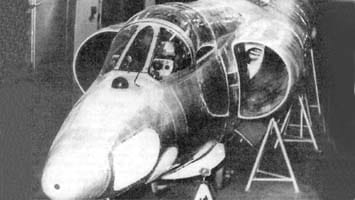
Not even a year later, all work on the S-13 was stopped, seemingly out of nowhere, by government resolution No. 440-191 on May 12, 1962, on the basis of the thought that if the Soviets could shoot down a U-2, the Americans could definitely do the same to a Soviet equivalent. Not only this, but the Soviet space program had proved that satellites could more reliably provide information as opposed to spy aircraft. And no S-13 was ever completed.
But in the end, not all hope was lost in this quest for a Soviet U-2. Later Soviet aircraft, like the Tupolev Tu-104 were equipped with technology that was copied from the U-2, like the gas generator from the U-2's jet engine.
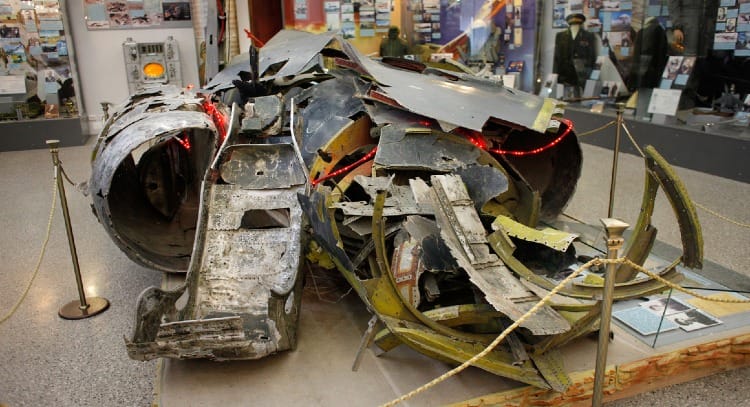
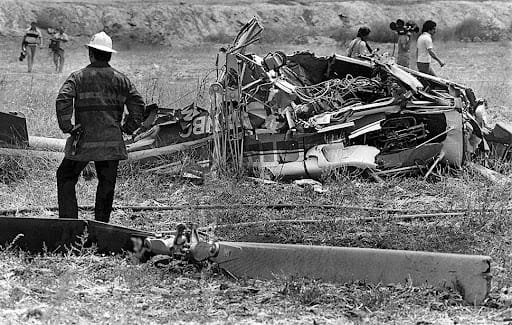
As for the downed U-2, the wreckage is still on display, along with Powers’ uniform, at the Central Armed Forces Museum in Moscow, Russia. And as for Francis Gary Powers himself, he survived the crash but was captured by Soviet authorities and sentenced to 10 years for espionage. He served 21 months of this sentence, from September 9, 1960, to February 9, 1962, before being exchanged for captured Soviet intelligence officer Rudolf Abel in a prisoner swap. He was later killed in a helicopter crash in Los Angeles on August 1, 1977.
Do you wish that the S-13 had made it to fruition? Do you think it could successfully compete against the U-2? Leave a comment!
Sources: Airspot.ru, Airwar.ru, SimplePlanes, Auto Evolution, AviationMilitaires.net





 Matthieu GALLET