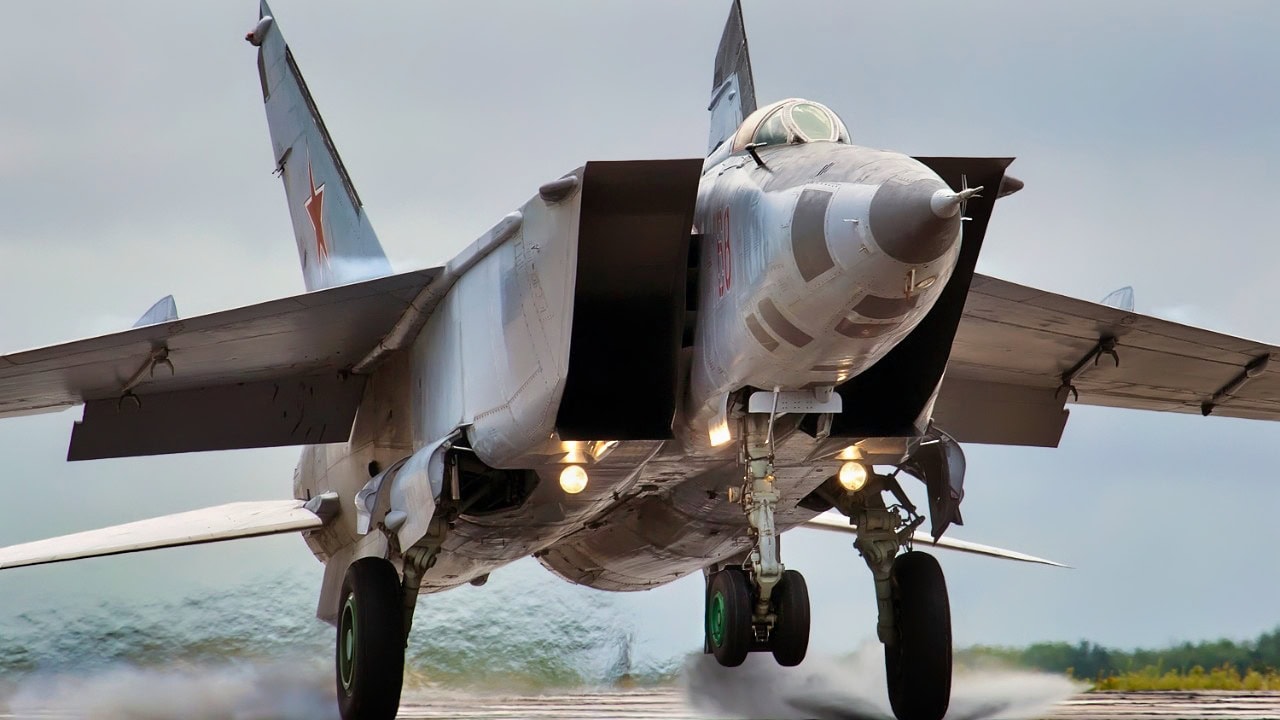
Opinion: The Mikoyan-Gurevich MiG-25, Redesigned and Improved


In this article, we will discuss what could’ve been improved with the best technology at the time, which is 1964. Reimagining the Foxbat with technology, even of the period, unlocks a slew of performance, avionics, and mission-flexibility upgrades. Below is a focused breakdown of achievable improvements, using only materials, subsystems, and design philosophies available to the Soviets during the 1960s.
In this alternate scenario, Soviet intelligence has learned that the North American XB-70 Valkyrie is not being produced, so they change the MiG-25 to intercept reconnaissance aircraft, though the MiG-25 can still hold its own in combat as a fighter. It is meant to face anything the Americans throw at the Soviets.
Airframe and Materials
Let's begin here. Since the Soviets don’t need as many MiG-25s as previously thought, production numbers have been drastically reduced. As such, exotic materials like titanium alloys can be used for large sections of paneling, instead of having to make do with heavy steel and aluminum. This means that the MiG-25 won’t weigh a staggering 44,090 lbs. (20 metric tons). Use of titanium will cut this weight by up to 15%, and it will also retain high-temperature strength. In addition, use of this material will lower the radar signature, albeit slightly, because the panels are thinner and more precise.
Moving into the wings and tail, we can assume that, if ceramic-based leading edges were installed, that would better withstand the heating that would take place on the nose and wing roots at Mach 2.8 and above that. Not only that, but to optimize the wing planform, engineers would increase the aspect ratio very slightly (as in by only 5-10%) to improve high-altitude cruise efficiency. Leading-edge root extensions (LERX) would be used for better off-boresight maneuvering. It should also be worth noting that the wingspan was above average just so that the jet could be airborne, because it was so heavy. With the improved version, the wingspan is kept the same, so that maneuverability is increased.
Power Plants and Performance
For those unaware, the Tumansky R-15 is a jet engine that was originally built to power cruise missiles and reconnaissance drones. And the engine was simply put onto the MiG-25, without any re-engineering, though the MiG-25’s engines are designated R-15B-300. But here, it is entirely re-engineered to be fitted onto an aircraft of this type, to be more reliable, and exceed Mach 3. The new engine is based on the R-15 core, but most everything else is redone. One such improvement is the addition of variable-area convergent-divergent (CR/DR) nozzles. Another improvement, which is not necessarily related to the engines, is the incorporation of an air-to-air refueling probe for extended loiter and intercepting abilities.

Avionics and Sensors
One of the biggest flaws with the original MiG-25 is that its radar was powerful, but it lacked look-down capabilities, meaning it couldn’t track low-flying targets. In the theoretical improved version, however, an upgrade from the “Smerch” radar to a digital pulse-Doppler set allows for better look-down/shoot-down capability. New electronic counter-countermeasure (ECCM) features make the radar more resistant to jamming. An infrared search and track (IRST) sensor pod would also be integrated, which makes detection beyond 50 km possible, and makes it possible for missile cueing against low-RCS targets. Even after all this, a basic digital flight computer and early fly-by-wire for pitch augmentation would stabilize the aircraft at high altitude and above Mach 1, as well as improve handling in dogfighting situations.
Weapons and Mission Flexibility
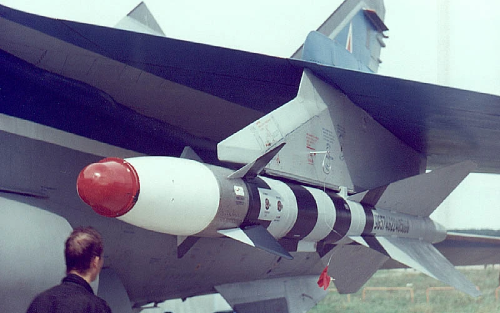
The original MiG-25 used R-40 missiles. For this scenario, improved R-40TD and R-40RD missiles, with newer seekers and less drag, will be fitted on. There would also be additions of under-fuselage hardpoints for short-range air-to-air missiles, like the R-60, as well as additional fuel tanks. And the new MiG-25’s arsenal would be upgraded beyond missiles. Provision for tactical air-to-ground stores for free-fall munitions or rocket pods would widen the range of weapons the MiG-25 could afford. On top of this, a twin-seater training version, dubbed the “Foxbat-B,” would be made for instruction on advanced weapons.
Aerodynamics and Stealth Considerations
To delay spanwise flow at high alpha, engineers would have installed boundary-layer fences. They also would have applied radome shaping and route Adherence Monitoring (RAM) paint in key areas to lower radar cross section (RCS). The enormous air intake ramps would have been refined for more precise Mach-dependent mass air flow. Small canard surfaces near the nose would also be added for pitch control at high altitudes.
Cockpit and Human Factors
The MiG-25 wasn’t known for being high-tech. As such, it didn’t use displays or anything like that. All it had were analog gauges. It was actually possible, even at the time, for multifunction displays to be put into military planes. Multifunctional display (MFD) clusters were also rare in American fighter jets at the time, aside from the General Dynamics F-111 Aardvark, which entered service in 1967. But, for the sake of this article, and the fact that the Soviets won’t build more than 150 aircraft, we’ll be very generous and say that the MiG-25s here are equipped with MFDs, along with early HUD for weapons cueing and flight data. The cockpit could also use improvements, like pressurization and conditioning for sustained Mach 3 flight. There could also be ergonomic seating and leg-support structures to ease G-tolerance.

So, what did we take away from this?
Well, here are a few things: first, the Soviets wouldn't have made the MiG-25 the original way (maybe even at all) if their intelligence system was good enough to discover that the XB-70 wasn't being made. So, for that, we learned that a good intelligence system is a must for any country.
Second, we’ve seen how weight reduction, via titanium and ceramics, boosts agility and range. We’ve also seen that engine evolution to a low-bypass turbofan improves fuel economy and thrust, that digital avionics deliver true look-down/shoot-down and situational awareness, that expanded weapon loads make the Foxbat a credible multi-role asset, and that stealth & aerodynamics tweaks shrink its signature and enhance maneuverability.
Had these improvements come to fruition, they may have helped to make the Mikoyan MiG-31 even better. But that’s a whole other topic, and one which won't get its own article.
Are there improvements to the MiG-25 that you think should have been put in place? Do you think the MiG-25 would be more capable with these improvements? Leave a comment!
Sources: Mustard (YouTube channel), 19FortyFive
 Harry Kazianis