That Time the Soviet Union Tried to Join NATO

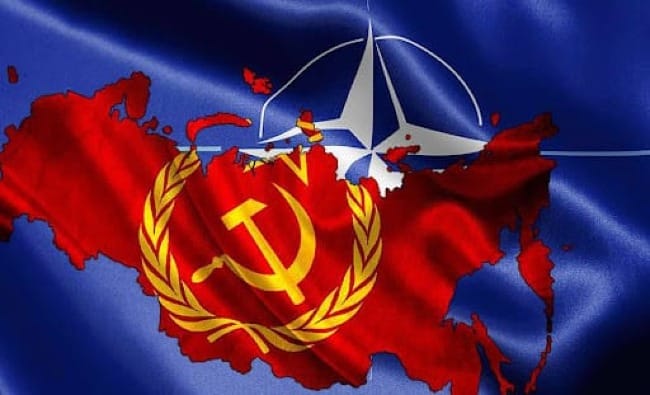
It’s March of 1954. Castle Bravo, the largest nuclear warhead made by the United States, has been detonated in the Pacific Ocean. The Cold War between the two superpowers is in full swing. The North Atlantic Treaty Organization military alliance, or NATO, protects 12 Western countries who had defeated Nazi Germany nine years prior, and the soon-to-be Warsaw Pact will keep 8 eastern European countries on the communist side of the Iron Curtain a year later. So, you’d think that the Soviet Union, the mastermind of the communists, would be against joining NATO more than anyone else. But you’d be wrong.
At this time, Joseph Stalin had died on March 5 of the previous year. Nikita Khrushchev was now the premier of the Soviet Union, and it is worth noting that NATO itself was not too much older than the Soviet Union's atomic weapons. But that didn't stop the Soviets from trying to do the last thing that most anyone expected them to do.
Outright bitterness wasn't prevalent in the immediate aftermath of Nazi Germany's defeat and surrender on May 7, 1945. But it is true to say that tensions between the Eastern and Western parts of Europe began right away, if not beginning before the war's end in Europe. By the time of the Nazi defeat, the Soviet Union had a large number of troops spread out across the eastern part of the European continent, despite suffering up to 27 million combined military and civilian deaths in the war. Communist puppet governments had been installed in Poland, Czechoslovakia, Bulgaria, Romania, Hungary, and East Germany, and these countries, along with the Soviet Union, will form the Warsaw Pact on May 14, 1955. NATO would protect the Western part of Europe safe beginning on April 4, 1949, and that frustrated the Soviets even more. Tensions reached a new high when the Soviets detonated their first nuclear weapon in Kazakhstan on August 29, 1949. From this point until the fall of the Soviet Union in 1991, the world was locked what would one day be called the Cold War.
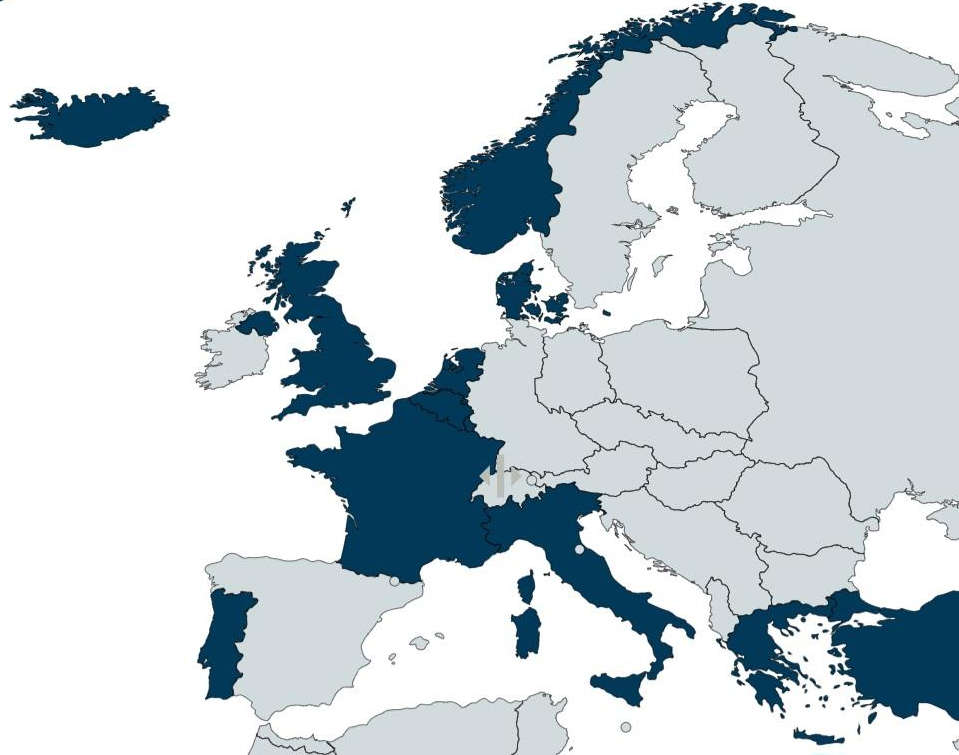
One reason the Soviets sought NATO membership was because of West Germany. The Soviets actually feared a rearmed West Germany and didn't want them to join any military alliance. On top of this, the Soviets wanted global influence and control. And for them, several other European countries had already fell into this category, having become members of NATO. So, the Soviets advocated for Germany to be reunified under a neutral, demilitarized government. The Western powers denounced this, as they feared it would put Germany under the communist sphere of influence, which was understandable, since most of eastern Europe was now under communist control.
On April 7, 1954, a new proposal was discussed at the North Atlantic Council in Paris, France. The Foreign Minister of the Soviet Union, Vyacheslav Molotov, presented the idea that a European agreement on security could be established, with the United States being excluded because it is not in Europe. (Though the US could remain an observer, along with the newly communist China). The Western powers rejected this deal, saying it would disrupt NATO. In response, Molotov altered the proposal by giving the US the opportunity to join the alliance, on the condition that the Soviet Union was given NATO membership. This request was sent to France, the UK, and the US. This offer was also turned down, in a joint statement from the three powers calling it "completely unreal." Also in the note was the statement that NATO was created on the principles of liberty and the rule of law. The three powers also told the Soviet Union not to prevent the United Nations from using its global security functions in accordance with its Statute. At the same meeting, the Danish representative stated that the establishment of NATO was in response to the failures of the United Nations to oversee international security following World War II. Most people at the meeting likely remembered the Korean War of 1950-1953, when the Soviet Union and Communist China fought against the Western powers.
The Danish representative also said that the Soviet government contributed to this failure by abusing its veto power in the United Nations Security Council. Other representatives also affirmed this view. The representative of Italy said that since NATO's decisions must be unanimous from different countries, the Soviets could have used their veto power to cripple the organization, and the organization would have become just as defective as the United Nations. The other representatives also denounced Moscow's effort to fight against the participation of West Germany in European defenses.
In the end, the Soviet Union's efforts to prevent West Germany from joining any military alliance fell through, as West Germany, which had undergone thorough denazification, became a NATO member on May 6, 1955, almost ten years to the date after Nazi Germany surrendered to the Allies. Only eight days later, however, the Soviets and their eastern European satellite states created their own military alliance, the Warsaw Pact. This alliance would divide Europe and keep the eastern European countries under Soviet control until 1990. And the next year would see the collapse of the Soviet Union on December 26, one day after Mikhail Gorbachev resigned as leader.
Did you least expect the Soviets, of all, to ask to join NATO? Leave a comment!
Sources: Wilson Center, Release Peace, Military.com, Euromaidan Press
 Geoffrey Roberts
 Blake Stilwell
https://euromaidanpress.com/2017/03/31/why-did-soviet-union-fail-to-join-nato-in-1954/