The Banana-Smoking Hoax of 1967. Yes, You Read That Right
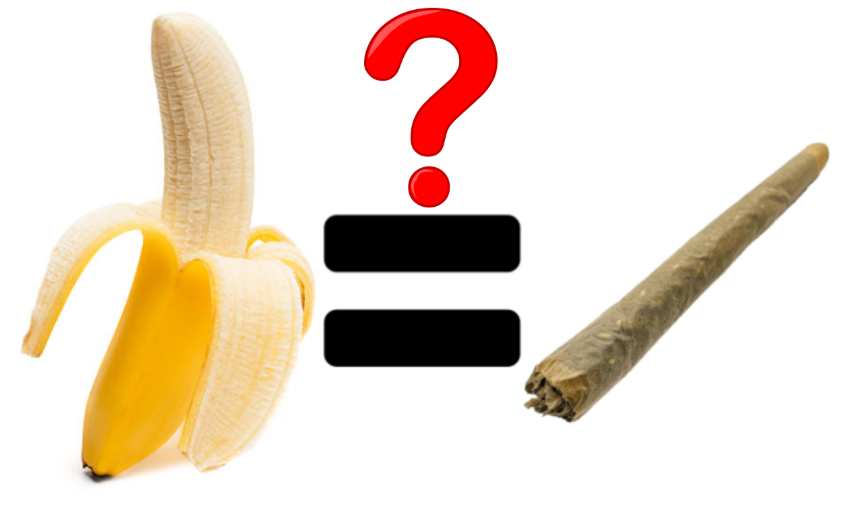
People have always tried to find new ways to get high. There are drugs, legal or not, like marijuana, peyote, and psychedelic mushrooms (among others) which will do the trick. They have been used in cases of medicinal, recreational, and holistic purposes since ancient times. But in a non-ancient time known as 1967, it was falsely considered a way to get high by smoking banana peels. While the whole thing was eventually proven to be false (which may have led to some disappointed hippies), the craze happened, nonetheless. Let's have a look at it.
Disclaimer: Do not attempt any of these methods of drug induction. These methods will, at the very least, not work. At the worst, these methods of drug induction could go very wrong and lead to serious consequences, from a legal or nutritional standpoint. It is worth noting that bananas do, in fact, contain a small amount of serotonin, a hormone regulating mood, the amount is too small to have any real effect on a person. So don't get any bright ideas from reading this article.
The date is March 17, 1967, and the weekly underground newspaper The Berkeley Barb published an article that differed greatly from the "above ground" papers, which were covering things like the Vietnam War, the racism of the time, and rebellious youth. The article involved a fictitious recipe to prepare the peels for smoking, which said to start by freezing the peels, blending them into a pulp, baking the residue at 200 degrees Fahrenheit, and then smoking the result from a cigar or pipe, which was claimed to produce a drug effect similar to THC, the active ingredient in marijuana, which was also becoming popular around the same time.
A few months prior, the song "Mellow Yellow" by Scottish singer-songwriter Donovan was making its way to the US charts, and many erroneously assumed it was about smoking the banana peels. Donovan later said that the song was actually about a yellow vibrator, but it didn't help that the lyrics say things like "electrical banana is going to be a sudden craze, electrical banana is bound to be the very next phase." And that's not the only way music makes its way into this hoax. The hoax even inspired the stage name of the late musician David Peel.
But the article by the Berkeley Barb is what caused the hoax to gain momentum. The fictitious method of smoking the banana peel residue was written by writer Ed Denson under the column "Folk Scene." Denson claimed that he heard from the recipe from a band he managed, Country Joe and the Fish. Lead singer Joseph "Country Joe" McDonald claimed to have been one of the people behind the craze, saying he gave out 500 banana joints at one of the band's concerts. In the same issue, a letter from a reader claimed that there was an increased police presence in Berkeley around a banana fruit stand, which fueled the hoax even more.
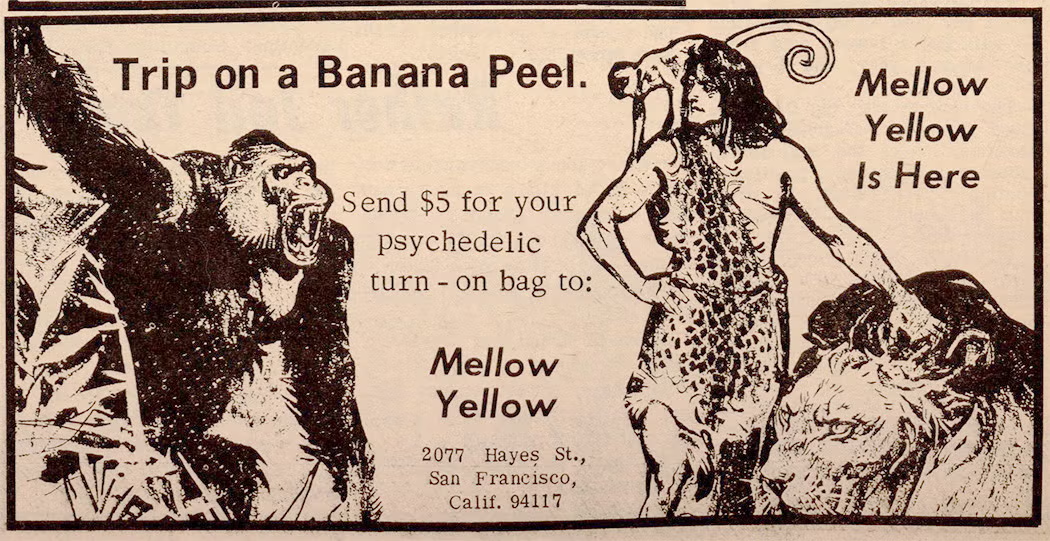
The Berkeley Barb continued to talk about the fictitious effects of banana peels, running stories titled "Pick Your Load, Banana or Toad" and "Mellow Yellow Future Bright," the latter of which contained absurd claims around the chemicals found in banana peels which gave psychedelic effects. Other small magazines were now gorging on the story, as well as running advertisements for "banana-based psychedelic turn-on bags" and other related merchandise. By the end of March, big-name papers like The New York Times and The Wall Street Journal began reporting the events. Before long, Mellow Yellow (the fad, not the previously mentioned song) was on the scene.
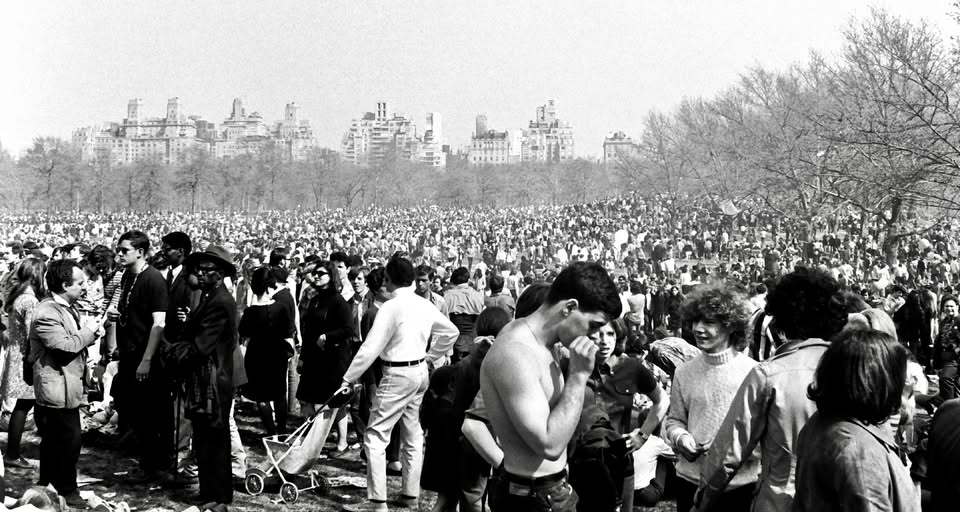
In one of the biggest events of the hoax, on Easter Sunday, 1967 (which fell on March 26), a Human Be-In event was attended by around 10,000 people in New York City. According to the paper New Left Notes, which was run by the Students for a Democratic Society organization, cameramen were anxious to film a "banana deity and its followers." Instead, followers reportedly waved Chiquita emblems, gave the banana pledge ("one nation, under banana, with liberty and justice for all") and the banana salute, which was your middle finger up and bent. In August of 1967, a banana was featured at a demonstration for the legalization of marijuana.
By this point, the scientific community and even the government got involved. The Food and Drug Administration actually set up a machine that, essentially, smoked banana joints for three straight weeks. By May of 1967, they concluded what many people had already discovered months before: banana peels don't get you high. In November 1967, researchers at New York University proved that bananas aren't drugs. Despite both of those studies, the myth went on. For up to a few years afterwards, smoking banana peels actually continued to be popular in hippie circles, though it was mostly a gag. Reportedly, the last time the myth was fooling anyone was at the Woodstock Music and Art Fair of 1969. But even then, the myth refused to go away.
In The Anarchist's Cookbook, published in 1970, author William Powell included a recipe for reducing banana peel scrapings into a powder. He said that bananas contained something called "bananadine," which is where bananas got their psychedelic effects. But since "bananadine" doesn't exist, this was also untrue.
Though this tale serves as a reminder of the dangers of silly drug fads from the 1960s, the banana myth spilled over into the 21st Century. In 2013, several inmates at a Maine county jail got caught smoking banana peels. And administrators claimed the problem had been persistent for months. Although it's completely ludicrous to think that banana peels can get you high, the tale still serves to remind us that false information can spread very quickly thanks to untrustworthy news sources. This is especially true today, unfortunately. And even major news outlets aren't immune to bias and misinformation.
Did you expect a food item to be considered a way to get high? Leave a comment!
Sources: JSTOR Daily, Gastro Obscura
 Jonathan Aprea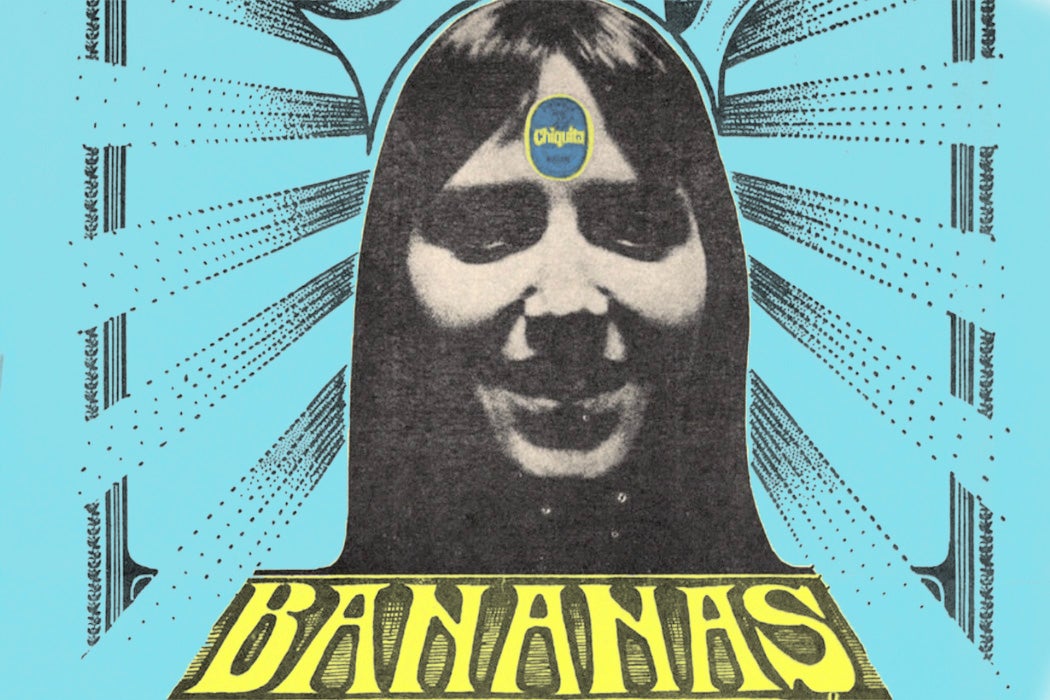
https://www.atlasobscura.com/articles/smoking-banana-peels-1960s-donovan-mellow-yellow-hoax