The Most Twisted Soviet Science Experiments Ever

While the Russian sleep experiment is just a creepypasta (or legend circulating around the internet), these experiments were unfortunately not. If you thought American scientists were crazy at certain times (and, being honest, they have been), it’s nothing compared to these experiments, which could easily pass for being from a science fiction novel. Even Dr. Frankenstein may look normal compared to these. Please be aware, some may find these experiments disturbing (and rightfully so). Also, just a note, Laika will not be featured on this list, because even that pales in comparison to these.
Weather Control

OK, we admit it. This isn’t a Soviet-only thing. The Americans and British had been dabbling in this kind of thing as well. But let’s start off with this one because it’s pretty light compared to what comes next. The Soviets invested significantly in weather modification research and operations. This was mostly an ill-fated way to reduce precipitation for a holiday. May 1 was, for the Soviets, International Workers' Day. As such, they wanted to prevent rain from falling that day. They spent the equivalent of $1.3 million for a single contractor to use a technique called "cloud seeding." This is where various chemicals are launched into the sky in attempt to cause precipitation earlier than normal, the idea being that rain can be forced out of different places at different times, leaving other areas unaffected. It sounds like a load of baloney, (and in this case, it likely is) but weather experimentation is still a very real thing to this day. And although claims of success in weather experimentation today are more modest than they were in 1969, many have reported that the benefits exceed the cost. There was, in 1976, very limited research and, seemingly, only one small-scale agency dealing with weather modification. Research in the then-Ukrainian Soviet Socialist Republic from 1972 to 1975 led scientists there to the conclusion that ice nuclei seeding of cumulonimbus clouds over a certain area caused rainfall to increase by around 30%. It has also been reported that, at the same time, snow from frontal clouds had increased.
Combat Mole
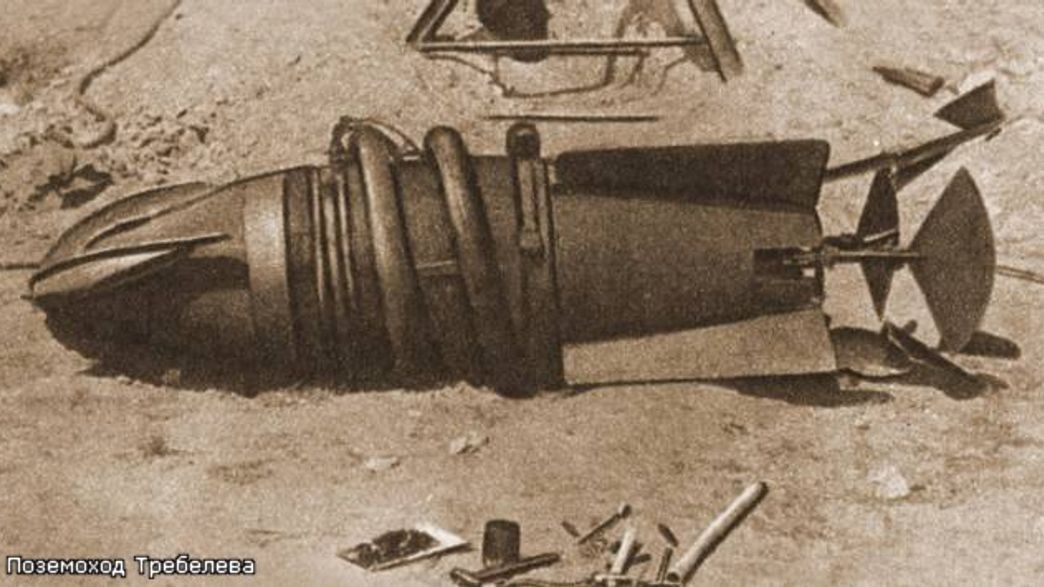
No, this isn’t a rodent that’s been trained to fight in battle. Reminiscent of The Underminer from The Incredibles (2004) and its sequel, Incredibles 2 (2018), the Soviets actually attempted to develop a nuclear-powered drilling machine known as a Combat Mole or Battle Mole. It was a subterre, which is basically a land version of a submarine. Now, these aren’t very common, and for obvious reasons, which is why the Combat Mole was, more or less, a concept rather than an actual vehicle. Nevertheless, it was a Soviet experiment that was worthy of this list.
Human-Chimpanzee Hybrids
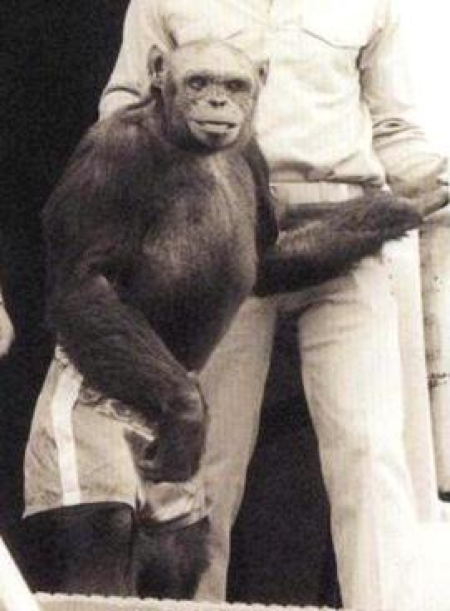
Now we get into the disturbing side of things. In an ill-fated and almost cartoonish effort to create super soldiers, and in one of the most “playing God” experiments ever conducted, scientist Ilya Ivanov, sometimes known as "The Red Frankenstein," conducted several experiments where animal DNA would be spliced together. Some previous experiments were coined "Zedonk" (a combination of a donkey and zebra) and a guinea pig-mouse hybrid. But the most infamous of his experiments was, no contest, this one. Ivanov first put forward his idea at the 1910 World Congress of Zoologists in Graz, Austria. During his presentation, he claimed that one day, it might be possible to cross humans with their closest relatives through artificial insemination. This notion was just speculation at the time. Despite that, he received $10,000 (around $278,000 today) from the Soviet Financial Commission to continue the experiment. While the reason for this experiment is unknown, but Ivanov pitched the idea that he could prove Charles Darwin's theory of evolution once and for all. What is known is that Ivanov inseminated three female chimpanzees with human sperm. But thankfully, none of them got pregnant. You might be asking yourself "what if it was the other way around?" Well, that would be even worse. And it was almost carried out in 1929 but was canceled because Ivanov's last orangutan had died. Not only that, but by this point, the Soviet government had deemed Ivanov's work had simply gone too far. Ivanov was exiled to the Kazakh Soviet Socialist Republic, where he died on March 20, 1932, from a stroke.
Poison Laboratory

The KGB was no stranger to poison. As such, it should come as no surprise that the Soviets had a whole laboratory dedicated to finding nerve agents and the like. Founded in 1921 under the name "Special Office" and renamed "Laboratory 1" in 1939 before being called the "kamera" (meaning cell, as in prison cell), this laboratory was headed by a Soviet biochemist named Grigory Mairanovsky, who rightfully earned the nickname "Doctor Death" from testing their nerve agents on human Gulag prisoners who had been deemed "enemies of the people." To name a few things that the prisoners were subjected to (which the prisoners were told was medication) are ricin, mustard gas, digitoxin, curare, and cyanide, in the name of finding tasteless, odorless poisons that couldn't be detected after death. Mairanovsky himself was later arrested as part of a political campaign by Joseph Stalin. The lab, however, saw numerous days during the Cold War, and it is said that the lab still lives on to this day.
Intermission: If you’re a dog lover (or love animals in general) you should probably turn away from what follows. You have been warned.
Torturing Dogs in the Name of Finding a Nerve Agent
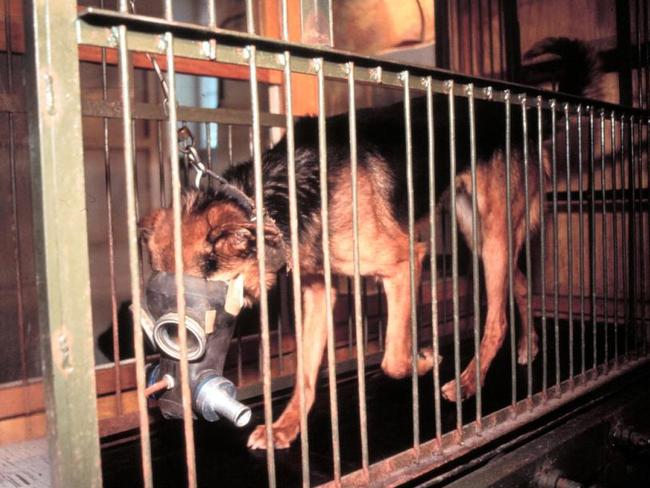
The attack on Sergei Skripal and his daughter Yulia in Salisbury, UK in 2018 had a far more disturbing backstory. Soviet and Russian scientists have notoriously experimented on and killed thousands of dogs in an effort to find the perfect nerve agent. In many experiments, the dogs would be forced to run on treadmills while wearing gas masks until they died from exposure to the Novichok agent. The experiments mainly took place in a compound in Uzbekistan until being shut down in 1992. And if you thought this is bad (in which case, you'd be correct), at least those dogs got to remain in one piece. Because...
Reviving a Dog's Severed Head
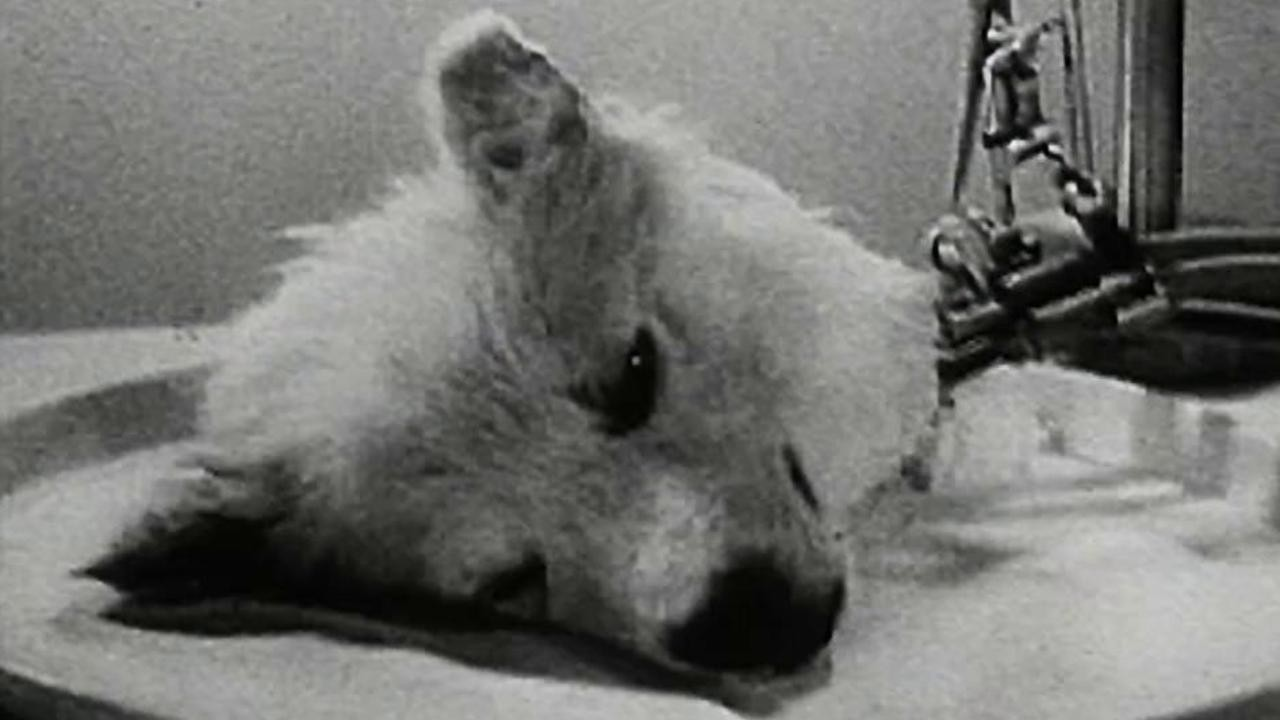
A disturbing documentary titled "Experiments in the Revival of Organisms" was made in 1940 to showcase some research that Soviet scientists had conducted to find a way to revive "clinically dead" animals. The lead scientists, Sergei Brukhoneko and Boris Levinskovsky subjected a few animals to a series of tests in the documentary. To begin with, they surgically removed the heart from a dog and connected the heart to some apparatuses, which the heart pumping blood outside the dog's body. The machines were then hooked up to the dog's head, returning blood circulation. This seemingly brought the dog's head back to life, though it was reported that the head only survived for a few minutes. But brace yourself. Yes, it gets worse...
Two-Headed Dog
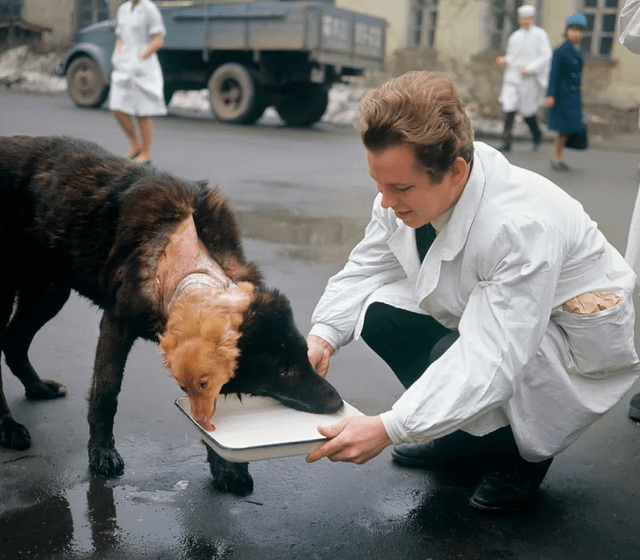
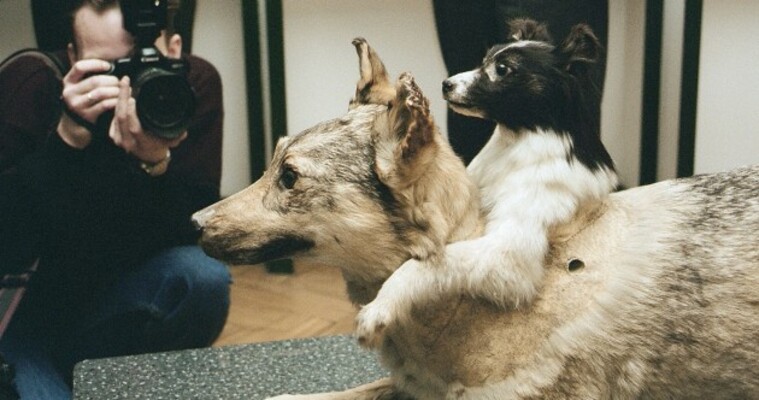
And now, we've saved the worst for last. Likely the most disturbing thing on this list, this heinous experiment was conducted by Vladimir Demikhov, who is, arguably, one of the only people ever to properly be described as a mad scientist. Over 20 years, Demikhov created at least 20 two-headed animals in his laboratory. In one such case, the protruding dog head would drink water, and the water would spill down the neck of the host dog. This didn't mean, however, that the protruding dog was malnourished, since it got its nutrients from the host dog. It was also said that both heads slept and awoke at different times, though none of the dogs survived over a month. Some of the dogs' bodies are still on display, with one such example calling the Museum of History of Medicine in Riga home since 1988.
Which of these experiments was the worst of all in your opinion? Leave a comment!
Sources: ScienceAlert, News.com.au, Jalopnik, History of Yesterday, The Guardian, American Meteorological Society, Weird Historian, thejournal.ie, IFL Science,
 David Nield
 Jason Torchinsky
 Andrei Tapalaga
 Luke Harding
 Marc Hartzman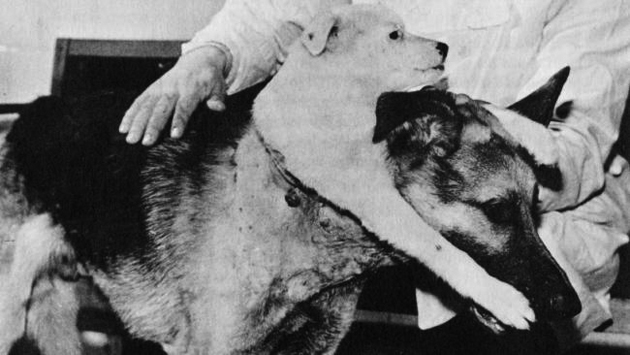
 Sinead O’Carroll