This Confederate Submarine Sank Three Times

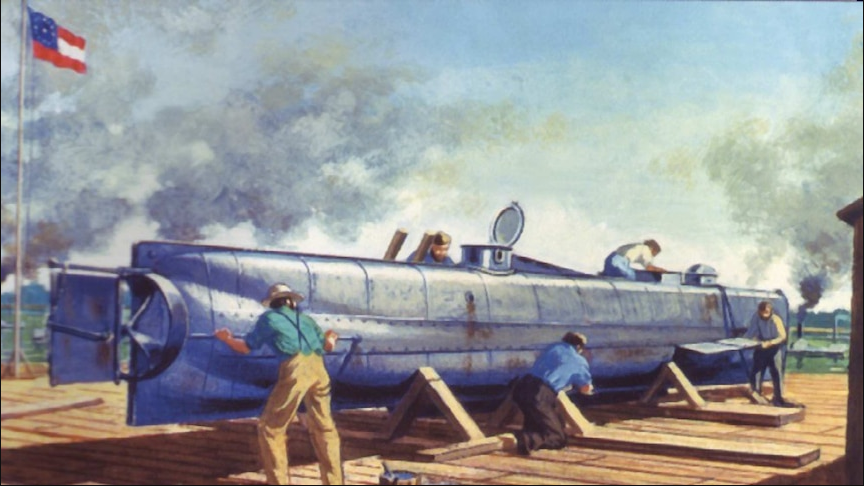
When a submarine sinks once, it’s usually a total loss, and the wreck is usually unsalvageable. You also may think of the Confederate Navy as being inferior to the Union Navy, given that the Union won the Civil War, but on both accounts, that would be incorrect. Today, we will be looking at the service life of the HL Hunley, a Confederate Navy submarine which had a service life that, if you ask me, should be made into a movie. But let's start with an article first.
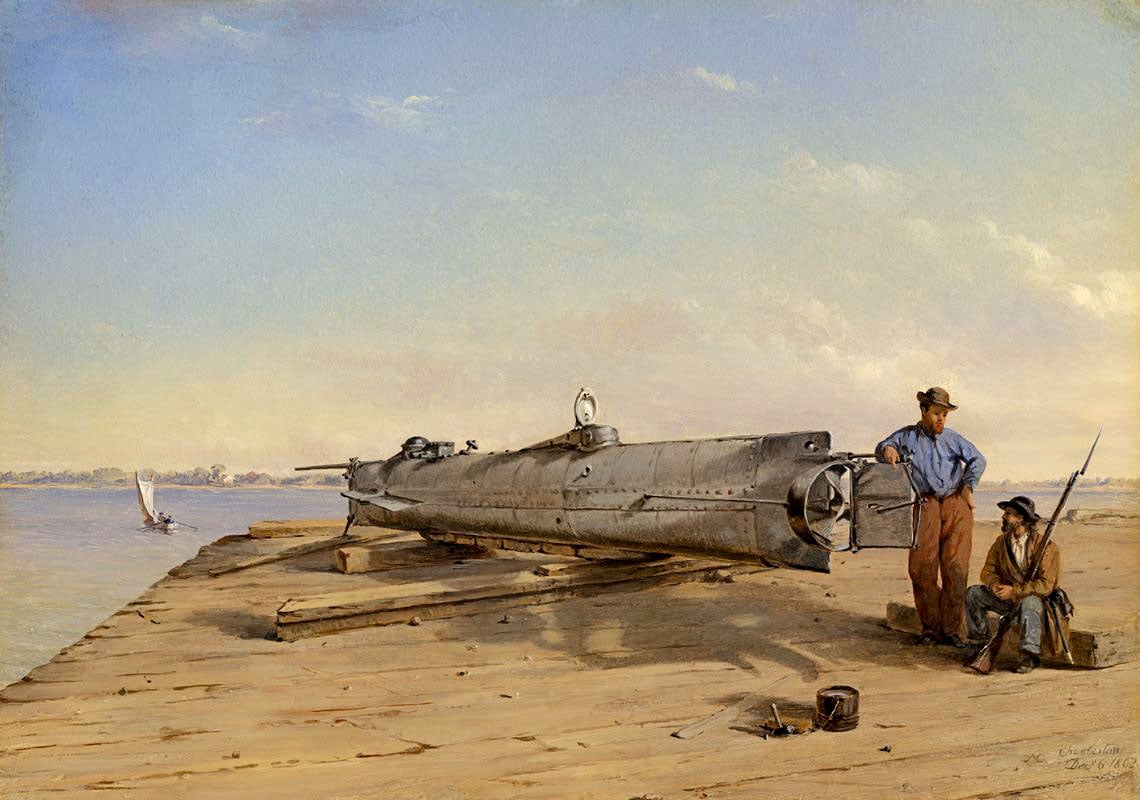
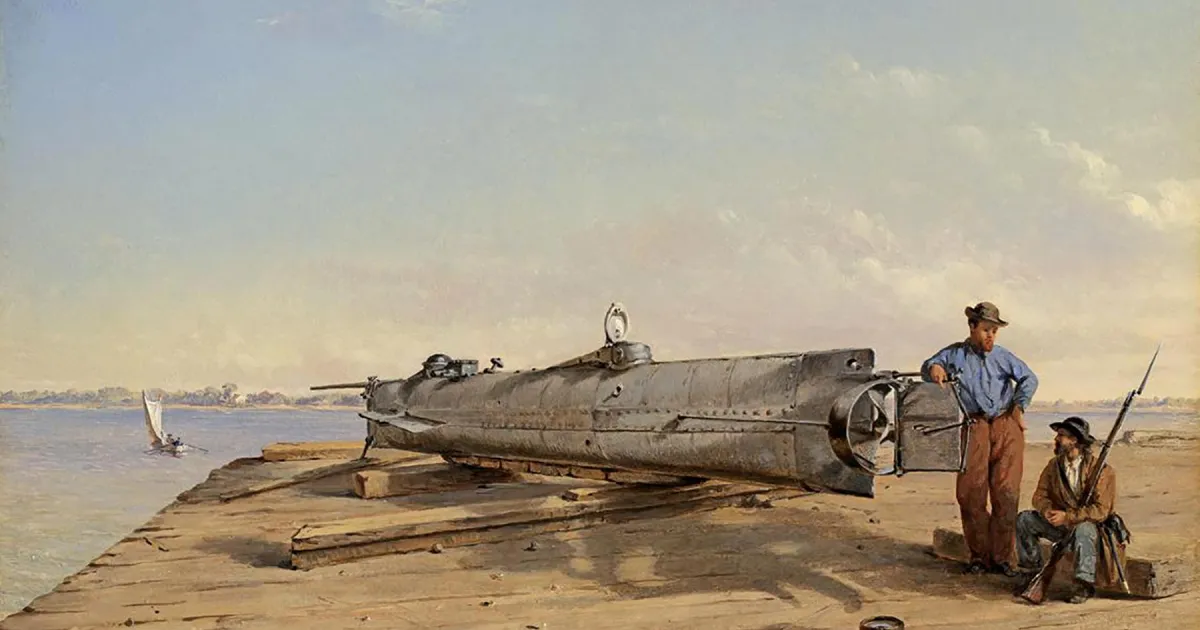
The American Civil War's height was reached in 1863, with Lincoln's Gettysburg Address, the Emancipation Proclamation, and the Battle of Gettysburg taking place that year. And that's just on the Union side. On the Confederate side, many things were taking place, but one such thing that often gets overlooked is the construction of a combat submarine which would be known as the Hunley (later the HL Hunley). The 13-meter (40 feet) long submarine was named for the financier who funded its construction, Horace Lawson Hunley (1823-1863). Made from iron and powered by a hand-cranked screw propeller, this vessel became the first submarine to sink a warship during wartime. But that's not without a slew of problems. But before we discuss those, let's look at its background and construction.
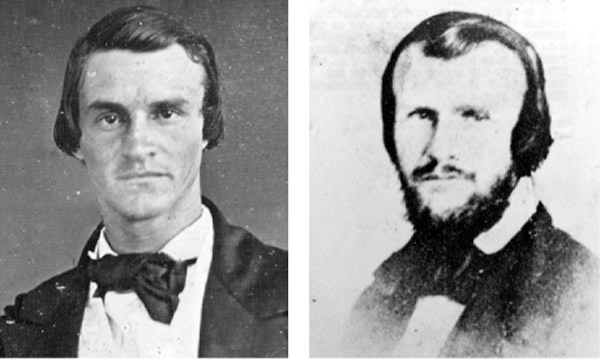
Horace Lawson Hunley provided $15,000 in funds (around $480,000 adjusted for inflation) for the project to shipbuilder James McClintock, who built three submarines. One was known as the Pioneer, and that submarine was made in New Orleans. Two others, the American Diver and the Hunley, were also made. The Pioneer was first tested in the Mississippi River in February of 1862. More trials were supposed to take place, but because the Union advanced on New Orleans, the submarine was scuttled. As such, Hunley and everyone else involved moved operations to Mobile, Alabama. Once there, the American Diver was constructed. The group was also working with electric and steam propulsion systems but decided to keep using hand-cranked propellers. The American Diver was then taken to Mobile Bay in late February 1863 to fight against the Union Navy, but it sank in unstable water during a storm. The submarine was never recovered.
While the American Diver was a loss, that didn't stop work from happening on a new submarine, this time named for Horace Lawson Hunley. The submarine's hull measured only 4 feet 3 inches (129.54 cm) tall, and it required a crew of eight; seven being used for turning the propeller and one to pilot the submarine. After its completion in July of 1863, it began a trial at the Theater Street Dock in Mobile Bay, this time to a success. After its trial, the submarine was shipped by rail to Charleston, South Carolina, where it arrived on August 12, 1863. It is worth noting that, from this point until its final sinking, it would be rebranded as the CSS Hunley and would serve in the Confederate military, despite never being commissioned into service.
On August 29, 1863, an accident occurred when the submarine was about to make a dive. It submerged with its hatches open, and the submarine sank in Charleston Harbor. How it submerged this way is disputed, but two possibilities exist: either a passing ship's wake flooded the open hatches, or the submarine got tangled in mooring lines and was pulled under. Either way, the submarine sank for the first time, and it killed 5 of the 8 crew members. The submarine wreck was raised, repaired, and returned to service. However, on October 15, 1863, the Hunley went under again after going down during a mock attack and not resurfacing. And this time, the sinking was worse. Not only did all hands go down with the submarine, but one of those was Horace Lawson Hunley himself. Hunley was 39 years old. Despite even that, the submarine was raised for the second time.
This time, things get interesting, because the Hunley was equipped with armament. Originally, it was planned to have a torpedo. While torpedoes wouldn't be invented until 1866, the term had been used since 1800 to describe floating mines. So, the Hunley had to use another weapon instead. An explosive charge was designed to be towed behind the submarine and then attach to the ship's hull and detonate at a time late enough for the submarine to escape. This idea was abandoned on the basis that it was too dangerous. A spar torpedo was attached instead. A spar torpedo works in one of two ways: the torpedo would either be rammed into the side of the ship and detonate as the submarine pulled away or electronically on impact.
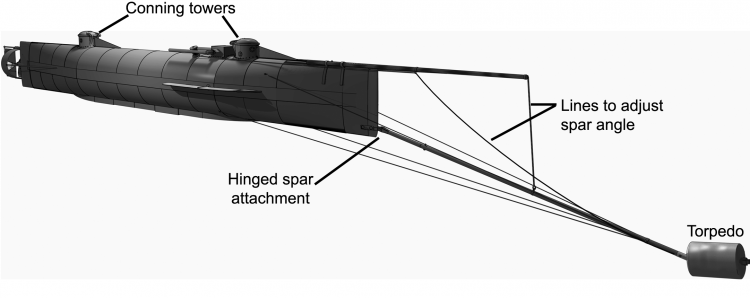
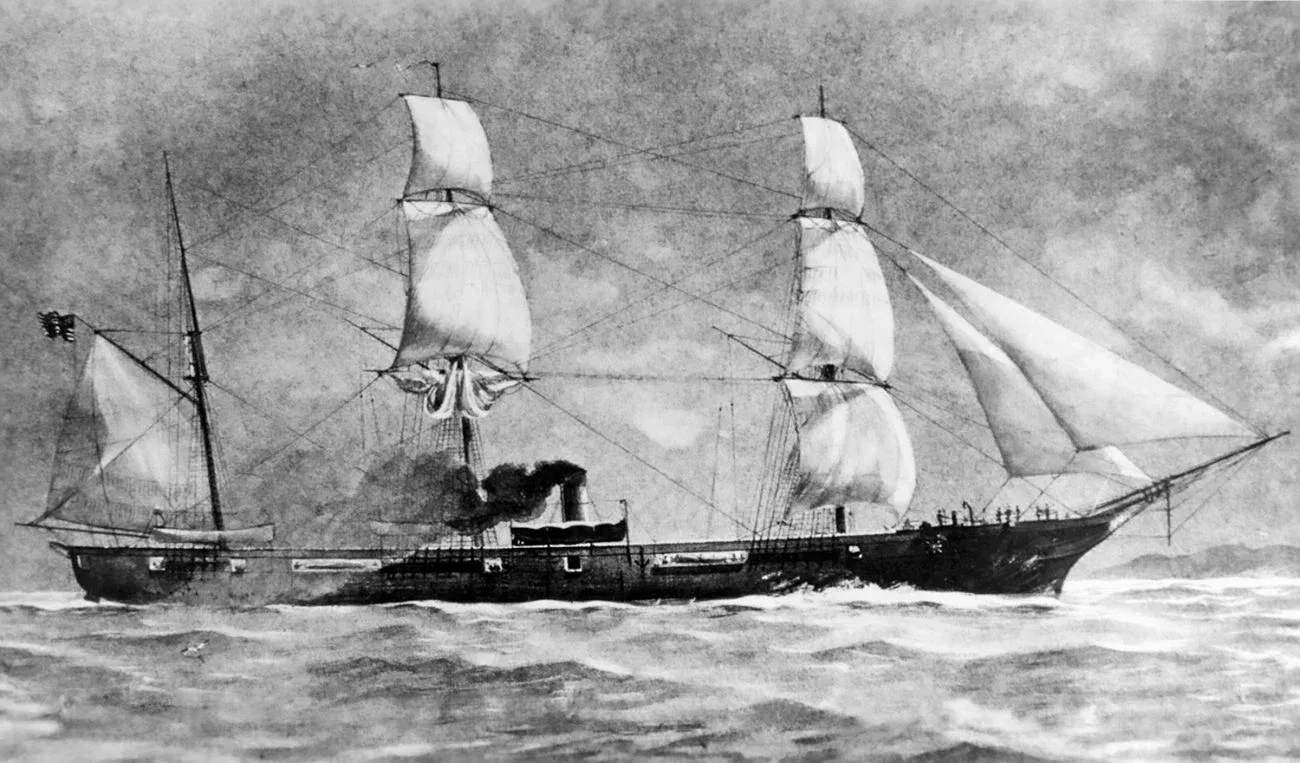
But it wasn't until February 17, 1864, that the submarine cemented itself in maritime warfare history. That night, the submarine became the first one to sink an enemy vessel in war. The USS Housatonic was an 1,800-ton sloop-of-war steamship that had a wooden hull and twelve cannons. On that night, she was stationed in Charleston Harbor as part of the Union's blockade. The Hunley struck the Housatonic with the spar torpedo, which exploded. The Housatonic sank in five minutes, with 5 crew members on board dying in the process. But after this, the Hunley didn't return to base. And what happened to it would be a mystery for the next 131 years.
But that mystery would come to a close in April of 1995, when the Hunley wreck was found buried in silt about 4 miles (6.43 km) off the coast of Sullivan's Island, South Carolina by divers from the National Underwater and Marine Agency (NUMA). Shortly after its discovery, the wreck was donated to the South Carolina, and after being studied and a fundraiser, the wreck was raised on August 8, 2000, to a crowd of cheering spectators. It was then taken to the Warren Lasch Conservation Center, which was made specifically for the Hunley wreck.
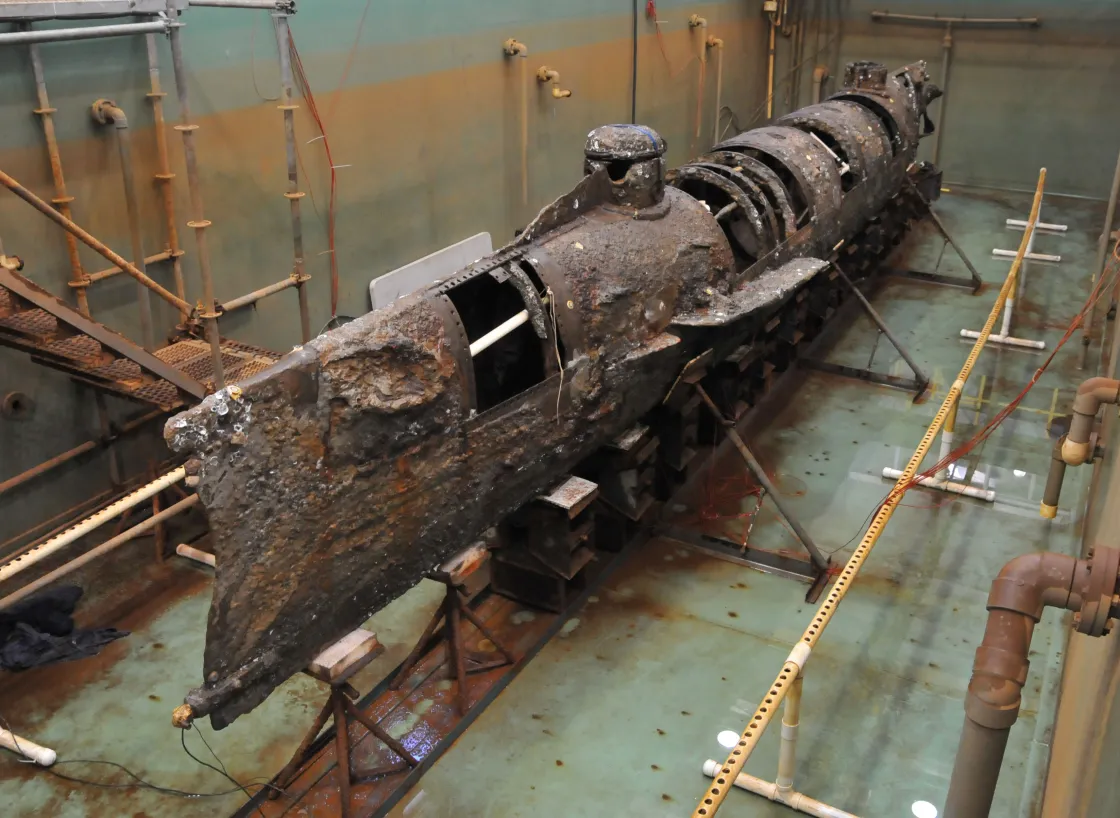
Many hours of archaeological research began right after the wreck was given to the conservation center. The crew were still inside the submarine's wreck, and they were removed and identified with DNA testing. Their remains were buried at the Magnolia Cemetery in Charleston. Among the thousands of attendees were reenactors and color guards from all five branches of the military. Today, you can see what remains of the HL Hunley at the Warren Lasch Conservation Center in North Charleston, South Carolina. The exhibit also includes a replica that visitors can enter.
Did you think a submarine could be salvaged twice after sinking three times? Leave a comment!
Sources: American Battlefield Trust, Encyclopedia of Alabama

 Matthew Young