What If the North American XB-70 Valkyrie Was Made Into a Passenger Jet?

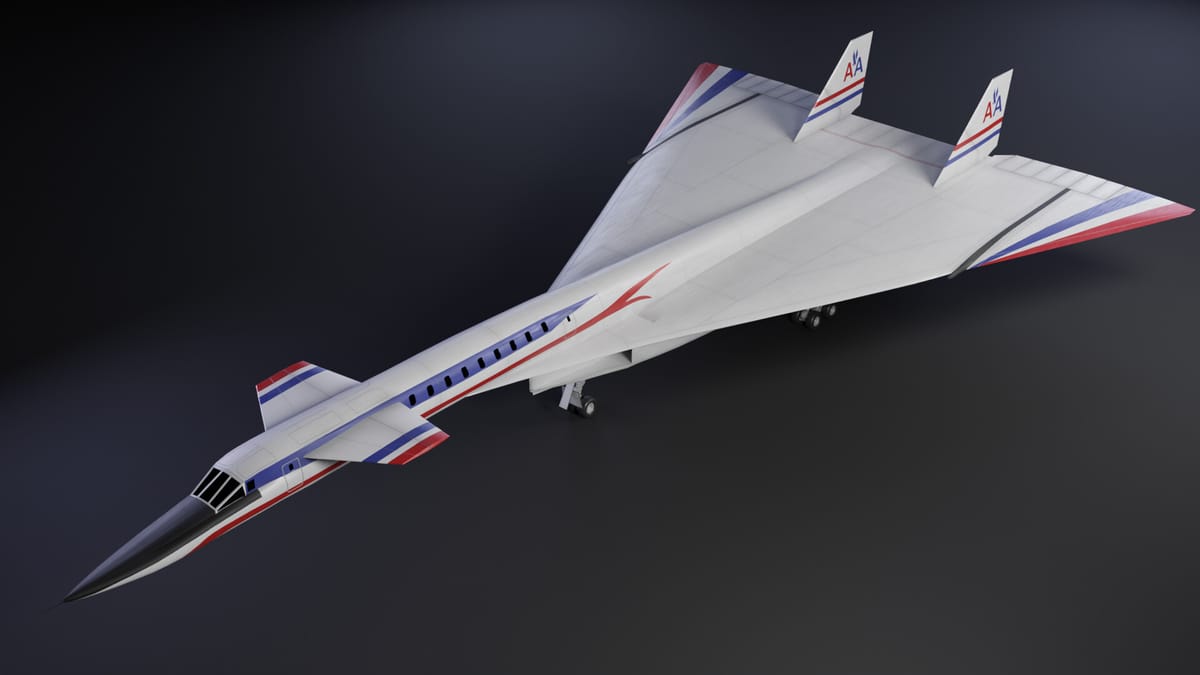
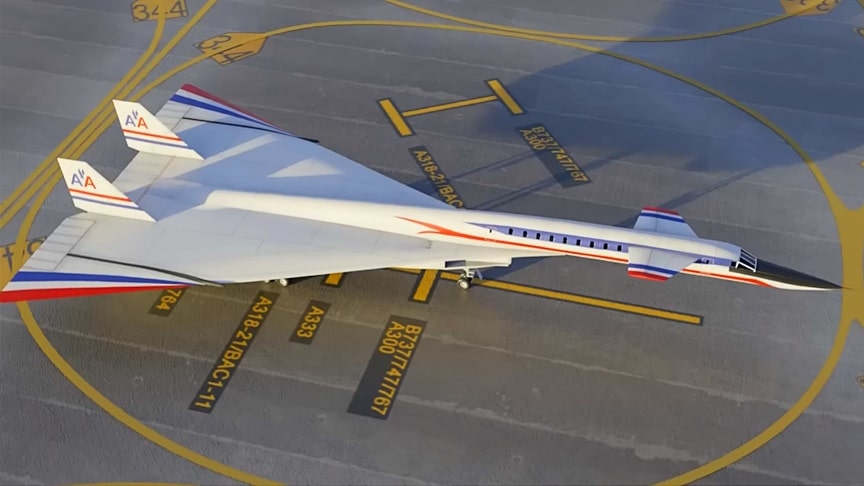
While the Concorde became a reality in 1976, is it actually possible that supersonic passenger aircraft could have happened earlier than even that? Could a supersonic bomber have done a good job transporting passengers at Mach 3? Well, let's dive into it.
For those who are unaware of the real story of the XB-70, it was a bomber from the 1950s that was, for its time, extremely cutting-edge. So much so that many of its goals were not very plausible. Three were built in total, and after suffering many setbacks and a photo op that caused one to fatally crash, the Valkyrie program was canceled. Despite that, it remains the fastest bomber aircraft to ever fly. And some have considered the idea of different applications, like being used in military roles. Others have imagined it as a Mach 3+ capable passenger plane. While the Soviet MiG-25 was also under similar consideration, today’s article concerns the XB-70 Valkyrie.
For more context, let's look at the XB-70's origin story, which has been shortened to the most important details: In 1957, North American Aviation was widely expected to lose the competition against Boeing for the next-generation bomber to counter the Soviet Union. The new aircraft would need to be able to travel at speeds exceeding Mach 3 and cruise at high-enough altitudes to avoid the newest Soviet air defenses. But North American won for a very ingenious reason: their engineers discovered that the plane could deflect its own shockwave at speeds above Mach 2, generating additional lift and allowing it to fly more efficiently at those speeds. The Air Force was impressed so much that North American Aviation’s entry was selected for the task. Fast forward to May of 1964, and the XB-70 has three existing prototypes. These would be put on flight trials in the coming months, but trouble started seemingly right away. Most of these problems would be solved, but that didn't compare to what happened next.
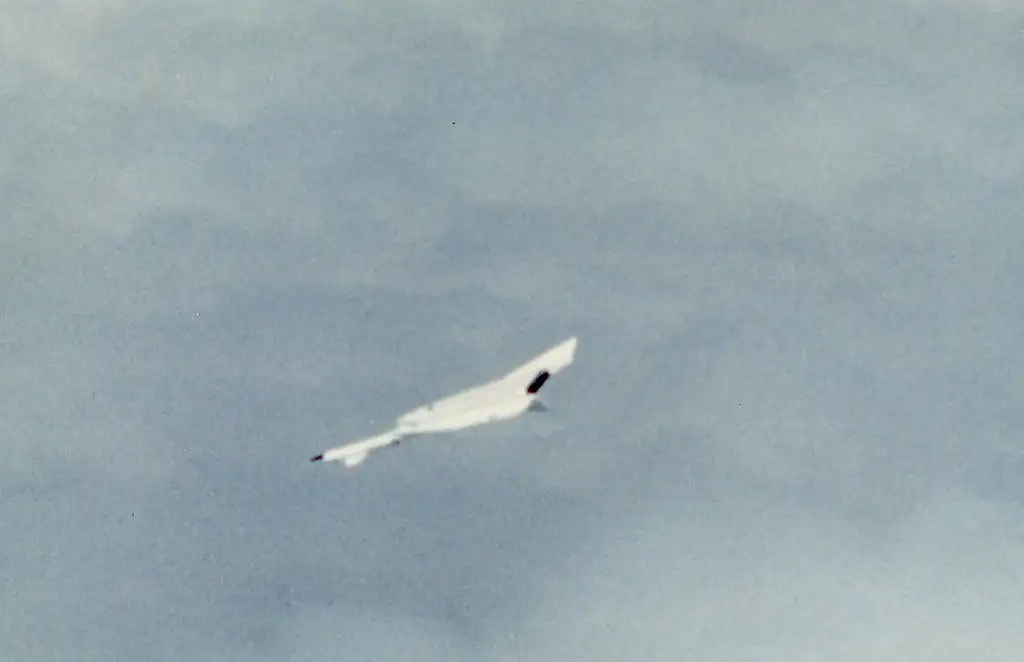
On October 14, 1965, one XB-70 flew past Mach 3, but the heat and stress damaged some of the panels, leaving a portion of the left wing missing. After repairs, the aircraft was ordered to fly no faster than Mach 2.5. And on June 8, 1966, the second XB-70 was involved in a horrific accident involving four other aircraft. One of the other aircraft collided with the XB-70's right wing, causing the XB-70 to fall in a somersault towards the Earth.
After this, the Valkyrie program was canceled. In the end, approximately $1.5 billion ($12-14 billion adjusted for inflation) was spent on the program, but not all hope was lost. Not yet, anyway. North American Aviation and the US Air Force looked at alternatives to nuclear bomber roles for the plane. Even launching a space capsule wasn't off the table. But that didn't hold a candle to the most plausible use for the plane: a passenger aircraft.
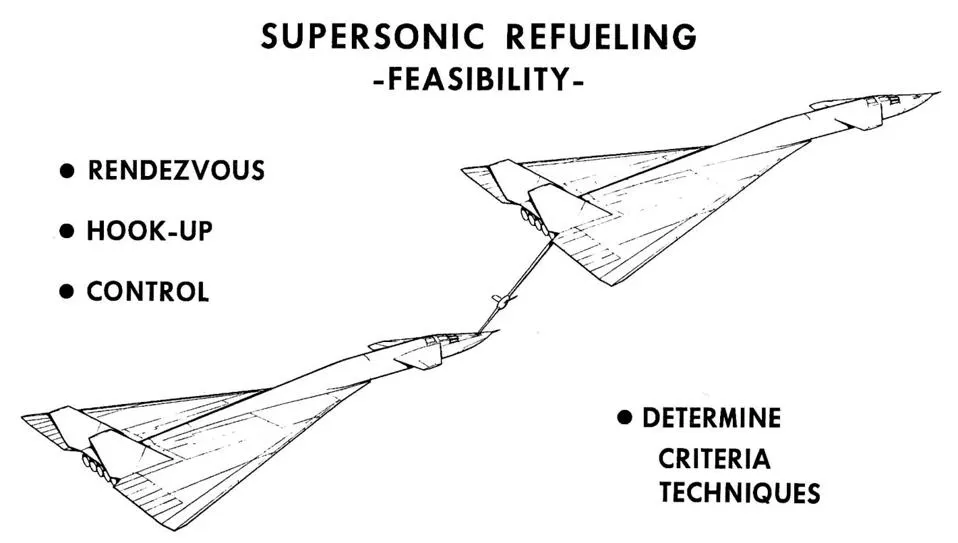
The NASA-funded Supersonic Transport (SST) proposed the idea, while North American Aviation proposed to build two more Valkyrie aircraft to test the idea, with one of them being a testbed for new engines. Designers made concept plane designs that could carry up to 80 passengers in airline-style seating. Passengers could also enjoy a "hot liquid buffet." It had also gone through designs as a medical transport plane capable of carrying 48 patients on stretchers. Even the sky wasn't the limit for these possibilities, as the Valkyrie also underwent designs to fly on the edge of space, carrying other aircraft like the X-15, also made by North American Aviation (albeit, more successfully, since it was the fastest manned aircraft ever). There was also consideration for air-to-air refueling. At the time, the Boeing KC-135 Stratotanker was the go-to air-to-air refueling aircraft. But the Valkyrie could've done so at supersonic speeds. And that would've been a whole new challenge.
But these designs never went ahead. Had it, the Valkyrie likely would've been the most expensive plane to operate. As optimistic as the designers of the period were, their ambitions couldn’t have been met, despite the technological advancements of the 20th Century. But that didn’t stop them from dreaming up even more imaginative uses for the Valkyrie, such as a medical transport aircraft. But, as the Air Force, and the US government as a whole, discovered, intercontinental ballistic missiles (ICBMs) proved to be able to strike targets more efficiently and cheaply. Not only that, but the high costs and the fact that the plane was, essentially, obsolete sealed its fate. Today, the first (and only surviving) XB-70 prototype is still on display at the National Museum of the US Air Force at the Wright-Patterson Air Force Base in Ohio. As for North American Aviation itself, it would go defunct in March of 1967.
Would you fly on an XB-70 passenger plane? Leave a comment!
Sources: Popular Mechanics, Forbes, Sia Magazine
 Kyle Mizokami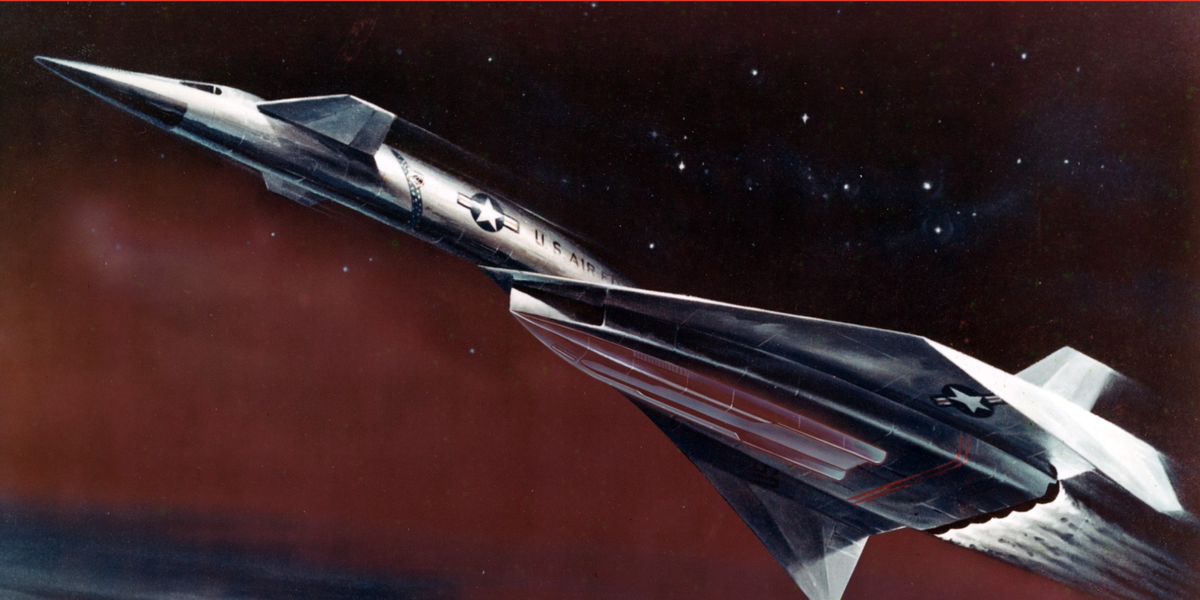
 Sia Mag