What You Didn't Know About American Gothic

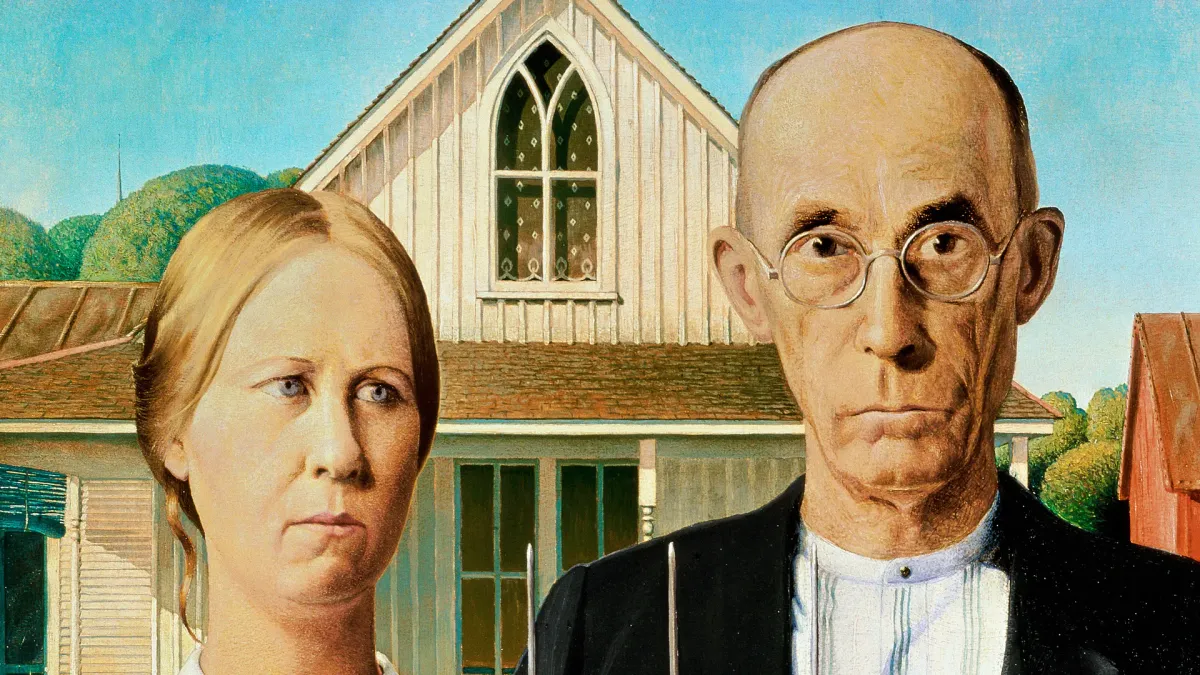
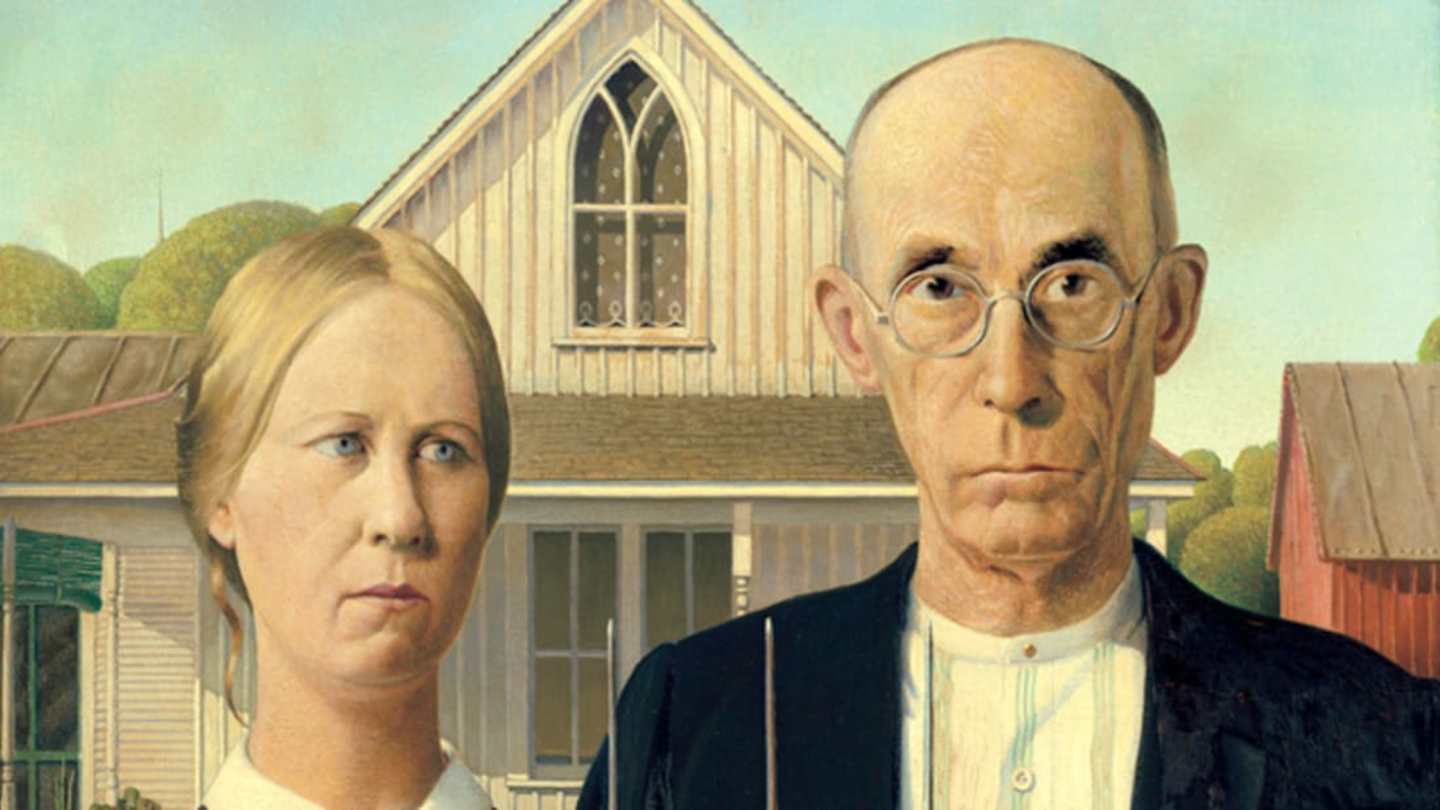
One of the most famous paintings in modern American history (and modern history in general) is Grant Wood's 1930 artwork titled "American Gothic." Despite its fame, there are still several things that most are unaware of. Today, we will be looking at some of those things.
The artist’s dentist and sister modeled for it

While Grant Wood's family dentist, Byron McKeeby, and Wood's sister, Nan, modeled for the painting, the models never posed together. Grant Wood painted them in separate sessions. In addition, Wood originally wanted his mother, Hattie, to model for the painting, but he was concerned that posing for a long time would be hard on her, so he used Nan instead. Hattie, however, gave Nan her apron to contribute to the costume.
It depicts a farmer and his daughter, not his wife
In the papers, the caption “An Iowa Farmer and His Wife” was widespread. But that’s not how Nan saw it. She told people that the painting depicted a farmer and his daughter because she didn’t like being “married” to a man twice her age. Grant Wood himself never confirmed this.
The house was based on The Dibble House in Eldon, IA
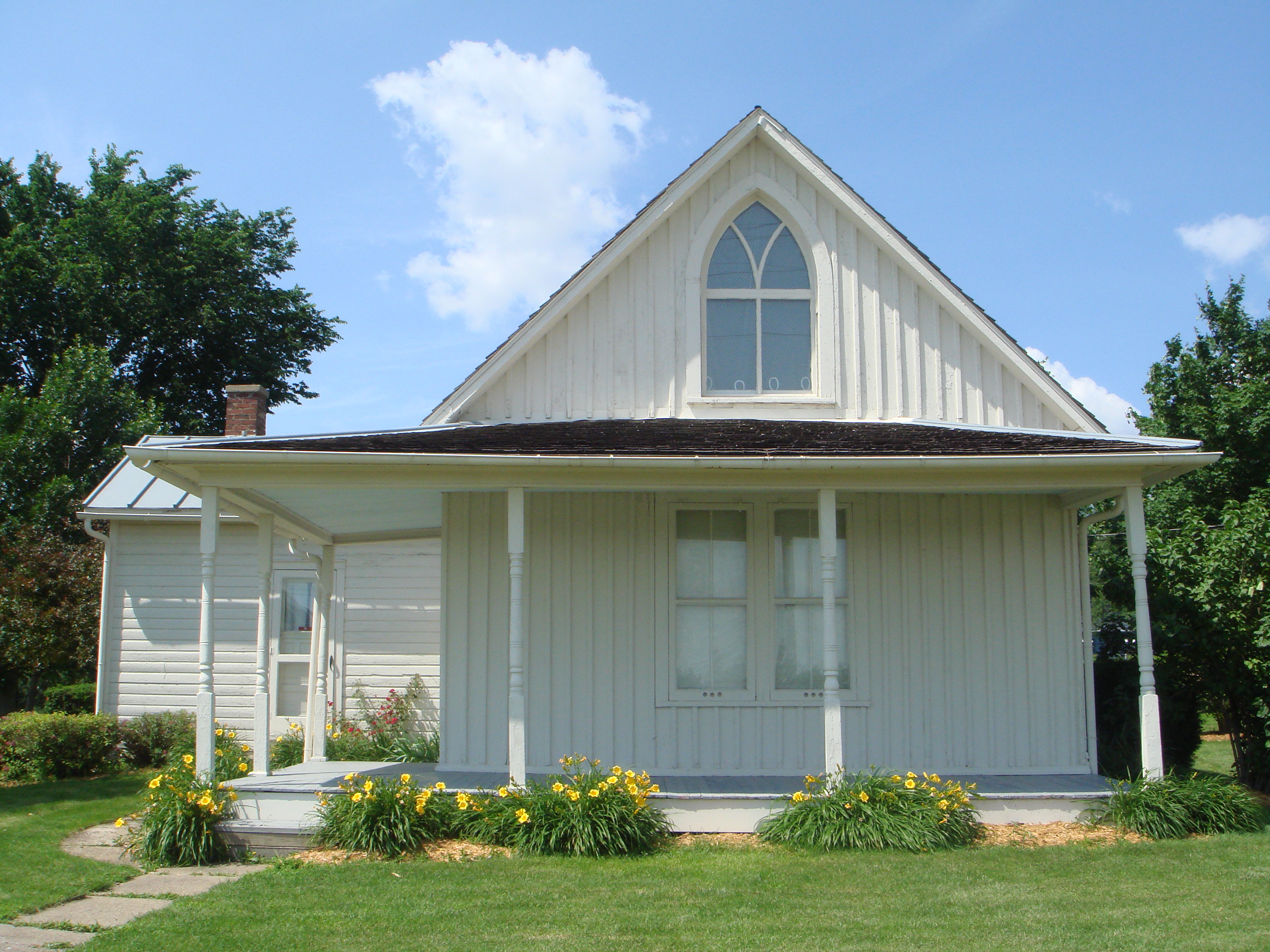
In the summer of 1930, Wood was visiting Eldon, IA to attend an art exhibition. During that time, he came across the home, which had a “carpenter Gothic” window on the second floor. Wood this "pretentious" for this kind of structure. He sketched the house on the back of an envelope, providing the basis for the famous painting. The house was built in 1881 by a couple named Charles and Catherine Dibble. It passed through many different owners over the course of a century before it was donated to the State Historical Society of Iowa in 1991. It’s now a museum of Grant Wood.
It was an instant hit...

The painting was submitted to the 1930 annual exhibition at the Art Institute of Chicago. It won a bronze medal and a $300 prize, worth $5,669.55 today. Not only that, the art institute acquired the piece for its collection. After this, a picture of the painting ran in the Chicago Evening Post, then in newspapers across the country, which helped it gain fame. Even to this day, the painting is held in the art institute.
...Although Iowans didn’t like it, to put it mildly
When newspapers began circulating the painting, it sparked a severe backlash. Iowans of the time didn’t like how the painting portrayed them to the world. One woman was so angry with the painting that she actually threatened to bite Wood’s ear off. Another individual said that Wood “should have his head bashed in.” Wood was, understandably, appalled by this, and said that he was a loyal Iowan who only meant homage. Nan later wrote to a newspaper, saying when she posed for the painting, “He showed me some pictures of old Gothic stone carvings from a cathedral in France, and asked me if I could pull my face out long and look like some of the women in the carvings. I told him some of my neighbors looked like that just naturally, but he explained that he couldn’t ask them to pose without hurting their feelings, so I gladly consented to pose and still consider it a great honor. … [No Iowan woman] should feel hurt about the painting if I don’t, unless as I suspect she sees some resemblance to herself!”
It contributed to the rise of regionalism
Regionalism, also called American scene painting, was an art movement that kicked urbanism to the curb in favor of the beauties of more rural settings. This movement hit its peak in the 1930s and because of Wood’s artworks, not to mention artworks from artists Thomas Hart Benton and John Steuart Curry. Wood got into this type of art by always wearing overalls and saying to the press “All the good ideas I’ve ever had came to me while I was milking a cow.” Despite this quote, Wood was disgusted by farm animals. It was also suggested that the overalls was a public relations thing, not just to accentuate his art persona, but also to help conceal his homosexuality.
The painting has Wood’s signature on it

It’s almost invisible at first, but if you look really closely at the bottom right corner of the man’s overalls, Wood’s name is printed, along with the year the painting was painted (1930) in pale blue.
Is there something about this iconic painting that you didn't know about before? Leave a comment!
Sources: Mental Floss
 Kristy Puchko