12 Popular Movies That Are Actually Remakes
A remake surpassing the original? Here are a few surprising examples.

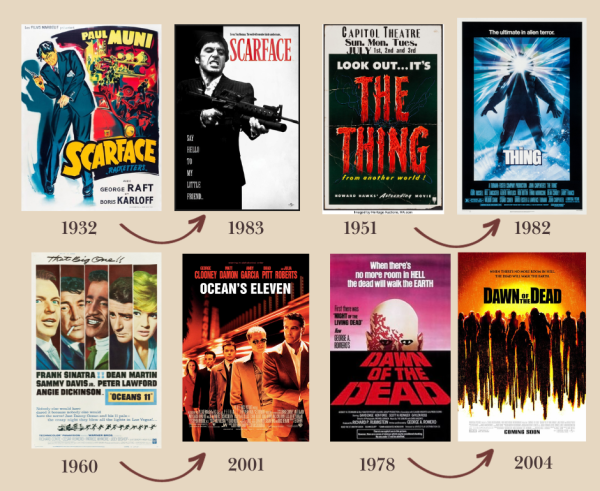
It’s pretty rare for a remake to hold up to the original, let alone surpass it, but in these cases, that’s what happened. And in this day and age, it cannot be done again. Modern Hollywood has seemingly run out of original stories (despite there being countless books and scripts that have yet to see the big screen). And these days, Hollywood remakes don't even hold a candle to the original stories they are trying to retell. With that being said, let’s take a look at 12 movies that aren’t original stories but were retold, and even improved, for some.
Dune (2021)
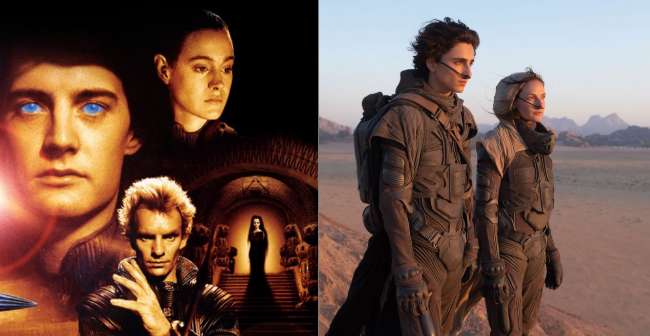
Original: 1984
Kicking off this list is a movie (and two subsequent sequels) that you likely knew were remakes, given all the buzz going around in 2021. Both adaptations were based on the 1965 novel of the same name by Frank Herbert, and if that novel wasn't so hard to adapt, many other adaptations would have been made. The original adaptation hails from the late David Lynch and was released in 1984. Despite the book's fan following, the 1984 adaptation was a flop, and is considered a failed attempt at telling Frank Herbert's storytelling. But that didn't stop Canadian director Denis Villeneuve from having a go at it 37 years later. It became one of the most popular movies in recent years, and it’s easy to see why, considering its stacked cast of Timothee Chalamet, Zendaya, Rebecca Ferguson, Dave Bautista, and Oscar Isaac. The remake is considered more faithful to the source material than the 1984 version, and that's not counting a miniseries which was released in 2000 and is still largely forgotten, despite the 2021 movie bringing the story back into the spotlight.
The Thing (1982)
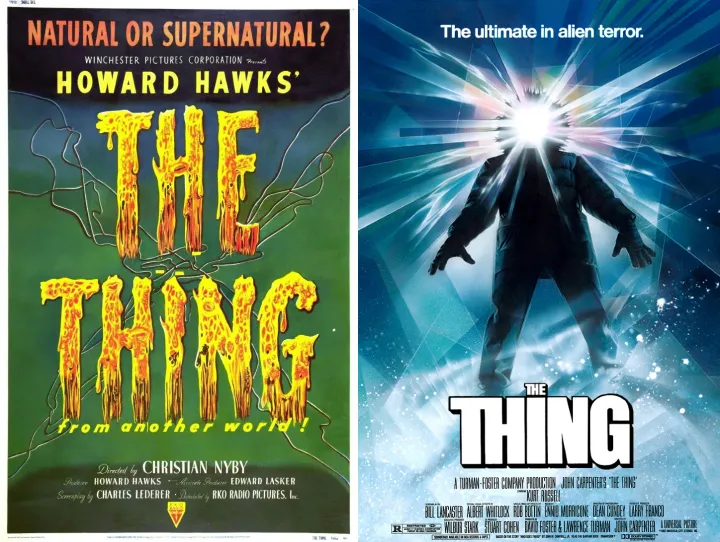
Original: 1951
Both versions are based on the short story “Who Goes There?” by John W. Campbell, Jr. And the 1951 version was successful in its own right, but John Carpenter's interpretation sported visual effects by Rob Bottin, who brought to life the terrifying forms of the alien, which can shape-shift into any organism. The effects of Carpenter's version are, to this day, considered some of the best practical effects ever. The 1951 version also sees a monster, albeit a different kind, this being an alien plant during the Cold War in an us-vs-them type of monster movie, while the 1982 film sees a "which one of us is the monster" kind of fight.
Invasion of the Body Snatchers (1978)
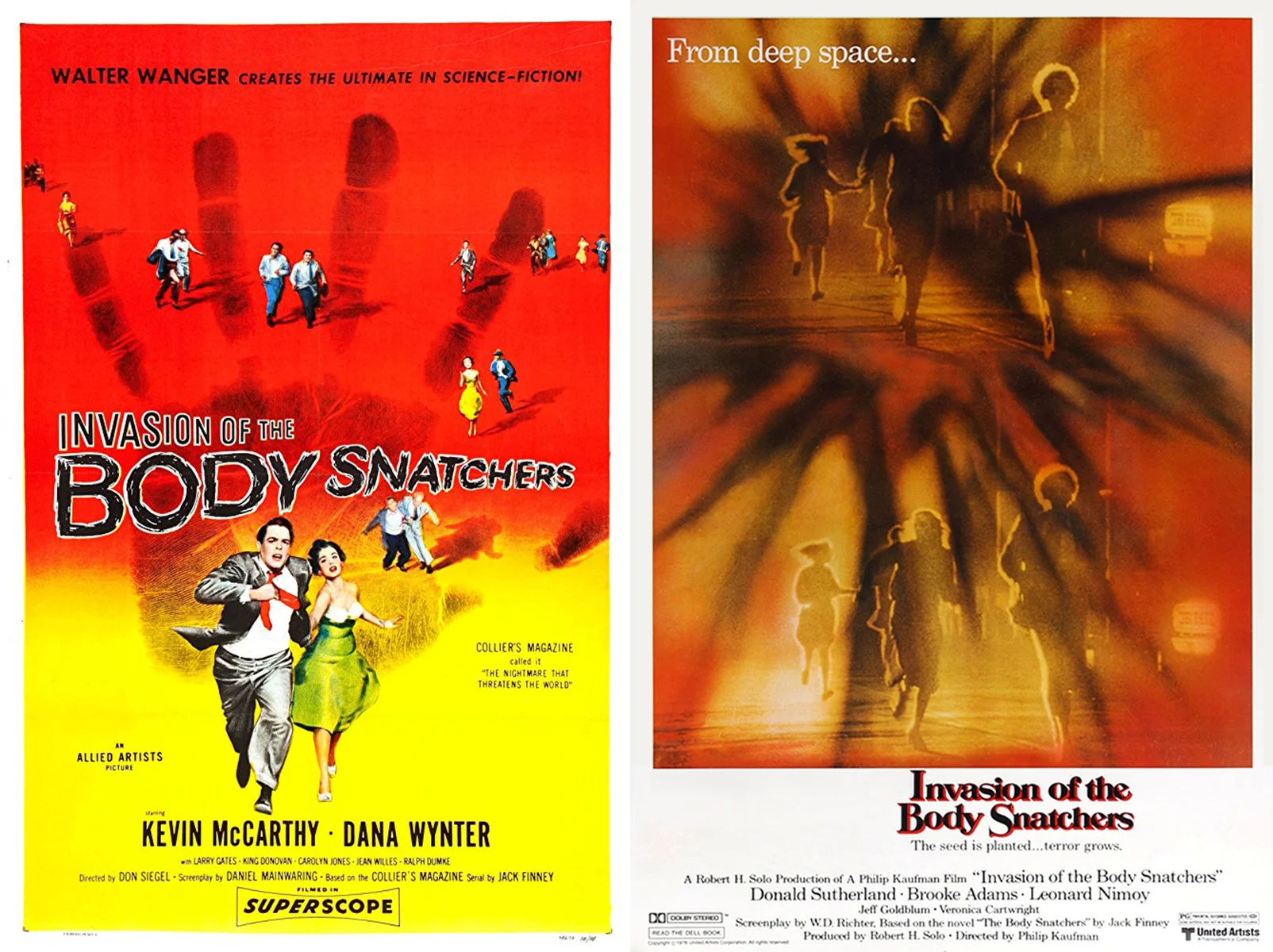
Original: 1956
Widely regarded as one of the best remakes of all time, the remake centers on San Francisco in the 1970s, while the original takes place in small town USA. And that's not the only difference between the two. The original was made at the height of the Cold War and uses pod people as a euphemism for McCarthyism and communist paranoia. The Cold War was still going on in the late 1970s, but tensions had simmered a bit until the Soviet invasion of Afghanistan in 1979. Regardless, both movies are based on the 1954 science fiction novel The Body Snatchers by Jack Finney. And don't even get started on the scream from the 1978 version. That scene traumatized many viewers for years.
The Mummy (1999)
Original: 1932
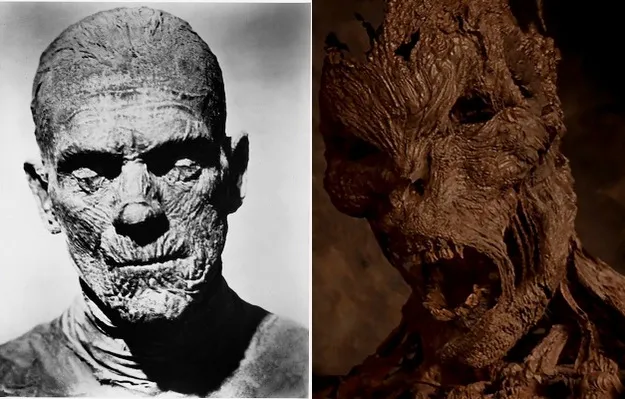
Even the 1999 remake can be considered a classic in this day and age. But it wasn’t the first remake. There was a 1959 adaptation with Christopher Lee and Peter Cushing, but that didn’t have any sequels. The 1999 one did, with The Mummy Returns in 2003 and The Tomb of the Dragon Emperor in 2008. It also inspired the $60 million roller coaster at Universal Studios Hollywood which replaced the E.T. ride which was there from 1991 to 2003. But don't let that take away from the fact that the original had Boris Karloff in it, who had starred as the iconic Frankenstein's monster in the 1931 classic horror Frankenstein. Also, for the sake of bad remakes, we won't talk about the 2017 Tom Cruise movie.
Freaky Friday (2003)
Original: 1976
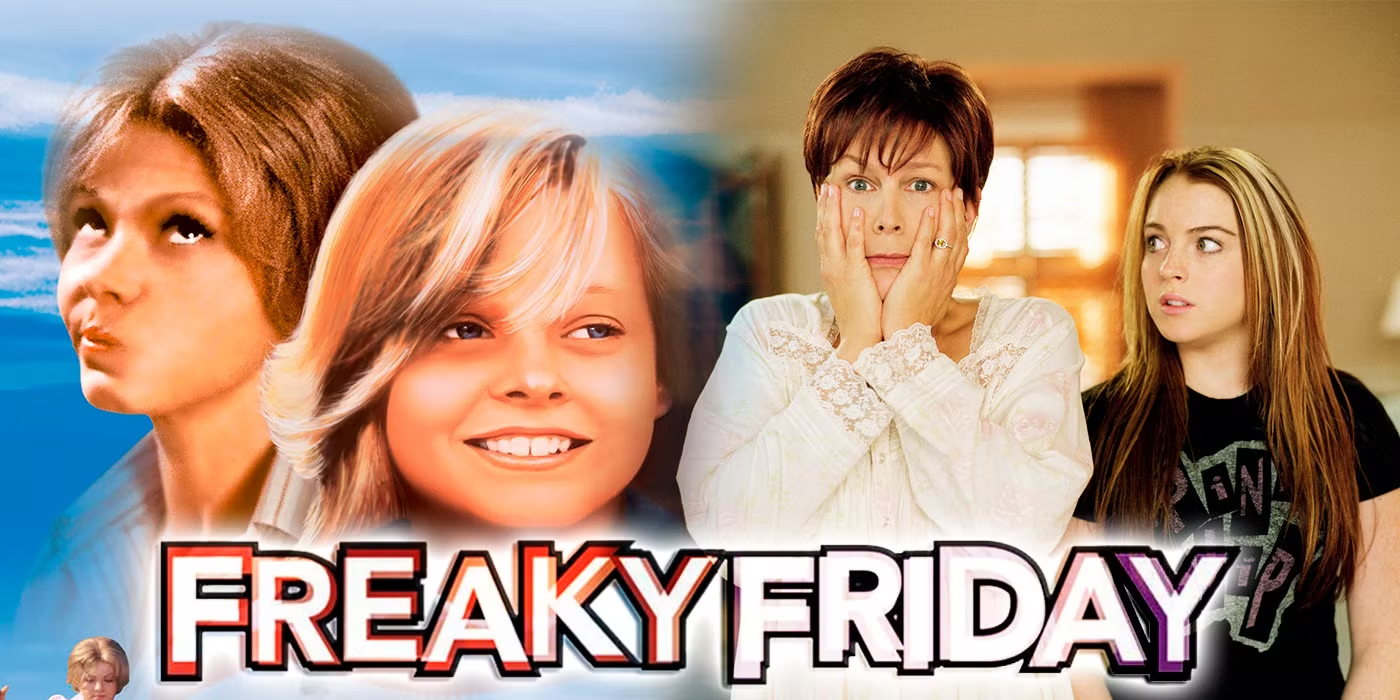
First adapted in 1976 and then in 1995 for TV, Disney took over for the remake. Both tell the tale of a mother and daughter who swap bodies and need to change before it’s too late. The 1976 one has a quirky, family-friendly feeling, reminiscent of the time's comedic style. The 2003 one, on the other hand, has a more contemporary approach, with some humor that's more on-edge, and stronger presence of punk teen culture of its time. But let's not forget that the 1976 one has Jodie Foster, who had her breakout role in Taxi Driver alongside Robert De Niro that same year.
The Fly (1986)
Original: 1958
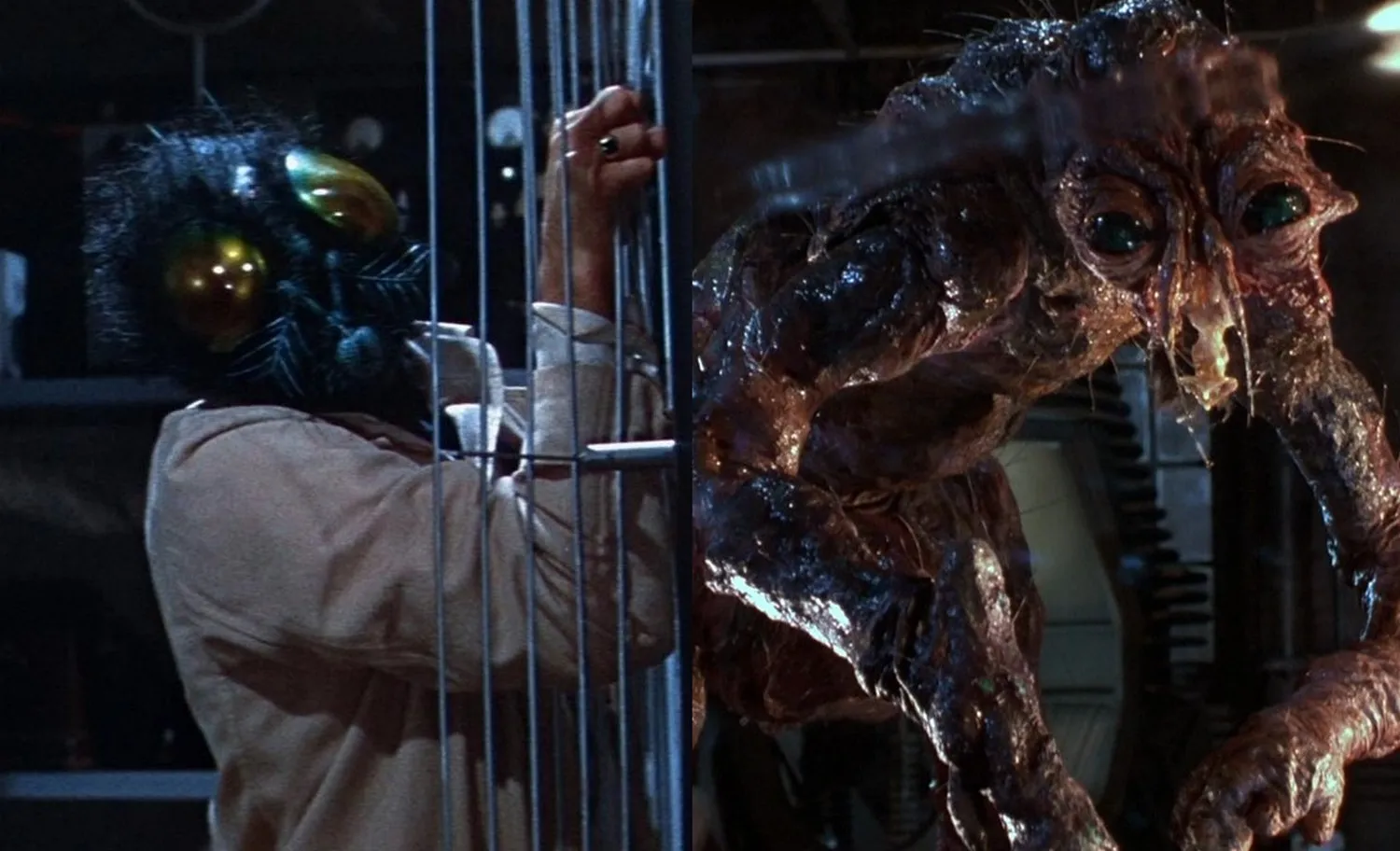
OK, maybe both versions are well-known, but it got a spot on this list anyway. If audiences in 1958 thought that their version of The Fly was grotesque and disturbing, they had no idea what was in store for them 28 years later. The groundbreaking makeup effects of the 1986 version even won the 1987 Oscar for best makeup. In the original, the scientist swaps his head and left hand with that of a housefly. In the remake, the scientist fuses DNA with a housefly, then gradually (and horrifyingly) becomes a human-fly hybrid. Also, just for the fun of it, could you imagine if the 1986 version was shown to audiences in 1958? That would be kind of fun to watch (Mind you, two years later, with the release of Psycho, there were ambulances waiting outside the theaters in case people passed out from the shower scene. No joke).
The Blob (1988)
Original: 1958
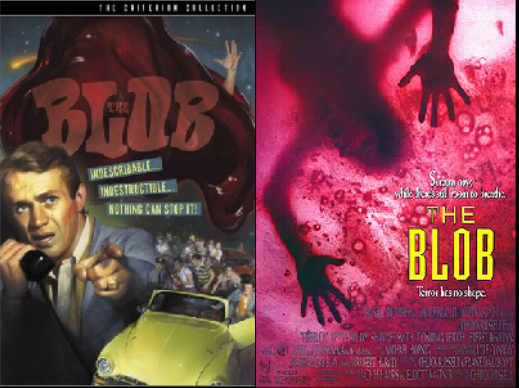
Chuck Russell, who would go on to direct 1994's The Mask, was at the helm of the remake, and boy is there a difference between the original and the remake. As is true with The Fly, the 1980s remake is far more graphic than the 1950s original. In the original, the titular gelatinous mass took its victims off-screen to digest them. The 1988 one does just that, only with one digestion taking place entirely on-screen. Not only that, but the gelatinous mass's origins differ in each version. In the original, the blob is a parasite that arrives on Earth from a meteorite, while the remake sees a government-made Cold War biological weapon escape from the lab and cause havoc in a darker, more gory fashion compared to the 1958 blob.
Casino Royale (2006)
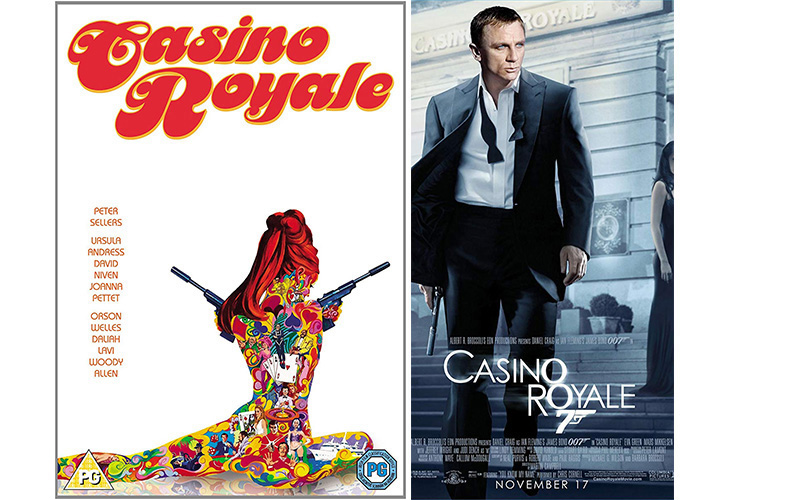
Original: 1967
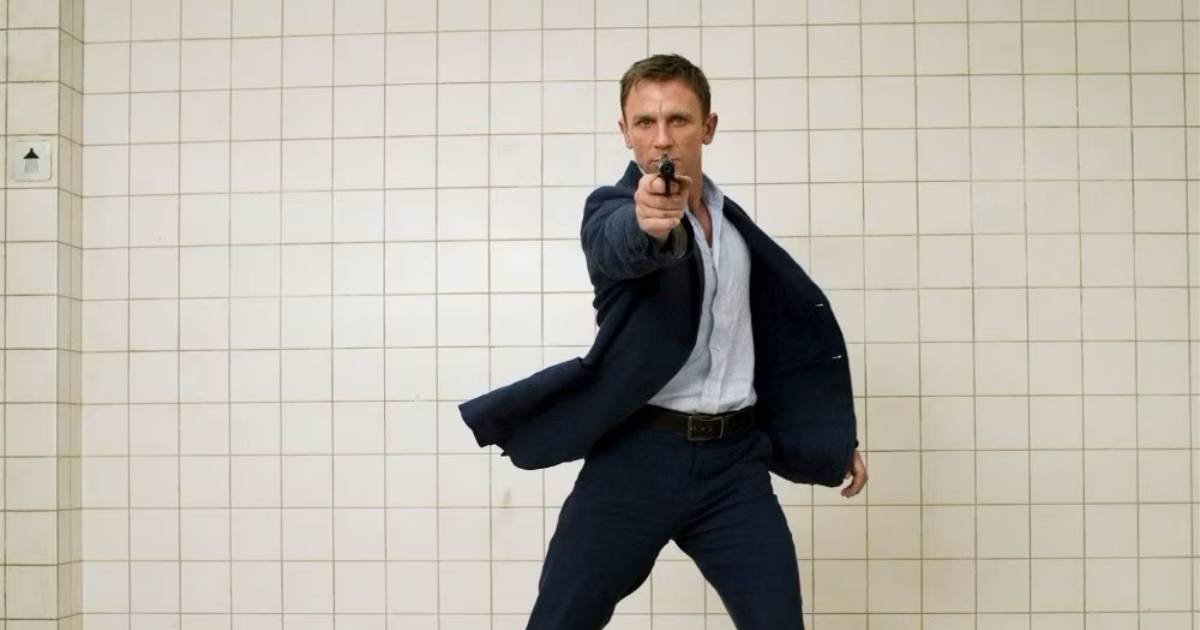
Maybe fans of the James Bond series already knew this, but it got a spot on the list anyway. Including this one was being generous, because the original from 1967 was a loose adaptation of Ian Fleming's first James Bond novel. Even weirder was the fact that the 1967 original was meant to be a comedy movie, and that it has Ursula Andress as Vesper Lynd, which is no coincidence, given that she played Honey Ryder in the first James Bond film, Dr. No (1962). The new one restarted the James Bond franchise and gave us a proper 21st century look at the British spy (never mind 2002’s Die Another Day). It introduces us to the Daniel Craig version of Bond and sees him starting his career as Agent 007.
Scarface (1983)
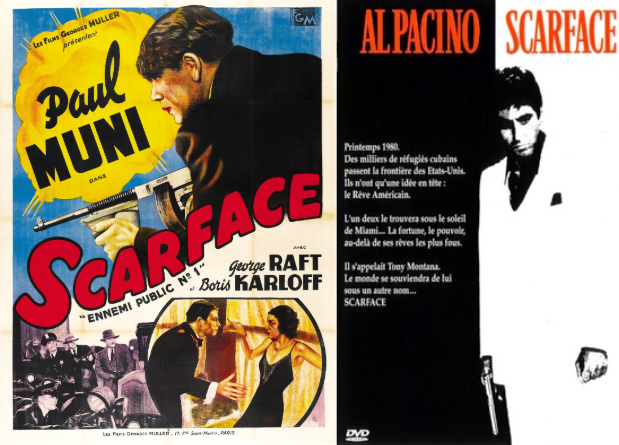
Original: 1932
This cult classic starring Al Pacino had Brian De Palma at the reins and Oliver Stone as a screenwriter. Needless to say, the 1932 one doesn’t have as much graphic violence as the 80s one. The 1932 version also doesn’t have any iconic lines, whereas “Say hello to my little friend!” is fairly well known, and not just because no one aside from Al Pacino could make the phrase as iconic as it is. The two tales also have vastly different settings. The original takes place in Chicago at the height of prohibition with an Italian-American mobster, while the remake sees a Cuban-American drug lord in Miami in the 1980s. Both settings at their respective times are notorious for very different reasons. Both are also loosely inspired by real-life events, such as Al Capone's business in Chicago as opposed to the Miami drug boom in the 1980s.
Ben-Hur (1959)
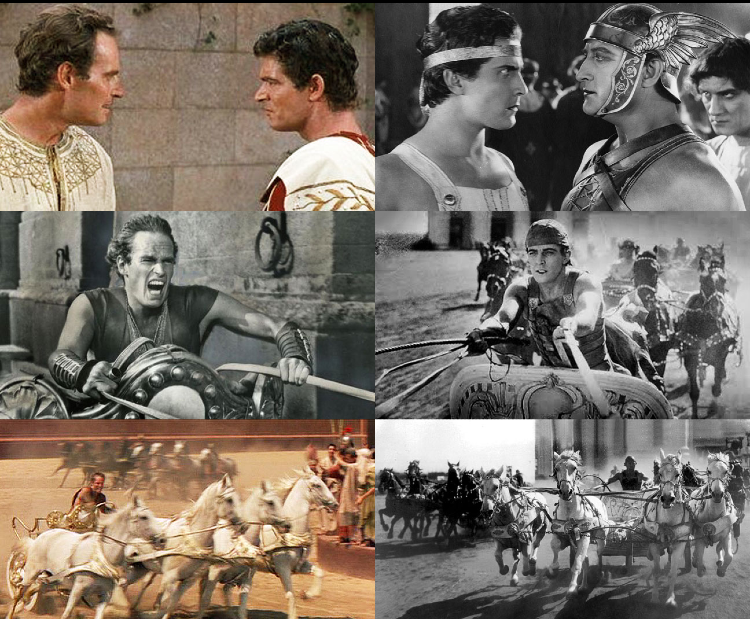
Original: 1925
It’s hard to believe that there’s only a 34-year difference between 1925 and 1959, given that so many things changed in that time. Not to go off topic, but let’s name a few things that changed during that time. The silent film era ended (and color film was getting started), among other things. Anyway, the remake is one of the most critically acclaimed movies ever, standing right beside Lawrence of Arabia (1962) and Citizen Kane (1941). The first adaptation of this story came from a 1907 short film, and then a full-length silent film from 1925. Unlike most silent films of that time, the 1925 film is fast-paced, and focuses on religious themes, while the 1959 classic is known for exploring character relationships.
The Maltese Falcon (1941)
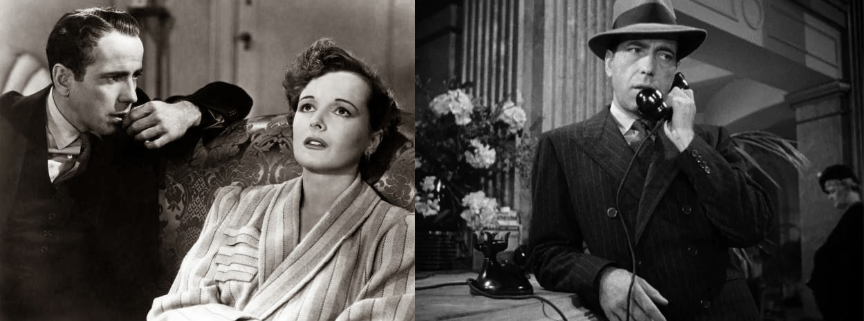
Original: 1931
As classic of a film as this one is, it may be hard to believe that this one was remade from a movie made just a decade earlier, and that one came just a year after the novel was published. The first attempt to bring Sam Spade onto the big screen was, needless to say, not as famous as the second attempt 10 years later. The remake stands alongside Citizen Kane (1941) and Casablanca (1942) as the three most classic noir films ever made. But that doesn't mean the 1931 film isn't notable, considering that film is a "pre-Code" film, meaning features obscene references and other things that were censored in the 1941 film.
The Wizard of Oz (1939)
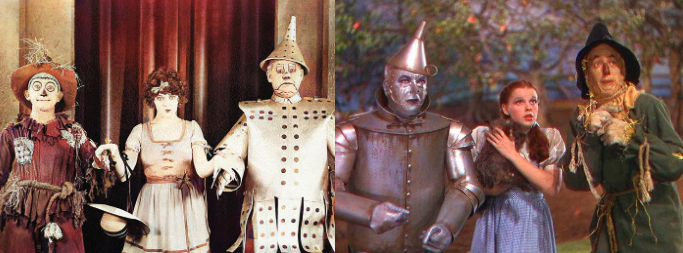
Original: 1925
And, last but certainly not least, arguably the most classic film of all time, which was a remake itself. Since its publication in 1900, L. Frank Baum's book The Wonderful Wizard of Oz has seen adaptations like 2013's Oz the Great and Powerful, which serves as a prequel to the 1939 classic film. But prior to that, one of L. Frank Baum's sons adapted the story into a silent film 14 years before Judy Garland saw her breakout role. Of course, several bad things plagued the sets of the 1939 film, but we won't get into those now. It's also worth noting that in the original book and silent film, Dorothy's slippers were silver but were made ruby red for the 1939 film to stand out against the yellow brick road.
What's a movie (not on this list) that you think could be made better with a fresh adaptation? Leave a comment!
Sources: Cheapism, YardBarker, Collider, Movie Web
 Chuck Nelson
 Amy McCarthy
 Hannah Saab and Amanda Cataldo
 Maralee Nieves