Woodstock '99: The Music Festival That Never Was
Recreating the iconic music festival? What could go wrong?

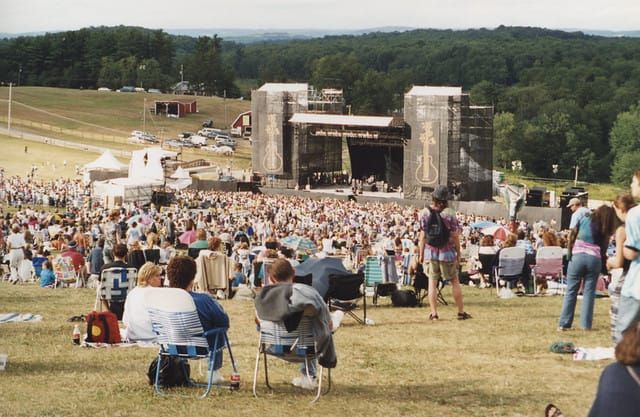
Nostalgia for the 20th century remains high today, even for some who hadn’t experienced it, or hadn’t even been born in that century. Some might even argue that nostalgia for different decades of the 20th century was prevalent in the latter years of that century. Case in point, many were nostalgic for the 1920s during the 1930s, when the Great Depression took place. Others, in the 1980s, were nostalgic for the 1950s, as mentioned by movie fans of Back to the Future. Today, nostalgia for the 1980s is high, from those who were there to some who weren’t. There’s actually a word for this: anemoia, or nostalgia for a time you’ve never known.
In the 1990s, nostalgia for the 1960s was, to my knowledge, relatively average (at least for some of those who experienced it). But that didn’t stop organizers from fatefully trying to re-create the Woodstock festival of 1969, 30 years after the original event. Although they didn’t anticipate that this event would end up being the Fyre Festival of the 1990s, albeit without anyone being stranded on an island. To say that this event wouldn’t hold up to the original would be an understatement. Today, we will be looking at why this would-be festival became known as “The Day the Nineties Died” (even though, technically, that day was December 31, 1999).
To commemorate the 30th anniversary of the 1969 Woodstock music festival, organizers decided to do it again, this time with bands from the 1990s, like Limp Bizkit, Red Hot Chili Peppers, Metallica, and Sheryl Crow, in a festival that took place from July 22 to 25, 1999. They tried to bring back the “peace and love” kind of vibe from the original, but by the late 1990s, things had changed significantly since 1969. And several things went awry, to say the least. Instead of peace and love, this festival devolved into riots, sexual assaults, infrastructure failures, and even three deaths due to a combination of factors such as high heat, high prices (tickets were around $300 in today’s money), and poor planning. What can only be described (in Netflix's words) as an absolute clusterf**k would ensue.
One of the first problems, right off the bat, was the location. The original Woodstock was held in Bethel, a town in upstate New York. The same couldn't be said for Woodstock '99, however, as the festival was held at the former Griffiss Air Force Base in Rome, New York, which ceased being a military base in September of 1995. While it didn't really matter that the locations changed, what did matter was the fact that the tarmac of the base reflected sunlight, which led to the heat being reflected onto the festival attendees. On top of this, the distance between the festival's two stages was 1.5 miles (2.41 km), meaning the attendees had to walk across this distance in 80-degree weather. The Baltimore Sun reported that "more than 700 had been treated for heat exhaustion and dehydration." Some of the only shade was provided by empty aircraft hangars, and the seemingly only other way of escaping the sun was by sitting at the Emerging Artists stage, which meant having to deal with listening to artists whose names would never be famous, barring Bijou Phillips.
The aforementioned heat brings us to hiccup number two, which was the lack of water. Around 230,000 people were in attendance at this ill-fated festival (220,000 attendees with 10,000 people working it). This, technically, made the site of the festival the 3rd most populous “city” in New York State. So, you can imagine such a place needing water. As mentioned before, temperatures were hitting the 80s in Fahrenheit, and may have reached triple-digit numbers, by which point water would have been a necessity. Most of the festivalgoers either didn’t receive or simply ignored warnings to bring their own water. Water bottles were sold, but went as high as $7 in today's money, and while water fountains were a thing, they were around half a mile (0.8 km) from the main stages, and the lines to use them often looked like they were meant for Disneyland rides. Out of frustration, some of the water fountains were smashed, which caused small floods, of sorts. But floods of water were nothing in comparison to our next problem: floods of sewage. Yes, sewage. The 2,500 porta-potties at the festival were easily overwhelmed by the near quarter of a million attendees and staff, and that led some of them to leak sewage into the dirt surrounding them. As the overflowing got worse, a forbidden cocktail of waste and mud began spilling into campsites, causing sickness to spread among attendees.
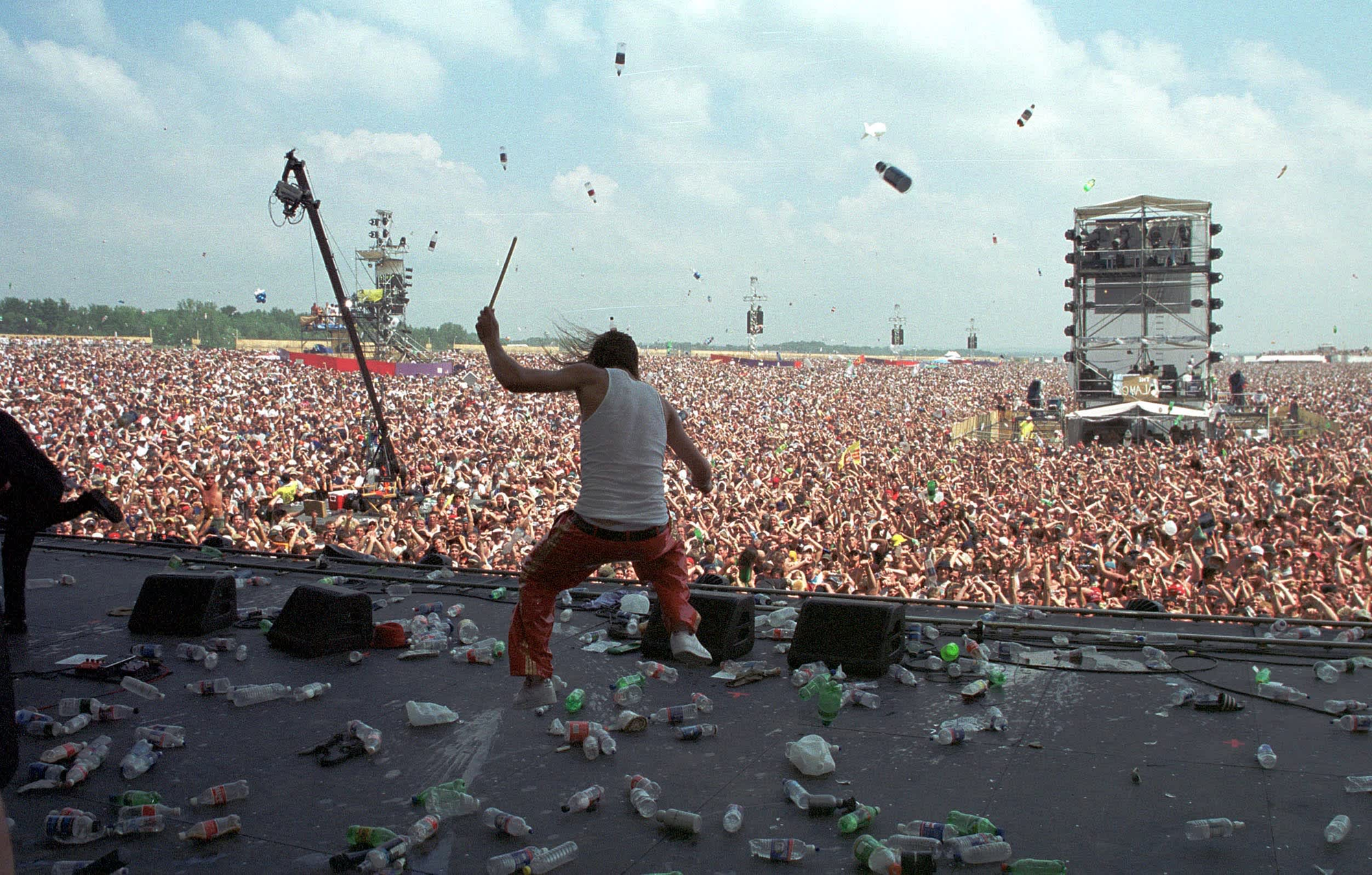
Moving into matters of those who were performing at this festival, we begin with Insane Clown Posse, which had been "the first to incite the crowd" by throwing $100 bills towards the audience and "watched gleefully while a melee ensued." In another incident which was one of the lowest points the festival fell to, the band Creed, which was deemed the worst band of the 1990s by Rolling Stone magazine, performed the penultimate piece on the last day of the festival. In an effort to bridge the gap with the original Woodstock and due to his obsession with Jim Morrison, singer Scott Stapp brought the Doors guitarist Robbie Krieger for a rendition of Roadhouse Blues. The problem, however, was that neither Krieger nor the Doors were at the original Woodstock. Musician Robert "Kid Rock" Ritchie made an appearance too, and according to the San Francisco Examiner, demanded that people "pelt the stage with plastic water bottles." While his motives were unclear, what is known is that his demands were met, as attendees threw water bottles (of various stages of fullness) onto the stage.
Please be advised, the next few problems deal with descriptions of sexual assault.
It's true to say that not all of the festival attendees were bad eggs, but it's also true to say that, of the ones that were, they made their presence well-known. Whenever a woman walked on stage, whether as an emcee or a performer, they would be greeted with people shouting, "show your tits!" Even Sheryl Crow wasn't exempt. While misogynistic, this request was met with what can only be described as one of the best comebacks of the festival. Actress Rosie Perez was set to introduce rapper DMX, and the crowd shouted that demand. Perez replied "$3.99, Blockbuster, go rent Do the Right Thing." The audience themselves flashed on several occasions. This led South African musician Dave Matthews of the Dave Matthews Band to say "today, there's an abundance of titties." Yes, he said that. Into a microphone. In front of thousands of people. And that's not counting the Woodstock.com website's activities. The official website of this festival unethically (and likely illegally) uploaded photos of topless attendees without consent, often with captions such as "nice pair" and "show your tits" to name a few. Even one event co-promoter, John Scher, said that the website's actions were "repugnant."
The next incident involves crowd-surfing. Crowd-surfing was a thing at this festival, as is common with most music festivals, but aside from this festival, few crowd-surfing incidents end up in illegal acts. Reportedly, one volunteer said to MTV, "at one point [during the band Korn's performance], I saw this girl...who was bodysurfing above the crowd and either fell in or was pushed into a circle in a mosh pit." Paraphrasing the rest of his statement, he told MTV that the girl he saw was pinned down by a couple of men, aged 25-32, and were holding her arms. In other cases, more assaults were reported to have taken place during the performances of Limp Bizkit, after frontman and lyricist Fred Durst told the crowd to "break stuff," and one woman was seriously assaulted. The assailants were never caught. In the midst of this chaos, someone (who was either an emcee or an organizer) pleaded "please, there are people hurt out there..." which was quite a stark contrast from the original's "the brown acid that is circulating around us isn't too good." Of the 44 people who were arrested at Woodstock '99, only one was charged.
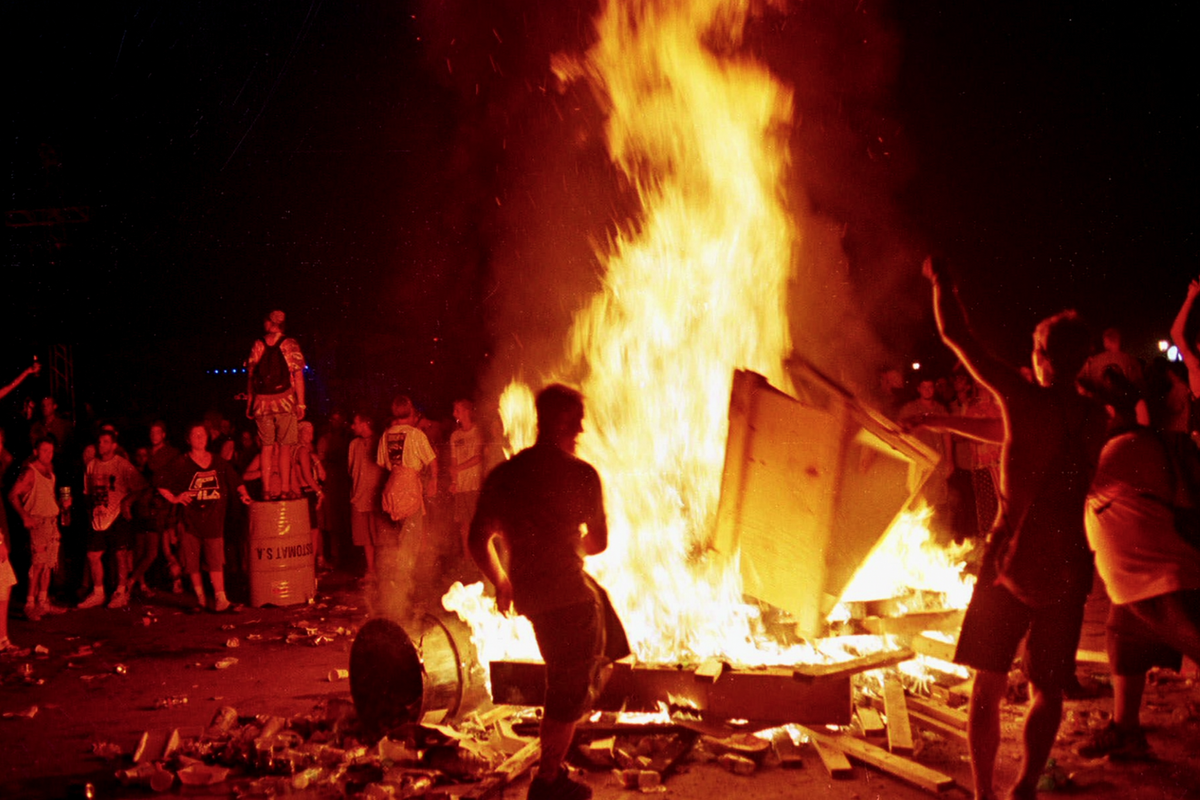
And the cherry on top of this cursed sundae? The fire. An anti-gun violence vigil was held at the festival, and 100,000 candles were handed out without the fire marshal's knowledge. And since people just had to go and ruin things, the candles were used to start fires in the crowd. Trucks, fuel tankers, vendor booths, merchandise tents, and even a Mercedes-Benz were set on fire while the Red Hot Chili Peppers horrendously covered the Jimi Hendrix song "Fire." The fires eventually spread to the stages, and an audio tower was damaged. Reportedly, the 12-foot (4-meter) fence surrounding the former air force base was broken down by crowds trying to escape. The New York state troopers and local law enforcement which were present were able to get the riots under control, but Griffiss Air Force Base still looked like it had been attacked with explosives, as well as tons of arrests and hundreds of injuries being sustained. And that's not mentioning the law enforcement agents who were demoted for posing in photos with topless women or having their police cruisers washed by nude attendees.
It's very safe to say that this festival didn't go as planned. But in its wake, the festival did leave us with lessons to be learned for future events. Festival organizers have gone many lengths to ensure safety and security measures are taken seriously, even though ticket prices have likely hit the atmosphere by now. And not all was lost in the craze of Woodstock '99. Many attendees later said that the music gave them fond memories that they'll remember for years to come. But, over 25 years later, corporate greed and poor planning still linger in some events (like Fyre Fest, which won't get its own article).
Should the original Woodstock have been left to the history books? Leave a comment!
Sources: Billboard, Rolling Stone, The Independent
 Gil Kaufman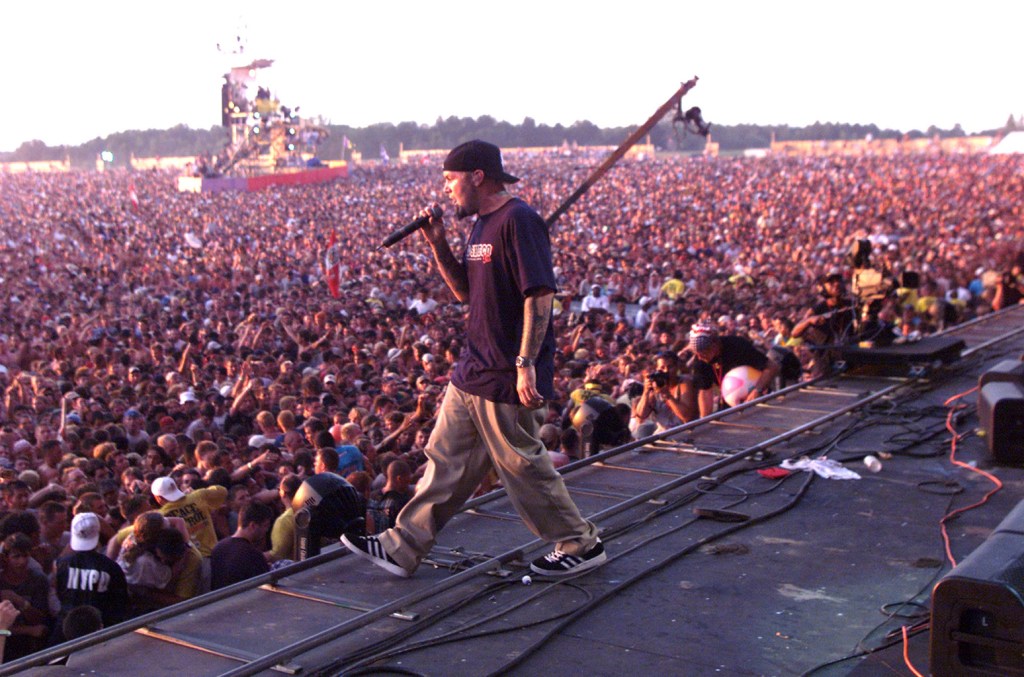
 Daniel Kreps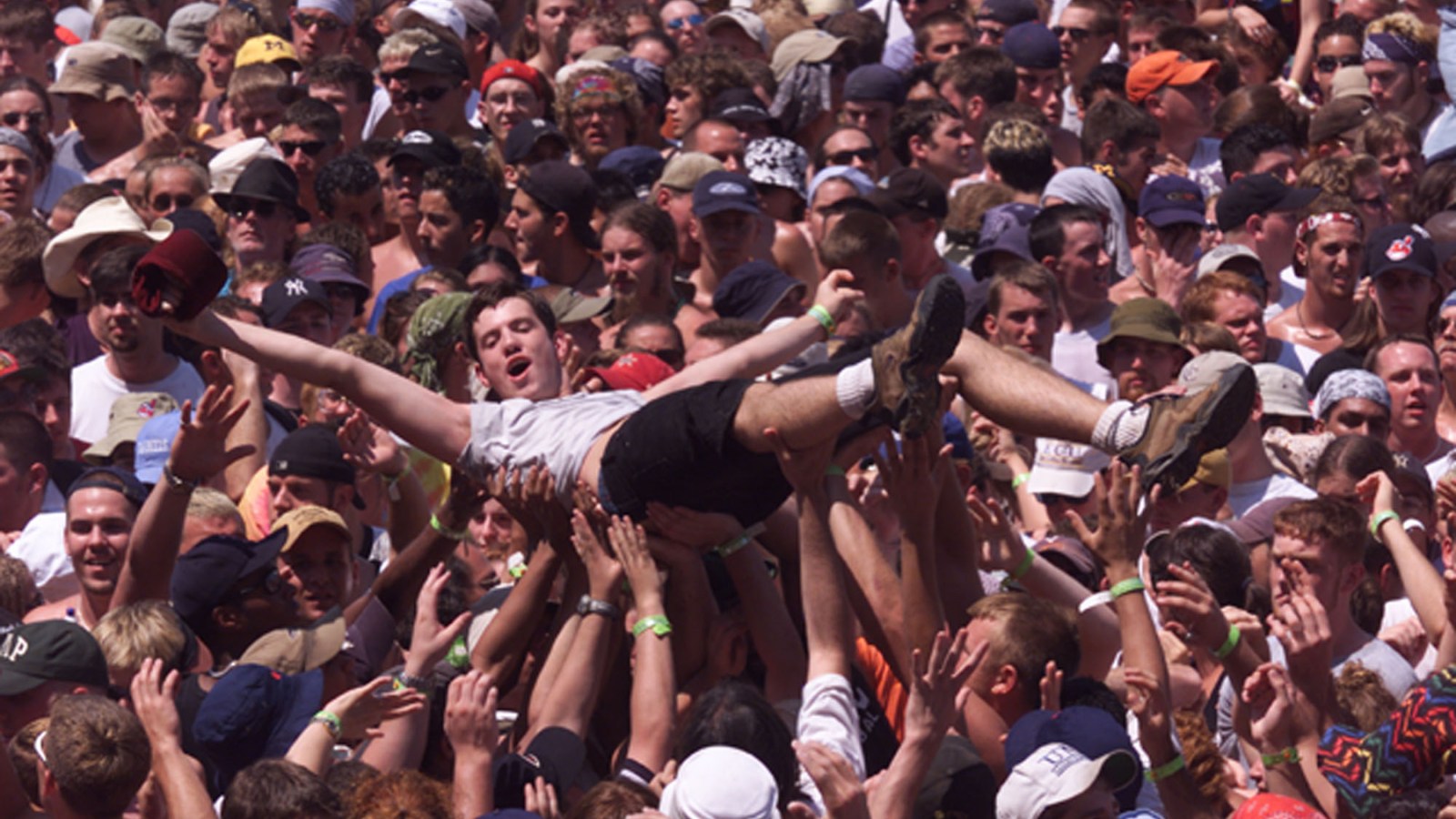
 Megan Graye