349: The Pepsi Number Fever Scandal
Could a soft drink cause chaos in foreign lands? Yes, here's how.

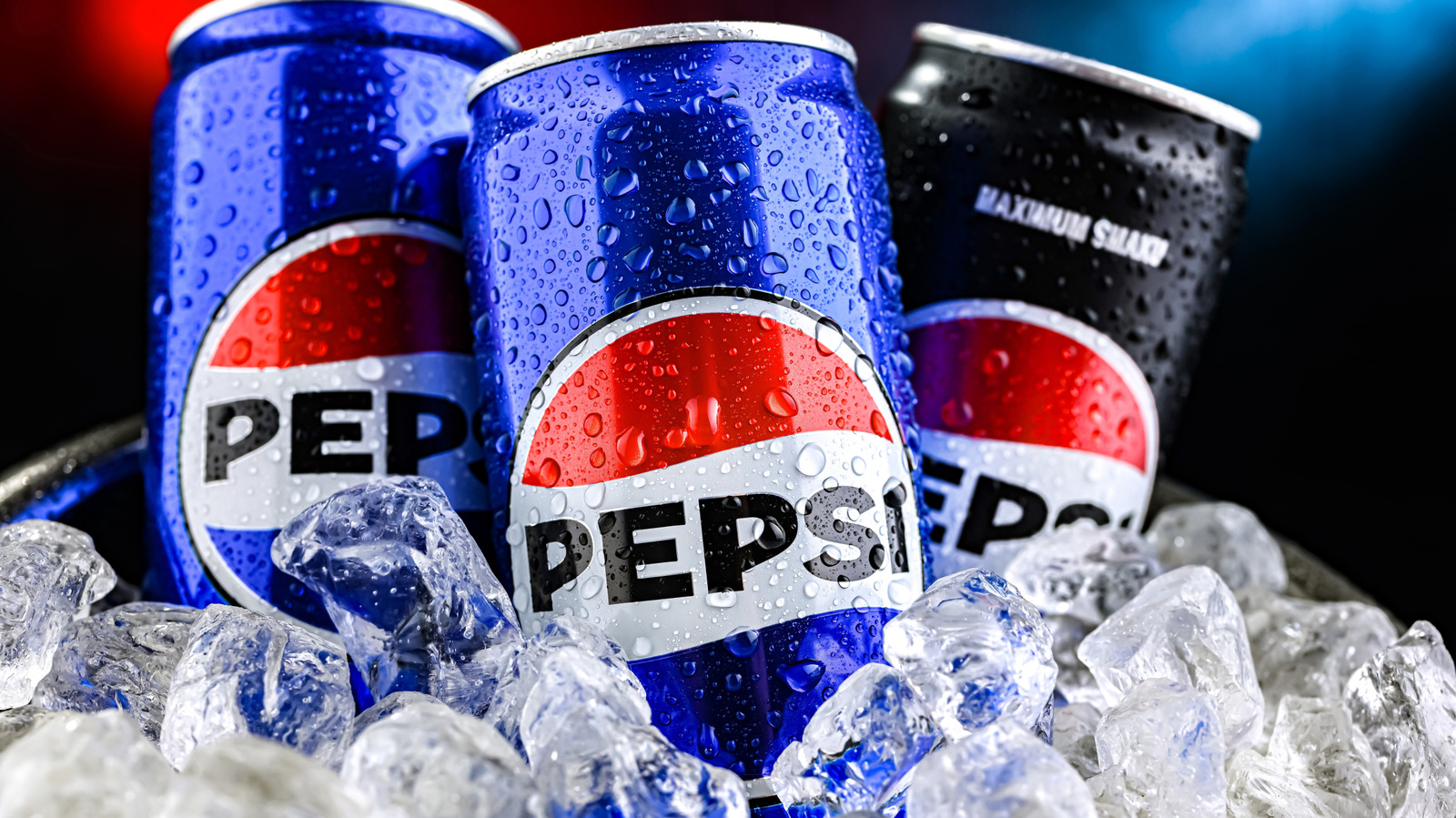
You might not think that a soft drink company could plunge an entire country into chaos, and yet, that’s exactly what PepsiCo accidentally did. And it almost cost them $32 billion in the process. Let’s take a look at the Pepsi scandal that rocked the company and sent the Philippines into mass hysteria.
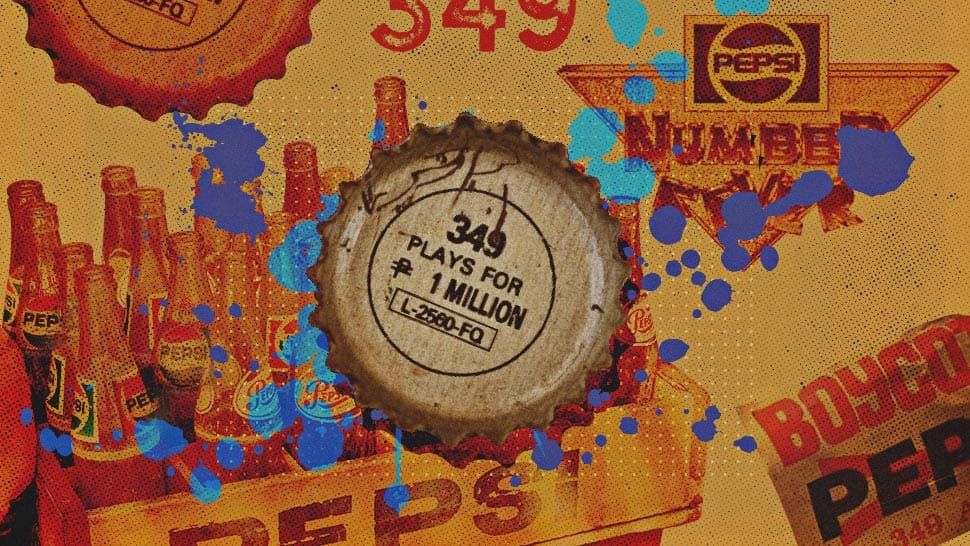
It’s February 1, 1992. PepsiCo has announced a campaign where a single supposed winner will receive 1 million pesos, which was equivalent to around $17,000 in today's money. At this time, the Philippines was a developing country that had high rates of poverty, so the promise of money definitely got people's attention, especially since the prize money would have been life-changing for the average Filipino, since the average monthly salary was only $100. PepsiCo had printed a number on the underside of the bottle caps sold in the country, and there was supposed to be a winning number on one of the bottle caps. But fate would have other ideas. Or at least, a faulty computer system.
The Filipino population was gorging on Pepsi in the hope of being lucky enough to have a winning number. Bottling plants were working 20 hours a day, nearly doubling production numbers, and sales increased by 40%, and the market share jumped from 19% to 24%. At the peak of the numbers, it was estimated that half of the Philippines' population was taking part in the contest. And because the contest was that popular, Pepsi decided to extent the contest by five weeks, by which the the promotion cost an affordable (for PepsiCo, anyway) $2 million.
On the evening of May 25, 1992, over 70% of the Philippines population was glued to their TV screens, anxiously awaiting the winning number to be called. And then came the moment everyone was waiting for: the winning number was announced as 349. There was only one problem: PepsiCo relied on computers to give two bottles the winning number, and that took a turn for the worst when, by accident, a glitch caused over 600,000 bottle caps to be printed with the number 349, even though only two of those bottle caps had another security code to prove that the bottle caps were authentic. But most winners felt that they were still owed the prize money. Reportedly, a bus driver had three 1-million-peso bottle caps, and a mother of 12 whose children went through 10 bottles of Pepsi a day had supposedly won 35 million pesos, or around $595,000 today. The number eventually grew to 486,170 people seeking prize money. Kids were searching for bottle caps in trash cans, others were hoarding Pepsi bottle caps in collections, but all hopes were lost, as droves of people were turned away.
Boycotts of Pepsi products and protesting ensued, but it wasn't long before violence was turned into a "solution." While PepsiCo did give some of the 349 winners $20 each as a "gesture of goodwill," which cost the company $10 million, some people accepted the money while others didn't. Those who didn't accept felt that PepsiCo, an international company, could have afforded to give the prize money to winners, but PepsiCo refused. Mass outrage, while understandable, quickly turned to rioting. Eventually, Pepsi had to construct barbed wire fences around their establishments. And that was just the start of Pepsi's problems. The violence escalated to the extent that over 35 Pepsi trucks were overturned, and some were burned. Molotov cocktails were thrown into Pepsi office windows, and some Pepsi executives hired bodyguards. One of said bodyguards later reportedly said that the Pepsi executives were "eating death threats for breakfast." At the height of the violence, a hand grenade was thrown at a Pepsi truck, but it rolled into a store instead. A woman and child died in the explosion. In another incident, a manufacturing plant in Davao was also hit with a grenade attack, killing three of the plant's employees.
And even though the violence had died down, that's not counting the mountains of lawsuits PepsiCo faced in the aftermath of the fiasco. Well into 1993, a new headline topped the Filipino newspapers. In December of that year, Artemio Sacaguing, chief of the organized crime division of the Philippines' National Bureau of Investigation, filed a report saying the violence wasn't from the protesters, but from PepsiCo itself, in acts of self-sabotage. The subsequent brief reported to local prosecutors that an unnamed man claimed to have been a Pepsi security guard and knew of three mercenaries who were hired by the PepsiCo to damage property. Sacaguing claimed that PepsiCo did this because then, PepsiCo could show that the anti-Pepsi protesters were violent and could be labeled as terrorists, harming their position in the courtroom. These accusations were immediately dismissed by Sacaguing's superiors, who said that the report had been discredited.
By the end of 1994, 689 civil lawsuits and 5,200 criminal complaints had been tossed out of court. And that's not counting the out-of-court settlements. The last remaining case didn't end until 2006, when the Philippines Supreme Court found that Pepsi wasn't negligent and therefore wasn't liable for damages due to the computer glitch. This marked the end of the prolonged end of the controversy.
In the end, 5 people died in the violence. And though this event was over 30 years ago now, its legacy remains. Even to this very day, mentioning Pepsi to some in the Philippines is, at the very least, frowned upon. The term "to be 349ed," meaning to be duped, was also made in the aftermath.
Did you think such a thing could be caused by a soft drink? Leave a comment!
Sources: Mental Floss, A Little Bit Human, Food Republic, CBC Radio
 Jake Rossen
 Allia Luzong
 Max Dean