Tsybin RSR: The Soviet SR-71 That Never Was
The Soviets may have made good tanks, but not a good reconnaissance aircraft.

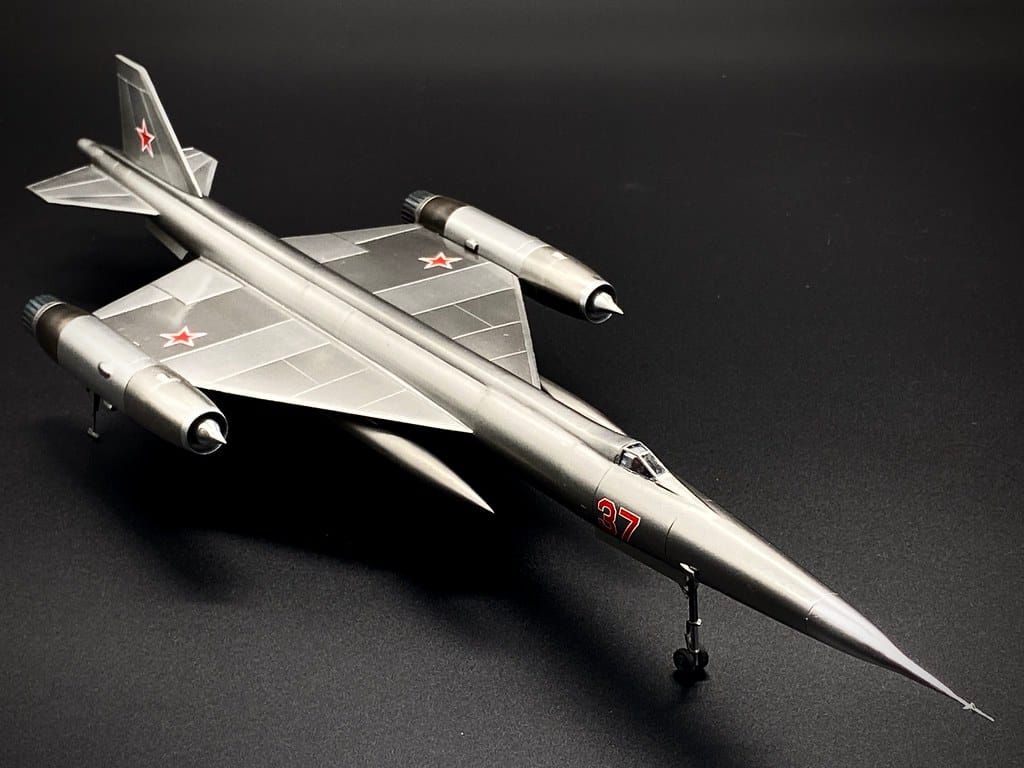
Once again, we find ourselves with a situation where the Soviets tried to copy an American creation, and they failed. We’ve seen this with the space shuttle Buran, the Beriev S-13 (more on that here), and now, with an SR-71 knockoff.
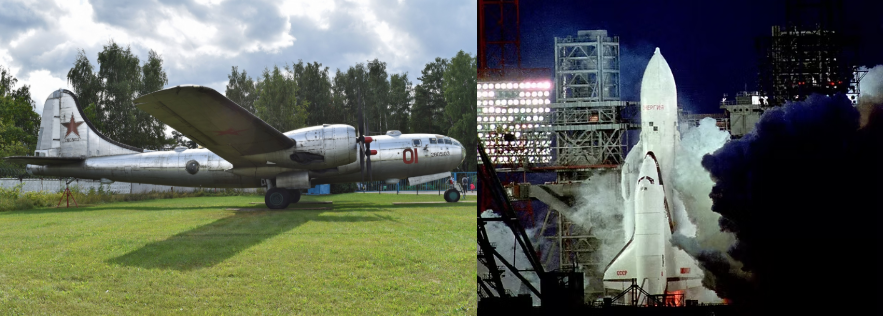
One thing you can’t ignore about the Soviets was their ability to copy, much like the Chinese today. The Tupolev Tu-4 is an outstanding example. It was reverse-engineered from the Boeing B-29 Superfortress, after the Soviets got a hold of three during World War II after they made an emergency landing in Soviet territory. The result was so convincing that Western spectators at the 1947 Tushino Air Show thought that they were the three B-29s, not entirely new aircraft. As mentioned above, the Soviet space shuttle Buran also comes to mind. While it never completed any space missions, the resemblance is uncanny enough to mention. Another thing that some may think of is the Sukhoi Su-9, which was reverse-engineered from the German Messerschmitt Me-262 fighter of World War II, although it was canceled because it was slower than other post-World War II aircraft. So, one thing many have asked is “why didn’t the Soviets build their own version of the SR-71 Blackbird?” Well, they did. Sort of. Today, we will be discussing that.
The Lockheed SR-71 “Blackbird” earned a reputation that no aircraft could catch it, and it could even outrun missiles, much less being caught by an interceptor. Its speed record for the aircraft was set on July 28, 1976, when it reached an astounding 2,193.167 mph (3,529.56 km/h). And even though the Soviets weren't as keen on state-of-the-art reconnaissance aircraft as the Americans, the Soviets wanted their own version of the SR-71.
In 1954, the US deployed its first surface-to-air missile system, the Nike Ajax. In response, under the guidance of aviation designer Pavel Tsybin, the Soviet design bureau took on the task of development of a ramjet aircraft that could travel at Mach 3. Being able to keep up with American development of weapons definitely gave the Soviets a run for their money, because American money for resources was plentiful, while the same couldn't be said for the Soviets (or any other countries on the communist side of the Iron Curtain, for that matter).
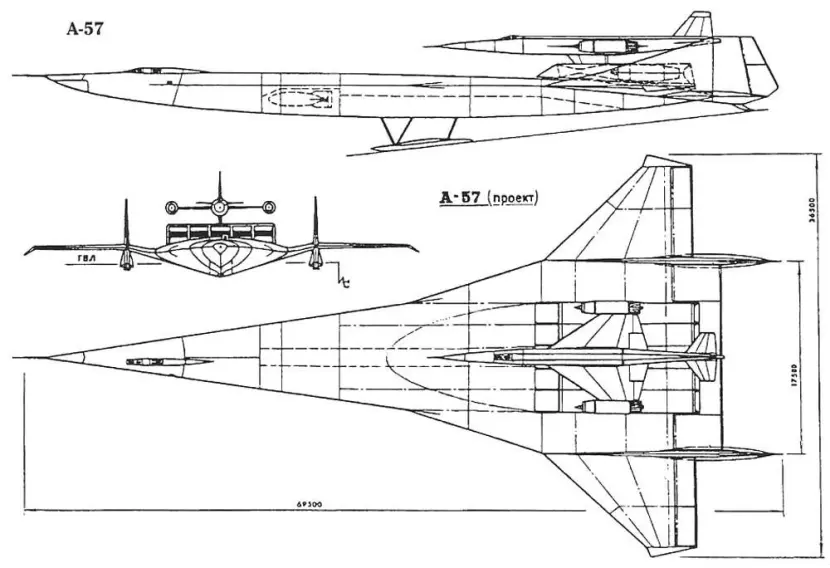
The Tsybin design bureau wasn't as big as other Soviet aircraft manufactures, like Mikoyan-Gurevich, Sukhoi, or Tupolev. But that didn't stop Pavel Tsybin from designing a jet that may have been a match for the SR-71 Blackbird if it came to fruition. On March 4, 1954, the Tsybin design bureau gave a proposal to the Soviet government concerning an aircraft that would be capable of reaching 3000 km/h (1,864 mph) with a 30,000-meter (98,425 ft) ceiling and range of 14,000 km (8,699 miles). This aircraft would be a strategic reconnaissance plane, crewed by only one person. It would also have a high weight efficiency of 54.6%, which was achieved by using lightweight materials throughout its construction. This was, in part, due to its short service life of only 200-250 hours, before defamations would appear. The outer layer of material would reach 220°C (428°F) at Mach 2.56. Because of this, aluminum and aircraft steel were off the table, though some parts of the exterior, like the ailerons, outer wings, and tail torsion boxes, were made with an aluminum/beryllium alloy. The wings would have a t/c (thickness to cord) ratio of around 2.5%, a 58° leading-edge sweep, and three main and two secondary spars. The wing tips, 86mm deep, carried two Soloviev D-21 ramjet engines, though these engines were never delivered to the factory. The plane was supposed to have a sea level dry rating of 2,200 kg (4,850 lbs) and augmented ratings of 4,750 kg (10,472 lbs). The new aircraft went through a number of design refinements and name changes before it would be named the “RSR” (Russian: PCP) stands for Реактивная стратегическая разведка (Romanized: Reaktivnaya strategicheskaya razvedka), which is Russian for "jet strategic reconnaissance."
The concepts may have even carried nuclear weapons at speeds and altitudes that would’ve been impossible to stop. Thankfully (or unfortunately, for the Soviets), design was far easier than perfection. It's true to say that the RSR program was ended by its bureaucratic enemies just as much as its technological obstacles. During development, designers realized that the RSR wouldn’t have the statistics that were originally planned. It was remade into a reconnaissance aircraft where jet engines would be used for takeoff, and ramjets would be used once airborne. Its cruising speed would also have been Mach 2, with a maximum altitude of 73,800 feet (22,494.24 m) and a range of just 2,500 miles (4,023.36 km). Impressive, yes. But it was no match for the SR-71.
Despite these setbacks, one prototype was completed and made its first of 32 flights on April 7, 1959. This test flight showed unstable the airframe's takeoff and landing characteristics within the aircraft, meaning it had to be re-engineered. The engines were swapped out for Tumansky R-11F engines, the same ones used on the Mikoyan-Gurevich MiG-21 and Sukhoi Su-15, and shortened the tail fins, among other modifications. The resulting aircraft ended up with trapezoid-like wings and looked like a cross between the SR-71 Blackbird and a Lockheed F-104 Starfighter.
By October of 1959, five improved RSR aircraft were ordered, but the design bureau was absorbed into Myasishchev, best known for the M-4 strategic bomber. This was done under the orders of Soviet premier Nikita Khrushchev. Supposedly, either three or five RSR airframes were completed at the No. 99 factory in Ulan-Ude, Siberia, only awaiting their engines, some sources claim. But the whole thing was axed, and in April 1961, Soviet premier Nikita Khrushchev canceled the program, focusing more on missiles and the Soviet space effort.
While the RSR never came to fruition, it is fun to think about what would have happened if it had, and how it would have fared against the fearsome SR-71 Blackbird. Tsybin would go on to play a huge role in the development of Soviet spacecraft like the Soyuz-1 and 2, as well as the ill-fated Soviet space shuttle Buran. As for Pavel Tsybin himself, he would die on February 4, 1992, while at his work. He outlasted the Soviet Union by only 40 days.
Do you think the Soviets could have made a worthy rival to the SR-71? Leave a comment!
Sources: TestPilot.ru, National Interest, Wikiwand, Hush-Kit


 Sebastien Roblin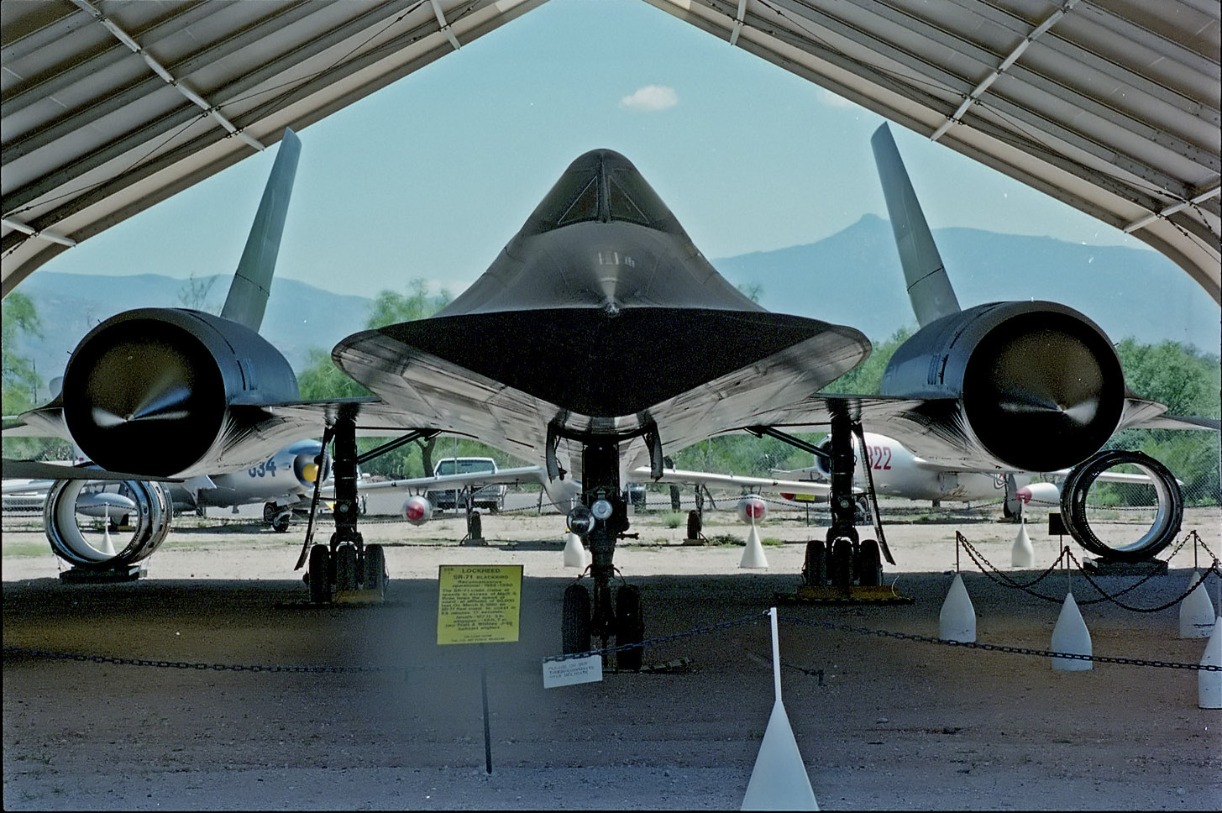
 Hush Kit