The Untold Stories of 7 Women in the American Revolution
If not for these ladies, our nation might not have ever existed.

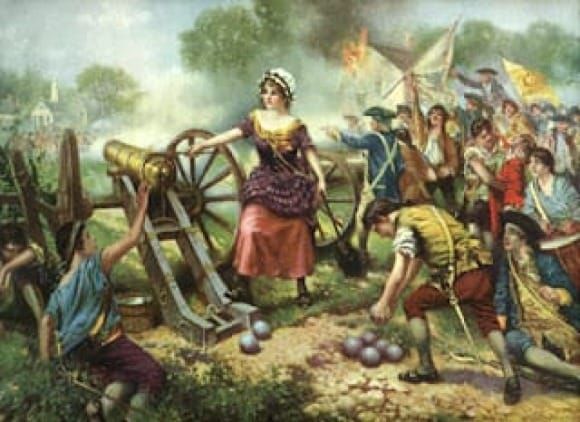
Everyone remembers the Founding Fathers, and rightfully so, but when it comes to the opposite gender, recognition is a must. From sewing the first version of the American flag to fighting in combat, women proved themselves worthy in the name of forging a new nation, free from the tyranny of King George III. Today, we will be looking at the role that women played in our fight for independence from Great Britain.
Deborah Sampson
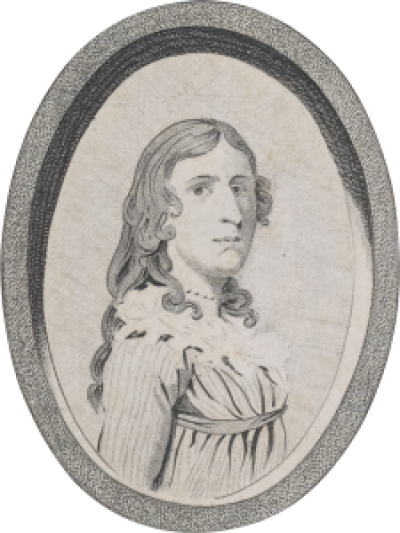
Kicking off our list is a woman who did something unheard of at the time: serving in combat. This was so far-fetched that she actually disguised herself as a man to take part. Born in Plympton, Massachusetts on December 17, 1760, Sampson took up arms in the Continental Army in 1782, under the alias of Robert Shurtliff, which was the name of her deceased brother, in the Fourth Massachusetts Regiment, where she saw combat in Westchester County, New York. During this time, she would suffer wounds on her forehead and thigh. She allowed doctors to treat her head injury but left the field hospital unnoticed to avoid her identity being discovered. She took out one bullet from her thigh herself with a sewing needle and a penknife. The other bullet was too difficult to extract, and that injury never fully healed. Only after falling ill with a fever in Philadelphia in 1783 was her true identity discovered. Following this discovery, the Army gave her an honorable discharge. Like other veterans of the Revolutionary War, she petitioned the state and federal governments for a fair veteran's pension. After this, she married and had three children, all the while giving speeches about her service in an effort to make ends meet. At the time of her death on April 29, 1827, at the age of 66, she was collecting pensions from the Massachusetts government.
Martha Washington
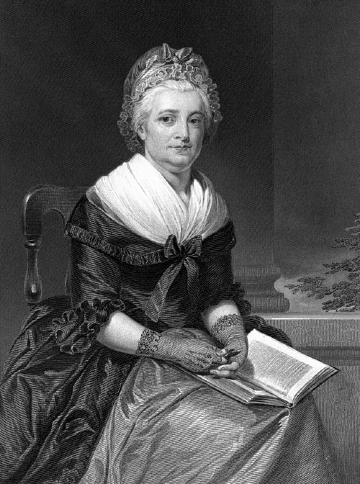
Of course, we can't forget the wife of the man who would go on to create a nation. Born on June 2, 1731, on a plantation called Chestnut Grove, which was located along the Pamunkey River in present-day New Kent County, Virginia, Martha Washington spent every winter during the war at military camps with her husband, General George Washington. She was well-liked by the troops and boosted morale by hosting dinners and dances. And that's not including how she improved relations with civilians by listening to the petitions they made to General Washington. After the war and the only election in US history where a candidate won unanimously, she became the First Lady of the United States. And after Washington's presidential term was over, Martha freed George Washington's slaves on January 1, 1801, just over a year after George Washington died.
Abigail Adams
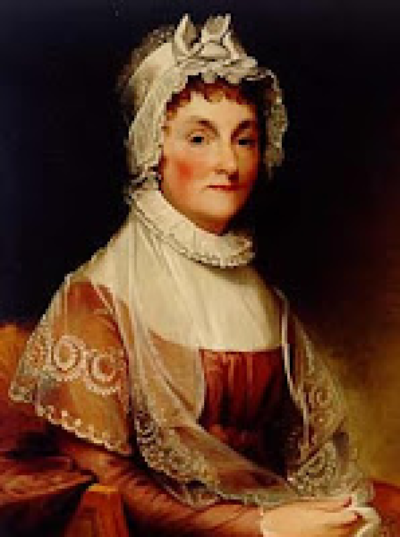
The second First Lady of the United States, Abigail Adams famously corresponded with her husband, John Adams, and reminding him that he should "remember the ladies" while the new government was being established, or the ladies would "start a revolution of their own." In a letter from March of 1776, she implored John Adams to give more rights to women of the day, while also warning against giving their husbands unlimited power. During that time, she would write to John Adams, who was serving in the Continental Congress in Philadelphia. Adams wrote many letters to John Adams during his time in the Continental Congress, many of which advocated for women's rights. She would also go on to raise future president John Quincy Adams and give him political advice as well, making Abigail Adams a rightful winner of a spot on this list.
Betsy Ross
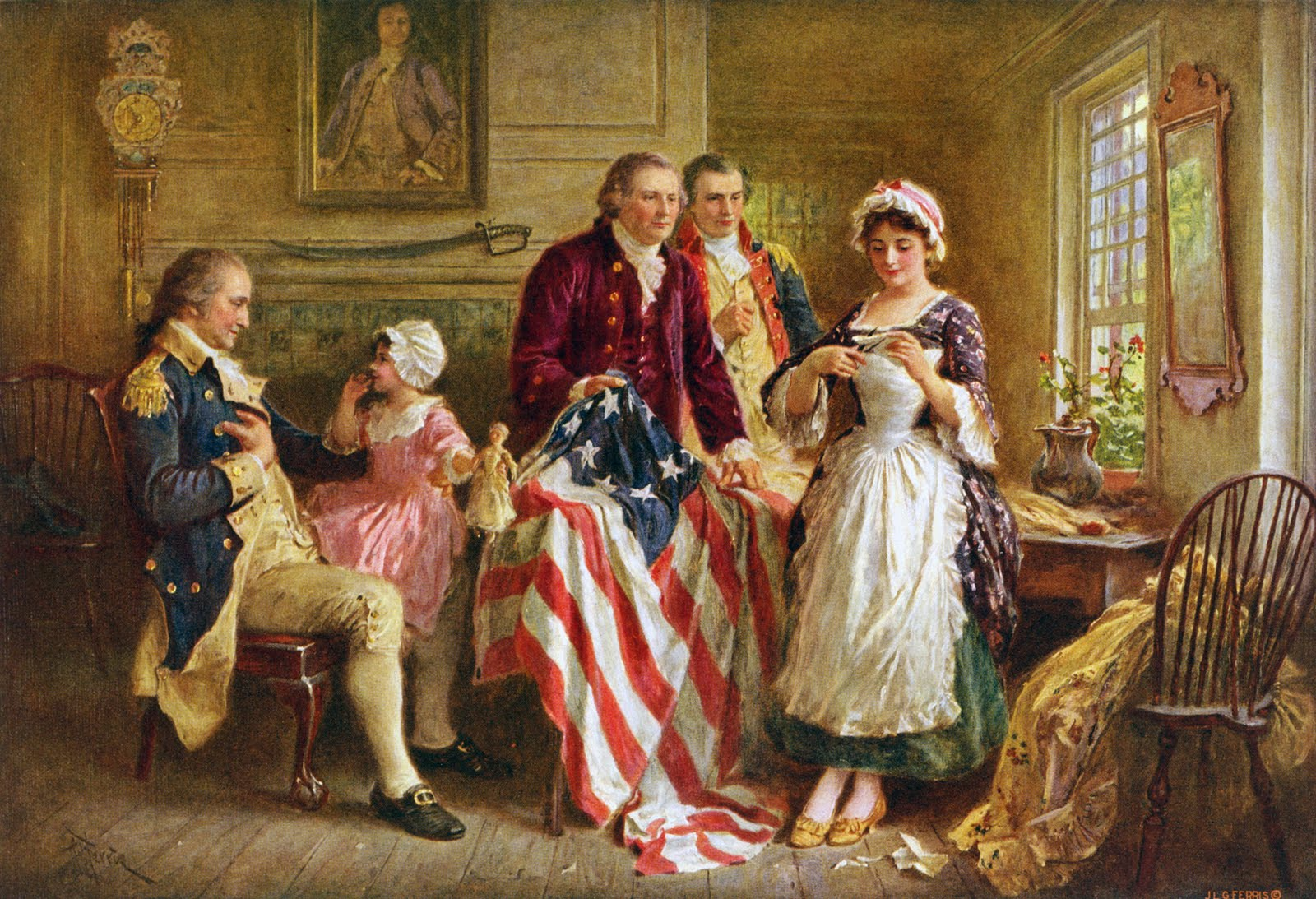
No list of this type would be complete without the seamstress who (supposedly) helped design the first American flag, this being the thirteen stripes and thirteen stars in a field of blue in the top left corner. Historians dispute this, but what is known is that Ross was a real person, and a flag-making seamstress and upholsterer of 1777 Philadelphia at that. It's also historical fact that Ross made flags for the newly created Navy, as stated on a receipt from 1777. It's also true to say that she is a fair representation of the working women of that time who contributed to the American Revolution, even if the flag-sewing tale was told by Ross' grandson in 1870, almost a century after the American Revolution began and with no real historical proof. Regardless, Ross' efforts won her a spot on this list.
Elizabeth Sandwith Drinker
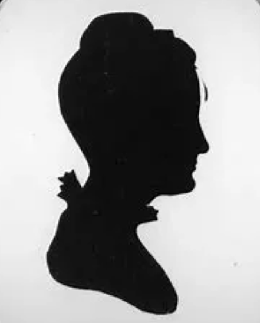
Elizabeth Sandwith Drinker is, arguably, the most thorough documenter of the time of and after the war. Drinker wrote about daily life during the Revolutionary War for an upper-class Quaker woman at the age of 23. At the same time, she and her husband Henry were often at odds with Pennsylvania's Revolutionary government, as Henry and Elizabeth were pacifists. After being suspected of loyalism to the British, some of Drinker's home goods were confiscated to pay their tax debts. By the time her writings ended, there were over 30 volumes, ranging in dates from 1758 to 1807, with the exception of 1787 and 1788. She began writing two years before she married and ended writing the night before her final illness.
Sybil Ludington
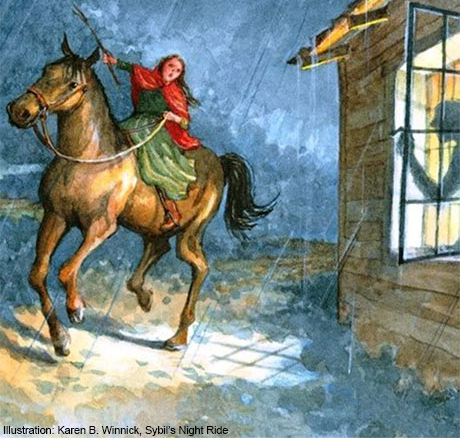
Among history enthusiasts, it's known that Paul Revere didn't actually yell "The British are coming!" What did happen, however, is that Colonel Henry Ludington, in an unrelated matter, had to stay behind in Danbury, Connecticut and brief the rebel soldiers under his command. Because of this, his oldest daughter, Sybil, volunteered to ride a horse and alert the local militia about the incoming British troops. Only 16 years old at the time, Ludington rode more than 40 miles (64.3 km), more than twice the distance Revere rode, to alert American forces about the approaching British. And although they couldn't stop the British from seizing Danbury, they did keep the British at bay in Long Island Sound. But it wasn't until World War II when Ludington began to receive recognition for her heroism. Historical markers began to be installed in places where she was thought to have traveled. She even appeared on the 1975 Bicentennial quarter, with her image on horseback. Not only that, but the Daughters of the American Revolution had an equine statue made in her honor, which now sits in Carmel, New York along the route she took.
Mary Katharine Goddard
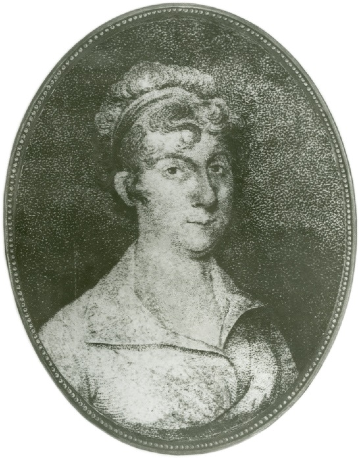
After being chased out of modern-day New Jersey by the British in 1776, the Continental Congress decided to declare independence from Great Britain, which was considered a treasonous crime worthy of capital punishment at the time. Goddard was a journalist at this time and was also the postmaster of Baltimore. And she may or may not have been the first female employee of the American government. She was a printer for the Continental Congress, and in 1777, she printed the first version of the Declaration of Independence, with most of the signers' names on the document as well. Her name appears on the document as well, but as a printer, not a signer. Still, her efforts won her a spot on the list as one of the women whose contributions helped the new American nation win independence.
Did you know about these women who helped us gain independence? Leave a comment!
Sources: American Battlefield Trust, Museum of the American Revolution, Women and the American Story, The American Revolution Institute, Boston Tea Party Ships and Museum, Culture Frontier
 Urge Congress to Reauthorize Battlefield Acquisition Grants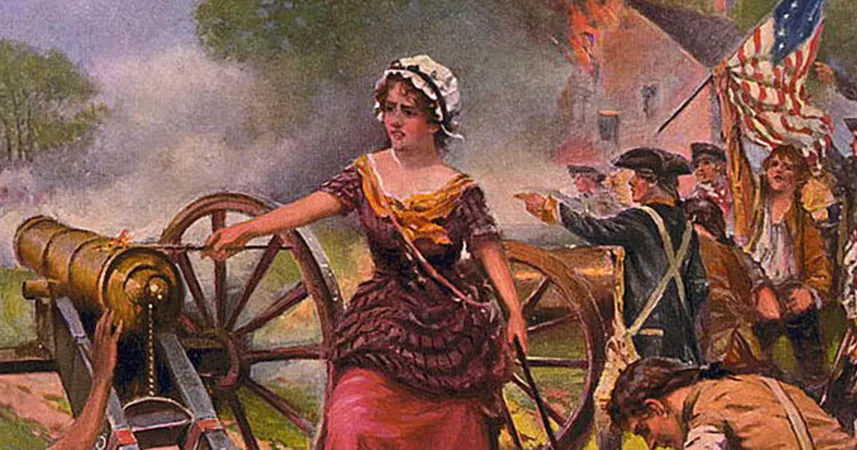
https://www.amrevmuseum.org/news/revolutionary-women
https://wams.nyhistory.org/settler-colonialism-and-revolution/the-american-revolution/

 Boston Tea Party Ships & Museum
 D.A. Vivian