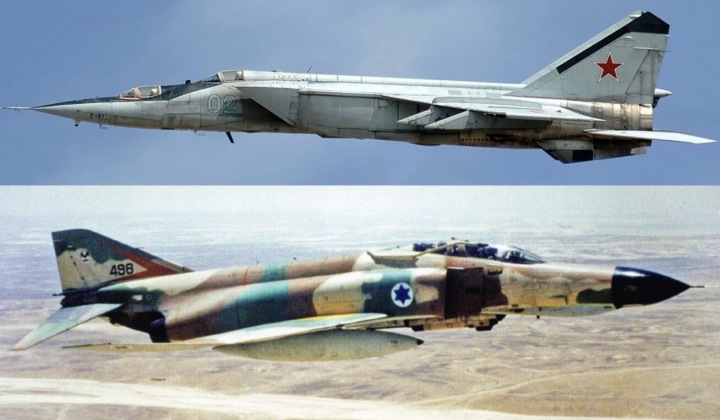
When Israeli F-4 Phantoms Faced the MiG-25
Two unlikely opponents in the Cold War face off in this article.

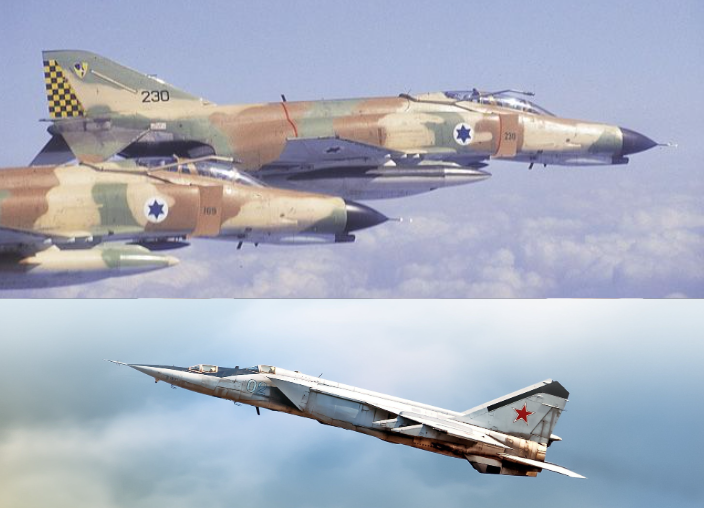
Numerous fighter jets from both sides of the Iron Curtain fought for supremacy from the 1950s to the end of the Cold War. Some of these fighters, like the American F-4 Phantom II and the Soviet MiG-21, duked it out over Vietnam. Prior to that, the North American F-86 Sabre battled the MiG-15 in the Korean War. But other fights put two unlikely opponents against one another. This being the Israeli version of the McDonnell Douglas F-4 Phantom II and the Soviet Union's Mikoyan-Gurevich MiG-25. And they were no match, to say the least.
The F-4 Phantom II was one of the fastest fighter jets of its time, with a top speed of Mach 2.23. But even that wasn’t enough to match the MiG-25’s top speed of Mach 2.8 (Mach 3.2 if it really pushed its engines). In today's article, we will learn about the times when the Israeli Air Force duked it out (or at least tried) against the fastest interceptor ever made, the Soviet MiG-25 "Foxbat" (as codenamed by NATO).
The Rogers Peace Plan was the ceasefire between Egypt and Israel. From August of 1970 to the spring of 1971, this ceasefire was mostly honored. But during the summer of 1971, the conflict started seeing Israel sending reconnaissance aircraft into Egyptian territory, trying to map out new SAM sites and monitor construction of new Egyptian air bases. Little did the Israelis, and the world, know, the Soviet Union began providing support to Egypt. In March of 1971, the Soviets sought military personnel from the 4th Center of Combat Employment and Personnel Training from the Soviet Ministry of Aviation Industry, from the Scientific Research Institute of the Air Force at Lipetsk, and from the 47th Independent Guards Reconnaissance Aviation Regiment, and deployed them to Cairo West air base, under the command of Colonel Alexander S. Bezhevets, in a unit known as the 63rd Independent Reconnaissance Aviation Squadron, or 63rd ORAE. The aircraft used by this unit was one of the most advanced aircraft that the Soviets had at the time: The Mikoyan-Gurevich MiG-25, as well as its bomber variant, the MiG-25RB. These operations were so secretive that the part of west Cairo they were assigned to was guarded by Soviet soldiers and no one was admitted, not even Egyptian civilians. During this time, the MiG-25 was codenamed the “M-500.” Operations began one month later, and initially, the aircraft flew above the Nile Delta, and above the World War II battlefield el-Alamein.
Since the Soviets wanted to make their operations as safe as possible, all four aircraft were equipped with A-72, A-87, and A-10-10 cameras, which enabled photos to be taken from altitudes up to 22,000 meters (72,172 ft), above the maximum ceiling reached by the Israeli MIM-23 HAWK surface-to-air missiles. They also coordinated with the HQ of the 135th fighter aviation regiment (135th IAP) at Bani Sweif, and protected the MiG-25s with MiG-21s during take-off and landing.
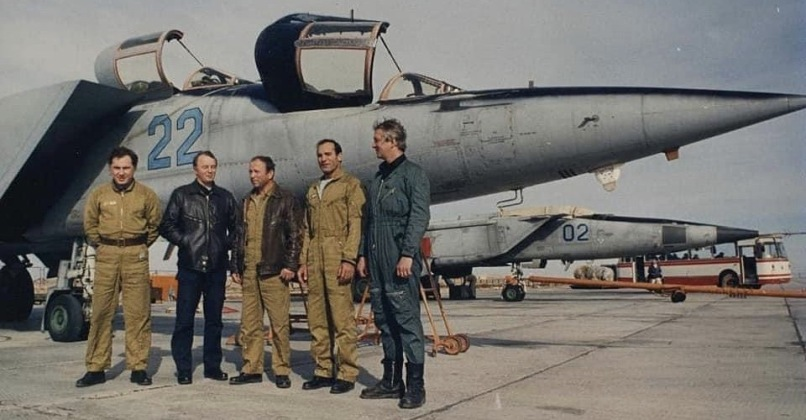
Every flight was done in full radio silence and always by pairs of aircraft. This way, if one was lost, the other could guide rescue teams. The MiG-25 was still under development at this time; Soviet technicians would require several months of work to tune the engines and make them capable of reaching Mach 2.83 (which the engines could only withstand for eight minutes maximum). Special fuel was also required. Designated T-6, it was not available in Egypt and had to be brought in by Soviet tankers to Alexandria. Now it's October of 1971. On October 10 of that year, by which time the Israelis were operating from special aircraft hangars, two MiG-25s climbed to an altitude of 23,000 to 24,000 meters (75,459 to 78,740 ft) over the Mediterranean Sea before they swung eastward. They then approached the northern coast of Israel and accelerated to Mach 2.5 while flying southwest along the entire Israel-Sinai coast. Despite the Israeli Air Force being alerted to the MiG-25s' presence, they lacked the equipment and aircraft to intercept the fast, high-flying MiG-25.
After further studies of Israeli air defenses, a decision was made to fly missions over the Sinai Peninsula. On November 6, 1971, two MiG-25Rs repeated the October exercise. However, instead of going in the direction of Israel, they turned southeast and flew over the Sinai Peninsula, crossing it from the eastern end of Lake Bardavil to Ras al-Sudr, in the Gulf of Suez, in under two minutes. Starting in December of 1971, two flights over the peninsula were made every month, until the mission on March 10, 1972, began. During the mission in March of 1972, fuel tanks under the fuselage were added to the MiG-25Rs, giving them an additional 5,300 liters (1,166 gallons) of fuel, which was enough to cover almost all of the Sinai Peninsula from north to south.
Theoretically, the Israeli F-4s could reach these MiG-25s and fire AIM-7E Sparrow air-to-air missiles, but these operations would require accurate vectoring and the best efforts from the crew to put the F-4 in a position below but in front of the MiG-25, after which the F-4 would need to close in on the MiG-25 so that the Sparrow missile could hit it properly, all within a short time frame. Despite many attempts, no F-4 was able to do this. On May 16, 1972, the 63rd ORAE launched its most daring mission yet: sending two M-500s to document the entire length of Israeli positions along the eastern side of the Suez Canal and down the coast to Sharm el-Sheikh. At 10:30 local time, the MiG-25s entered Israeli airspace, and Israel scrambled four F-4Es from Refidim and Ophir. But thanks to a GCI error, the Soviets managed to fly high above the F-4Es. Even after one F-4E fired a Sparrow, the missile's motor burned out before it reached its target. The missile was later recovered by the Egyptians and sent to the Soviets. After this failure, the Israeli Air Force began to search for an air-to-air missile that could be launched from the F-4E and shoot down what the Israelis thought was a Mikoyan-Gurevich MiG-23.
During the search, the Israeli Air Force returned to attempting to drag Egyptian MiG-21s into ambushes. On June 13, 1972, they were successful. By this time, the Israelis spread a rumor that they aquired American MIM-14 Nike Hercules surface-to-air missiles, which the Soviets knew would be capable of reaching a MiG-25. Soviet and later Russian sources differ about the fate of the 63rd ORAE. In one version, they ceased flying over the Sinai Peninsula and only flew missions along the west side of the Suez Canal. In another source, the 63rd ORAE closed its shop at Cairo West in April 1972, after the Soviet government concluded that the unit had completed all the work there was to do.
By October of 1973, the IAF had claimed 11 kills under the F-4 Phantom's belt. And by the end of that month, the Soviets had deployed MiG-25Bs to Egypt in order to keep track of Israeli force positions, though they were restricted to flying west of the Suez Canal, and were withdrawn within two years. Reportedly, the Egyptian Air Force briefly operated a MiG-25R in 1974 and made one major flight over Israel before the Soviets demanded that the aircraft be returned. Before long, a Foxbat detachment appeared in Syria, and even though flights over occupied Golan Heights were likely made in the aftermath of the 1973 war, there were no reported attempts to enter Israeli airspace. But it is worth noting that, reportedly, a Syrian MiG-25 was shot down over northern Israel on July 29, 1981, by an F-4, escorted by F-15s. And even though the crews returned to the Soviet Union, the MiG-25s were stored inside the underground hardened aircraft shelters in Cairo West.
What's your favorite interceptor? Leave a comment!
Sources: The Aviation Geek Club, Military Watch Magazine
 Dario Leone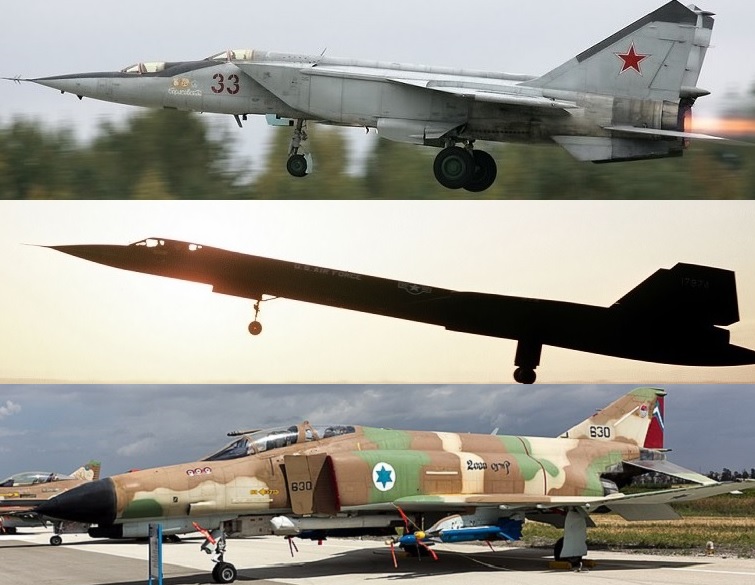
 Dario Leone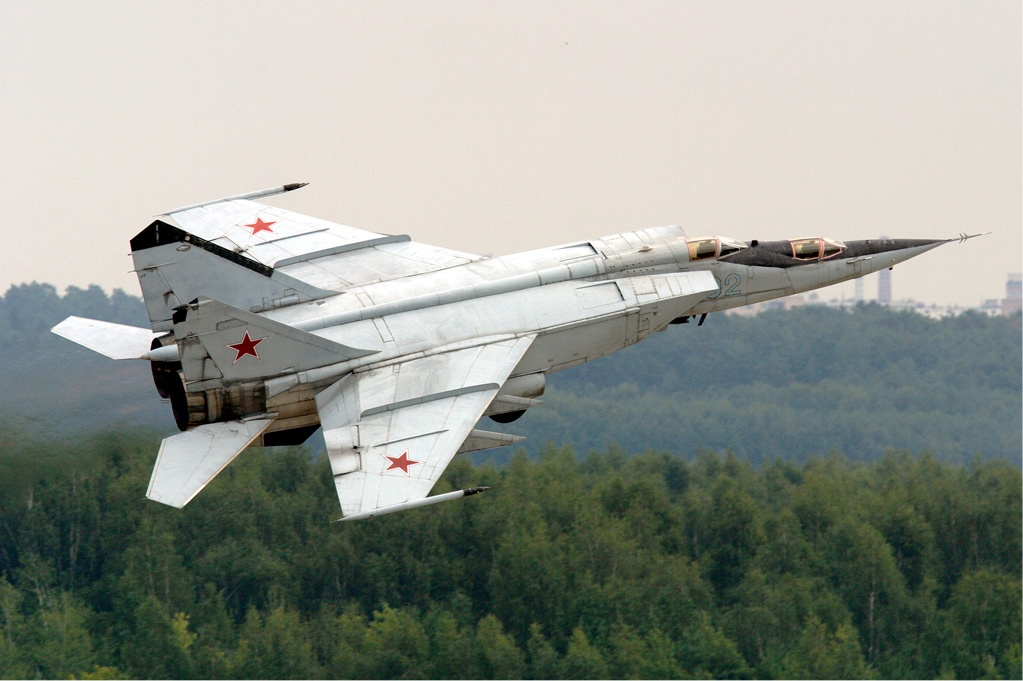
 Military Watch Magazine Editorial Staff